In provinces, Congress and UML are back to old rotational politics
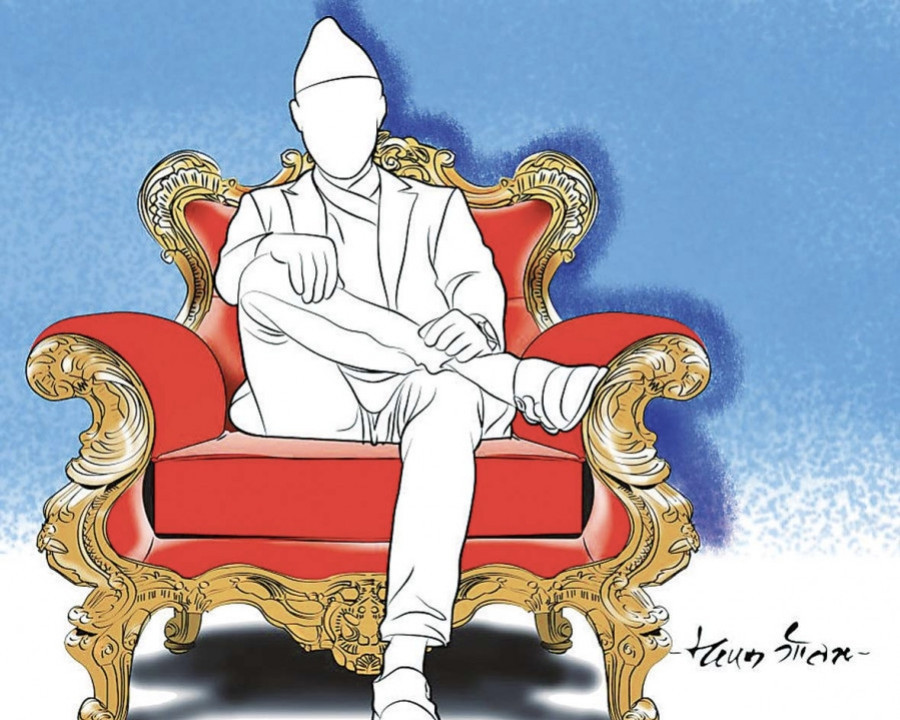
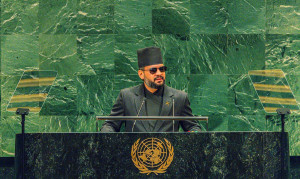
UML’s Rajan Bhattarai says broader opposition unity is needed as ‘constitutional and democratic values’ are under threat from federal government. Nepali Congress is in the helm of Madhesh, Bagmati, Gandaki and Sudurpaschim, while CPN-UML leads Koshi, Lumbini and Karnali now. Post Illustration
Nepali Congress and CPN-UML leaders are once again in negotiations to reshuffle provincial governments, reviving the same turn-by-turn power-sharing politics both parties themselves blamed for fuelling instability.
Senior leaders from the two parties have held a series of meetings in recent days to iron out a new arrangement under which Congress and UML would take turns to lead provincial governments. According to the leaders involved in the talks, Madhesh province is likely to remain untouched, but the other six provinces could see new chief ministers and coalition equations.
The latest negotiations come just months after Congress chief Gagan Kumar Thapa and vice-president Bishwo Prakash Sharma rose to party leadership on a pledge to end what they called ‘old-style power politics’ and introduce a reform-oriented ‘Congress 2.0’. Their renewed involvement in the same power-sharing bargain has now drawn criticism from both within the party and from opposition leaders.
Congress has tasked Sharma to negotiate with UML chairman KP Oli. Sharma met Oli at the latter’s residence in Bhaktapur on Tuesday for the second time in a week. Earlier, he had also been part of talks alongside Congress Joint General Secretary Udaya Shumsher Rana.
Of Nepal’s seven provinces, Congress currently leads governments in four while UML heads three. Congress is in the helm of Madhesh, Bagmati, Gandaki and Sudurpaschim, while UML leads Koshi, Lumbini and Karnali. Madhesh province underwent a restructuring around five-and-a-half months ago and is expected to continue under the existing arrangement.
According to Congress General Secretary Gururaj Ghimire, Sharma has been tasked with leading the negotiations and that talks are inching closer for a power-sharing deal. “Both parties have differing views on whether restructuring should take place before or after the budget speech. Once that issue is resolved, the process of reshuffling governments will move forward,” he said.
UML leader Rajan Bhattarai confirmed that ‘decisive talks’ were underway with Congress but said disagreements remain over Sudurpaschim province and how to accommodate the Nepali Communist Party (NCP) in the power-sharing arrangement.
According to Bhattarai, Congress is insisting on retaining leadership of all four provinces currently under its control, while UML chairman Oli is trying to bring the NCP into the provincial power-sharing equation. The NCP, meanwhile, has reportedly demanded leadership of the Sudurpaschim government, where it is the single largest force in the provincial assembly.
In the 53-member Sudurpaschim assembly, the NCP holds 22 seats, Congress 18 and UML 11, while the Rastriya Prajatantra Party has one member and one lawmaker is independent.
“I understand Congress has taken a position that it should lead four provinces,” said Bhattarai. “But the NCP is also claiming Sudurpaschim, and our party chairman wants to accommodate it. Whether Congress and UML will end up with three provinces each and Sudurpaschim goes to the NCP, or Congress will retain four and UML three, I cannot say.”
Bhattarai argued that broader opposition unity had become necessary because ‘constitutional and democratic values’ were under threat from the federal government. “In the current situation, opposition parties need to stand together, and a reshuffle of provincial governments could help strengthen that process,” he said.
One major obstacle delaying immediate reshuffling is Koshi province. During earlier negotiations between former Congress president Sher Bahadur Deuba and Oli, the two leaders had reportedly reached an informal understanding not to remove chief ministers from each other’s home provinces—Oli’s Koshi province and Deuba’s Sudurpaschim.
Oli is now said to be insisting on retaining Koshi Chief Minister Hikmat Bahadur Karki. But after the leadership change inside Congress, Sharma has emerged as a dominant figure in Koshi politics. He has reportedly sidelined former general secretary Krishna Prasad Sitaula and expanded his influence in the province.
Congress insiders say Sharma played a key role in making Bhishmaraj Angdembe of Panchthar the parliamentary party leader in the federal parliament and is now pushing to install Uddhav Thapa as chief minister. Thapa, once aligned with Sitaula, has recently grown closer to Sharma.
Provincial governments have changed hands repeatedly since the 2022 elections, usually mirroring shifts in coalition politics at the federal level. After the election, the first federal coalition was formed among UML, then Maoist Centre and the Rastriya Prajatantra Party. That was followed by Congress-Maoist, UML-Maoist and finally Congress-UML alliances in the federal politics, with every shift directly affecting provincial governments.
Madhesh province has seen the highest instability, with six governments formed in three and a half years. Koshi has changed governments five times, while Gandaki, Lumbini and Sudurpaschim have each seen four administrations. Bagmati has had three governments and Karnali two.
In Bagmati and Koshi, internal party rivalries have also contributed to repeated changes in leadership. The frequent collapse and formation of governments has increasingly raised questions about the effectiveness of federalism itself.
Critics say the latest round of bargaining contradicts the reformist image projected by Thapa and Sharma after they took over Congress leadership through a special general convention in January, under the ‘Congress 2.0’ agenda pledging to break from old political habits.
One Congress chief minister privately admitted that discussions about changing provincial leadership in the middle of budget preparations had already created uncertainty inside provincial administrations.
Responding to criticism, Congress General Secretary Ghimire defended the move, stating that leadership changes were necessary to align provincial governments with the new direction of the party leadership and the federal coalition.
“The previous leadership did not accommodate everyone. Some groups alone benefited from opportunities. After changes in the party’s central structure, some provincial leaders have not worked accordingly. There has been a mismatch in working style and political direction,” said Ghimire.
Bhattarai, meanwhile, said the proposed reshuffling merely reflected agreements reached after the 2022 elections. “People may question the culture of power-sharing and frequent government changes. But in coalition politics, if one party alone keeps leadership, dissatisfaction among partners is inevitable,” said Bhattarai.




 20.85°C Kathmandu