Supreme Court registers writ against chief justice recommendation after Sharma takes office
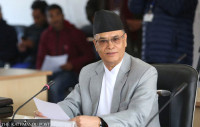
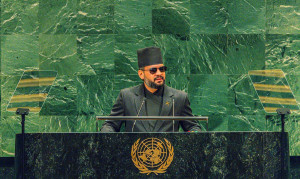
The controversy began after the Constitutional Council on May 7 recommended Sharma, the fourth senior-most justice at the Supreme Court, for the post of chief justice. File Photo
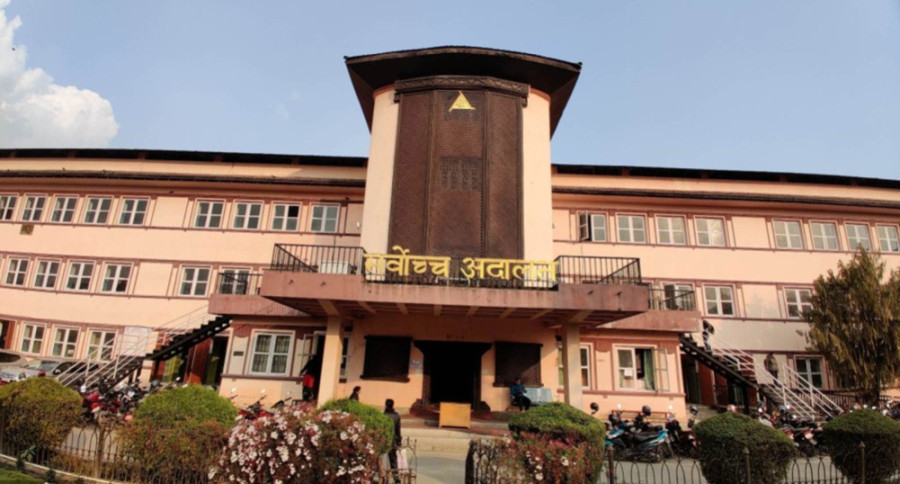
The Supreme Court on Wednesday registered writ petition challenging the recommendation of Manoj Kumar Sharma as chief justice, two days after officiating chief justice Sapana Pradhan Malla ordered the court administration to do so.
The registration came after Sharma assumed office as chief justice. The new chief justice was sworn in to office on Tuesday.
Malla had, on May 18, directed the Supreme Court administration to register petitions filed against the Constitutional Council’s recommendation by 1 pm that day. The administration, however, did not implement the order immediately.
Advocate Prem Raj Silwal said the petition was finally registered on Wednesday after the chief registrar allowed it to proceed. According to him, the first hearing has been scheduled for May 25.
Supreme Court spokesperson Arjun Koirala confirmed the registration of Silwal’s petition.
The court administration has also contacted senior advocate Dinesh Tripathi regarding registration of his petition, Koirala said.
The controversy began after the Constitutional Council on May 7 recommended Sharma, the fourth senior-most justice at the Supreme Court, for the post of chief justice, allegedly breaking with the convention of seniority.
Tripathi and Silwal had approached the top court to file writ petitions on May 8, challenging the recommendation, but the Supreme Court administration refused to register them. They subsequently filed separate applications challenging the rejection note.
After those applications also remained pending, Silwal lodged a complaint at the office of the officiating chief justice, arguing that Rule 10 of the Supreme Court Regulations, which allows applicants to directly approach a bench if registration is denied, had not been implemented.
Acting on the complaint, Malla issued a three-page order directing the administration to register the petitions and schedule hearings.
The issue triggered controversy within the legal fraternity and Parliament after the administration failed to immediately comply with Malla’s order. The Nepal Bar Association had questioned why an order issued by the officiating chief justice was not being implemented.
The dispute is now expected to enter the judicial process. On May 25, a single bench of the Supreme Court will hear arguments on whether the administration’s earlier refusal to register the petitions should be overturned.
The bench may either uphold the rejection or order the petitions to proceed for constitutional review. Past court precedents exist for both outcomes.
If the petitions are rejected again, the cases will not proceed further. If the bench orders registration for judicial review, the cases will move to a five-member constitutional bench led by Chief Justice Sharma himself.
In that scenario, Sharma could end up presiding over hearings involving petitions challenging his own recommendation as chief justice.
The constitutional bench may either dismiss the petitions or seek written responses from the defendants and proceed with a full hearing. The eventual ruling could determine whether the government can amend Constitutional Council-related laws through ordinance in future.




 24.03°C Kathmandu