Chief Justice Sharma’s court record shows low authorship in key bench decisions
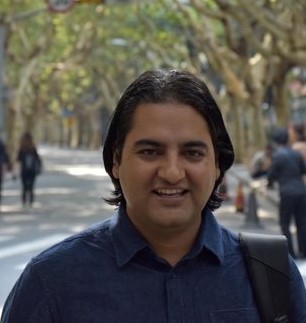
Published Supreme Court rulings show newly appointed chief justice was more often a signatory than the principal author of precedent-setting judgments. Chief Justice Manoj Kumar Sharma Angad Dhakal/TKP
In 2006, Sanjeev Rokka of Rupandehi married another woman while already married to Chanda Roka. Chanda went to court in 2008. A district court convicted him of bigamy and sentenced him to one year in prison and a fine of Rs5,000.
Sixteen years later, the Supreme Court in 2024 overturned the district court’s decision. The bench observed that bigamy had indeed occurred, but Sanjeev had to be acquitted because Chanda had failed to register her complaint within the absolute “three-month limitation period from the date she became aware of the second marriage.”
A legal question concerning the limitation period for prosecuting bigamy had already been settled by a full bench of the Supreme Court in 2006. In a landmark ruling, the top court held that the three-month statutory limitation period begins only from the date on which the authorities vested with the legal mandate to prosecute become aware of the offence. The precedent broadened the scope for accountability by preventing offenders from evading prosecution merely by concealing the second marriage from their first wives or coercing them into silence.
However, the May 2024 ruling marked a significant departure from that precedent. It held that the limitation period begins on the date the first wife learns of the second marriage, rather than when the prosecuting authorities become aware of the offence.
According to legal experts, this interpretation meant that if a husband could successfully deter, threaten, or financially manipulate his first wife into remaining silent for just three months, he would be permanently shielded from criminal prosecution for bigamy.
The author of this controversial verdict, which was delivered by a narrow three-to-two margin in a five-member extended full bench, was none other than the current Chief Justice, Manoj Kumar Sharma. This case marked the first and only time in his career that Sharma was entrusted with authoring a judgment on behalf of an extended full bench of the Supreme Court.
Taken together with his other decisions, the verdict provides an entry point for examining Sharma's judicial philosophy and record.
Sharma was appointed Chief Justice on May 19 after the Constitutional Council, chaired by Prime Minister Balendra Shah, chose him to lead the judiciary, bypassing the long-standing convention of appointing the senior-most judge. He is set to serve a six-year term.
In justifying his elevation, it has been argued that Sharma’s case disposal rate was the highest. Critics, however, have questioned whether this figure accurately reflects his personal judicial contribution.
The debate raises a broader question about Sharma’s role as a justice at the Supreme Court.
An examination of his rulings provides some answers.
A review of all verdicts published in the Nepal Kanun Patrika (NKP) from mid-April 2019, when Sharma joined the Supreme Court, through the latest available issue published in mid-September 2025, reveals a striking pattern.
The NKP is the judiciary’s official publication and includes only those decisions considered worthy of serving as precedents. During 2019 and 2025, a total of 1,263 rulings were published. Sharma sat on 143 benches reflected in these reports, but authored only 48 verdicts. (Only judgments published in the NKP have been included in this analysis)
In Nepal’s legal system, precedents set by the Supreme Court are binding on lower courts as well as on smaller benches of the Supreme Court itself. However, not every Supreme Court ruling automatically becomes a lasting precedent. A judgment effectively enters the realm of “living law” only when it is subsequently cited and relied upon by later benches.
Former Supreme Court justice Balram KC says that judgments published in the NKP provide an important indication of the quality of a judge’s work. “A justice’s contribution is not measured by the number of benches on which they have sat, but by the number of judgments they have authored,” said KC. “If a verdict is of sufficient quality, it is published in the NKP. That is the basis on which justice should be assessed.”
Sharma: author or merely a signatory?
Sharma’s tenure at the Supreme Court began in April 2019.
In his first year on the bench, only 11 panels on which he sat and three rulings were published in the NKP. The figure rose to 30 panels in 2020 and 35 in 2023, making it his most active year. Looking at his entire tenure, the NKP published decisions from 143 benches on which Sharma sat, but he authored only 48 of those rulings. In the remaining 94 cases, he was a signatory to judgments written by other justices. In one case, he wrote a separate concurring opinion. In other words, in two out of every three benches on which he served, the judgment was written by someone else.
Typically, one justice drafts the judgment for a bench, while the others endorse it by signing. Justices who disagree with the majority write dissenting opinions. Those who agree with the outcome but differ on the reasoning may issue a separate concurring opinion.
Besides Sharma, ten Supreme Court justices had judgments published continuously in the NKP throughout the six-and-a-half-year period since 2019—Bishwambhar Prasad Shrestha, Ishwar Prasad Khatiwada, Anand Mohan Bhattarai, Anil Kumar Sinha, Prakashman Singh Raut, Prakash Dhungana, Sushmalata Mathema, Sapana Pradhan Malla, Kumar Regmi and Hari Prasad Phuyal. Comparing Sharma’s record with theirs highlights the gap between the number of benches he sat on and the number of judgments he actually authored.
Among this group, Shrestha authored 109 judgments, Phuyal 105 and Malla 102. Sharma, with just 48 judgments, ranked ninth out of the eleven justices.
Shrestha wrote roughly 78 percent of the judgments arising from benches on which he served, while Malla’s authorship rate stood at around 70 percent. Sharma’s was only 34 percent. Measured against the number of benches on which they sat, only Mathema ranked below Sharma in terms of authorship.
During the same period, Deepak Kumar Karki, whose judgments appeared in the NKP for only six years—less time than Sharma—authored 84 judgments, more than one-and-a-half times Sharma’s total. Likewise, Nahakul Subedi, who was appointed after Sharma and whose judgments were published for only five years during the period under review, still authored 56 judgments—more than Sharma produced in six and a half years.
Not all Supreme Court benches carry the same precedential weight though. Decisions of two-judge division benches are less authoritative than those of three-member full benches, which in turn carry less authority than extended full benches. Larger benches can overturn the rulings of smaller ones and play a decisive role in shaping the direction of the legal system.
As the size and significance of the bench increased, however, Sharma’s authorship rate declined. The more complex the case, the less likely he was to write the ruling. He authored 43 of the 117 division-bench decisions on which he sat, or about 37 percent. Of the 20 three-member full benches, he wrote only four judgments, or 20 percent. And of the six extended full benches, he authored just one judgment—17 percent—the controversial bigamy ruling.
Former Supreme Court justice KC says these figures cast doubt on the Constitutional Council’s claim that Sharma was the court’s most productive justice. “They counted the number of cases a judge had disposed of. Under that method, a judge receives credit for a decision simply by sitting on the bench, even if he did not write the judgment,” he said. “They did not examine who actually authored the decisions. As a result, many judgments written by others were also counted in Manoj’s tally merely because he signed them. A judge should be evaluated on how many judgments he has written and the quality of those judgments.”
For comparison, the median authorship rate among the other ten justices stood at about 55 percent for division benches, 37 percent for full benches and 25 percent for extended full benches—all higher than Sharma’s figures. Put simply, he was seldom given the opportunity to write judgments in the court’s most consequential cases. More often than not, he remained a signatory rather than the principal author.
The imbalance becomes even clearer when Sharma’s record is compared with specific colleagues. He sat on thirteen benches with Justice Bishwambhar Prasad Shrestha, yet not a single judgment from those benches was written by Sharma. He shared twenty-one benches with Malla; Sharma signed sixteen judgments authored by Malla, while writing only two himself. The remaining three decisions were authored by other justices on full benches. He did not write a single judgment on any bench shared with Kumar Regmi.
His authorship burden appeared more evenly distributed when sitting alongside Hari Krishna Karki, Prakashman Singh Raut and Anand Mohan Bhattarai. Of twelve shared benches with Karki, Sharma wrote eight judgments; with Raut, seven out of twelve; and with Bhattarai, six out of twelve. Even so, when seated alongside the Supreme Court’s most prolific judgment writers, Sharma rarely took the lead and more often endorsed decisions drafted by his colleagues.
Another former Supreme Court justice suggested that institutional practice may partly explain the pattern. Traditionally, the senior justice presiding over a bench decides who will draft the judgment, meaning junior justices may receive fewer opportunities.
“I often gave both Manoj and others the chance to write verdicts,” said the former justice. “Perhaps not everyone did the same. But I never saw Manoj step forward and say, ‘I am particularly interested in this issue; may I write the ruling?’”
The retired justice, who requested anonymity, said senior justices have a responsibility to mentor newer colleagues and that such mentoring can occur only when they are entrusted with drafting judgments.
“Justices who enjoy writing naturally want the opportunity to author full-bench decisions. I felt the same way. But senior justices should not be overly possessive of that role. Otherwise, how will the newer justices ever learn?” he said.
Another former Supreme Court justice described Sharma as diligent and technologically savvy. “He comes to court with an iPad and even prefers to review case laws on it,” the retired justice said. “He completes assigned judgments on time and is hardworking. But he is not particularly strong at developing broader legal theories or delving deeply into complex issues. Among the newer generation, I see greater depth in justices such as Hari Phuyal, Sunil Pokharel and Meghraj Pokharel. As for Manoj, I have yet to come across a truly outstanding judgment authored by him.”
Ruling citations: mostly within his own benches
One measure of a judge’s influence is how often later courts cite his ruling as precedent. By that yardstick, Sharma’s record appears modest.
Of the 48 rulings he authored and published in the NKP, only two were cited by later benches, on a total of three occasions. The first citation came when Sharma himself referred to an earlier verdict he had written while serving alongside Justice Anand Mohan Bhattarai. The second occurred on July 6, 2020, when Justice Bhattarai cited a verdict authored by Sharma while both were sitting on the same bench. The third citation appeared in a judgment written by Justice Tej Bahadur KC while serving on a bench that also included Sharma.
In practical terms, among more than 1,200 benches whose decisions were published in the NKP during the six-and-a-half years under review, Sharma’s rulings have not been cited by any bench with which he had no connection.
Among justices whose decisions were published throughout the same period, Justice Anand Mohan Bhattarai recorded the highest number of cited verdicts, with 14 decisions cited 20 times. He was followed by Bishwambhar Prasad Shrestha, Ishwar Prasad Khatiwada and Sapana Pradhan Malla.
Citation of previous Supreme Court rulings is relatively uncommon. An analysis of 1,053 rulings published in the NKP from 2019 to 2023 found that only 12 percent had been cited at least once. Even so, Sharma’s citation rate of 4.2 percent was among the lowest. Bhattarai stood at 14.3 percent, followed by Khatiwada at 13.6 percent and Anil Kumar Sinha at 12.3 percent.
Senior advocate Raju Chapagain, who served with Sharma on a committee of the Constitutional Lawyers’ Forum before Sharma became a justice, says he cannot recall any particularly influential ruling authored by him on public interest, human rights or social justice issues.
“I am not very familiar with his ruling in private disputes,” Chapagain said. “But I cannot recall any remarkable decision on matters of public concern. There do not appear to be judgments that significantly guided the future development of jurisprudence.”
The ruling most likely to shape Nepal’s legal landscape is Sharma’s ruling in a bigamy case delivered by an extended full bench. Such benches are formed to resolve the most complex constitutional and legal disputes, and their decisions remain binding on subordinate courts and smaller benches within the top court for years.
In the majority opinion, supported by Justices Sharanga Subedi and Sunil Kumar Pokharel, Sharma wrote that a person seeking justice must pursue legal remedies within the prescribed time. Critics argue that the interpretation places the burden of bringing bigamy offenders to justice almost entirely on the first wife.
Sharma also suggested that because Nepal’s new criminal code automatically invalidates a second marriage contracted in violation of the law, the rationale for criminal punishment for bigamy itself could be questioned.
Justice Tek Prasad Dhungana, supported by Justice Til Prasad Shrestha, disagreed. In a dissenting opinion, he argued that the interpretation contradicted an earlier full-bench precedent, undermined nearly two decades of legislative reforms aimed at discouraging bigamy and conflicted with the principles of criminal justice.
Dhungana further argued that the dispute should never have reached an extended full bench because a full bench had already settled the issue of limitation periods in 2006. Nevertheless, the case was escalated, with Sharma himself among the justices who approved the referral.
The implications could be significant. The ruling means that even where bigamy is proven, prosecution may be barred if a first wife is found to have known about the second marriage for more than three months before filing a complaint. According to Dhungana’s dissent, the practical message is troubling: if a woman can be prevented from filing a complaint for three months because of economic dependence or social pressure, “there is effectively no barrier to committing bigamy, and the state itself has no concern in the matter.”
CJ Sharma’s judicial record in four charts
Recently appointed Chief Justice Sharma joined the Supreme Court in 2019. Since then, what kinds of benches has he served on, and how many judgments has he authored? A Kantipur analysis of all 1,263 decisions published in the NKP during his tenure offers some answers, summarised in five charts.
Between 2019, when Sharma was appointed to the Supreme Court, and 2025, the latest available issue, 1,263 judgments were published. The data show that Sharma sat on 143 benches during that period but authored only about one-third of the published judgments. In the remaining cases, he served as a signatory to decisions written by other justices. Among the 11 justices whose judgments appeared consistently in the NKP throughout the six-and-a-half-year period, Sharma ranks ninth by number of judgments authored.
Not all Supreme Court benches carry equal authority. Decisions of three-member full benches carry greater precedential weight than those of two-member division benches, while extended full benches are more authoritative still. Sharma’s authorship rate declined as the size and importance of the bench increased. He wrote roughly 37 percent of judgments in division benches, but only 20 percent in full benches and 17 percent in extended full benches. Across all three categories, the median authorship rate of ten comparable justices was higher than Sharma’s.
The likelihood of Sharma authoring a ruling also appears to have depended on the justices with whom he sat. He did not write any judgments while sitting with Bishwambhar Prasad Shrestha or Kumar Regmi and authored relatively few alongside Sapana Pradhan Malla. His workload was more evenly shared with Hari Krishna Karki, Prakashman Singh Raut and Anand Mohan Bhattarai.
Over six and a half years, Sharma authored only five judgments in benches comprising three or more justices—four in full benches and one in an enlarged full bench. None has yet been cited by subsequent benches.
Writing a verdict is one measure of influence; being cited as precedent is another. Among the ten justices whose the NKP publication record is comparable to Sharma’s, Anand Mohan Bhattarai recorded the highest citation rate at 14.3 percent, while Prakashman Singh Raut had the lowest at 3.8 percent. Sharma’s citation rate stood at 4.2 percent, placing him among the bottom three.
Methodology
This analysis is based on all 1,263 Supreme Court judgments published in the NKP between April-May 2019 and August-September 2025.
The study examined all 74 available issues of the NKP published from the month Chief Justice Manoj Kumar Sharma was appointed a Supreme Court justice in 2019 through to the latest available issue (August–September 2025). One issue was not published in 2020 and two issues were not published in 2021.
The NKP is the Supreme Court’s official law journal and publishes only those judgments deemed worthy of serving as precedents. All judgments are publicly available through the NKP website.
The research began by scraping all rulings published during the study period and compiling them into a structured database. Each ruling was categorised according to authorship, signatories, dissenting opinions, concurring opinions, type of bench, and the number and rate of subsequent citations. The data were analysed using Python in Google Colab.
For the purposes of this study, an ‘author’ refers to the justice who drafted the verdict, while a ‘signatory’ refers to a judge who concurred with a judgment written by another member of the bench. A ‘citation’ refers to a later judgment relying on or referring to an earlier decision as precedent. Citations were measured in two ways: the total number of times a justice’s verdicts were cited and the number of separate rulings cited at least once (citation rate).
During the period under review, Sharma sat on 143 published benches. He authored 48 judgments, served as a signatory in 94, and wrote one separate concurring opinion. All 143 judgments involving Sharma were manually verified against the NKP records. A random sample of 90 verdicts authored by other justices was also manually checked.
The analysis is limited to rulings published in the NKP and does not cover all Supreme Court decisions. Nor does authorship necessarily reflect the extent of each judge’s contribution to deliberations.




 15.15°C Kathmandu