



 20.14°C Kathmandu
Sat, Oct 17, 2026
Money
Iran war and soaring fuel prices hit travel and tourism in Nepal hard
West Asia conflict drives record jet fuel prices, doubling ticket costs and triggering cancellations during peak tourist season.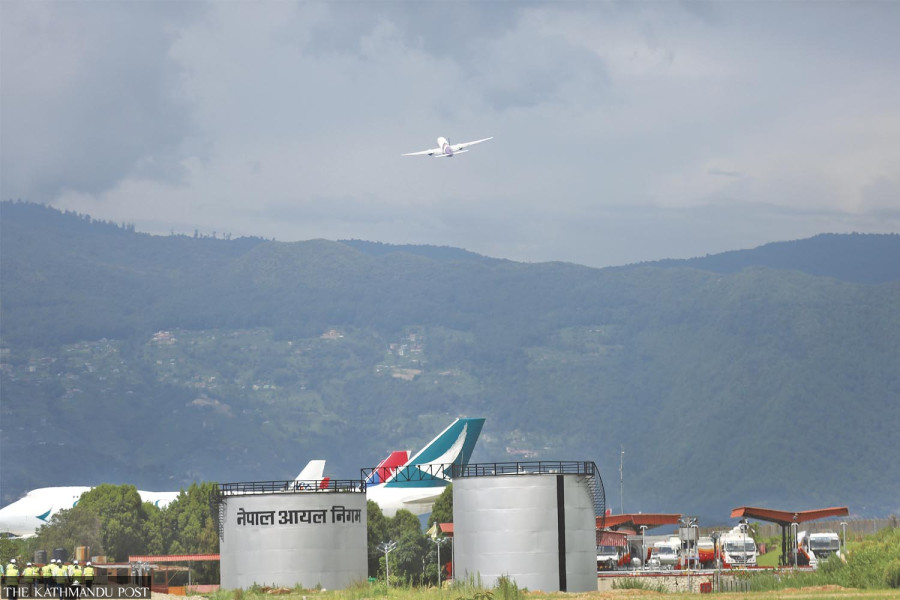
bookmark
Sangam Prasain
Published at : April 5, 2026
Updated at : April 5, 2026 06:38
Kathmandu
Yogendra Shakya, a prominent hotel entrepreneur, had to abruptly cancel a mid-April family trip to Hong Kong. The reason was simple: airfares had become prohibitively expensive.
“The airfare is so high. It terrorises everyone,” said Shakya, chairman of Ace Hotels, which operates Hotel Ambassador in Lazimpat and Club Himalaya in Nagarkot.
A one-way Kathmandu–Hong Kong ticket now costs around Rs190,000. “We have changed our plan and now intend to visit Jomsom instead,” he said.
Shakya’s case reflects a broader trend. Travel agencies say many prospective travellers—particularly those yet to book—are postponing or cancelling trips as prices surge.
The spike follows a sharp increase in aviation fuel prices.
On Wednesday, Nepal Oil Corporation raised aviation turbine fuel (ATF) rates to historic highs, citing soaring global energy costs triggered by the ongoing conflict in West Asia.
The price of ATF for international airlines surged 77.63 percent to $1,716 per kilolitre in Kathmandu, surpassing the previous record of $1,645 set in June 2022. For domestic carriers, fuel prices nearly doubled, jumping 97.63 percent to Rs251 a litre—well above the earlier peak of Rs190 per litre recorded in September 2022.
The ripple effects are being felt across the tourism sector.
“For inbound tourism, the situation has become even more difficult,” Shakya said. “We were expecting visitors from countries less affected by the West Asia tensions—Japan, Malaysia, China, India—but the fuel price hike has thrown everything into disarray.”
According to ticketing agents, travellers who had already purchased tickets for the peak tourism season remain largely unaffected. However, new bookings have slowed sharply as fares climb.
“Ticket prices have more than doubled since Friday,” said Sangam Lama, ticketing executive at Osho World Travel Nepal.
The cheapest one-way ticket from New York to Kathmandu now costs Rs167,000, up from Rs100,000 in February. Kathmandu–Dubai fares have jumped to Rs78,000 from Rs35,000.
Flights to Sydney now cost around Rs190,000, compared to Rs80,000 previously, while fares to Japan have risen to Rs130,000 from Rs80,000.
The steepest increase has been seen on the Bangkok route, where tickets have surged to Rs105,000 from Rs35,000. Flights between Kathmandu and Kuala Lumpur are sold out, with one-way fares reaching Rs170,000, up from Rs40,000 in February—a rise that disproportionately affects Nepali migrant workers.
Not all routes have seen dramatic increases. Fares on the Kathmandu–Delhi sector remain relatively stable at around Rs18,000, compared to Rs15,000 earlier. Similarly, tickets to South Korea hover at Rs87,000, up modestly from Rs70,000.
“We haven’t yet seen significant cancellations since the fuel price hike,” Lama said. “But the real impact is likely to emerge in the coming weeks.”
Tourism entrepreneurs warn that rising airfares are undermining Nepal’s appeal at a critical time.
“Globally, tourists are looking for safe destinations and avoiding West Asia, which should benefit Nepal,” Shakya said. “But airfare has now become the primary factor forcing them to cancel or postpone trips. The situation is alarming.”
The fallout is already visible in tourism data.
Nepal’s tourism season had started strongly. Arrivals grew 15.5 percent in January despite it being an off-season month, followed by an 8.8 percent year-on-year increase in February. Encouraged by political stability and strong bookings, operators had expected arrivals to grow by over 20 percent in March—the start of the peak trekking and expedition season.
Instead, arrivals fell.
March recorded a 1 percent year-on-year decline, with 120,516 visitors entering the country, according to official data.
The downturn coincides with escalating geopolitical tensions. On February 28, the United States and Israel launched aerial attacks on Iran, disrupting air routes through West Asia—a key transit corridor linking Asia with Europe and North America.
According to the Civil Aviation Authority of Nepal, nearly 400 flights from major transit hubs in the United Arab Emirates and Qatar have been cancelled over the past month, severely affecting connectivity.
“We did not expect cancellations at this scale for April,” said Thaneshwor Guragain, manager at Seven Summit Treks, Nepal’s largest expedition agency. “Cancellations, particularly among trekkers, have reached alarming levels.”
He said nearly 60 percent of trekking bookings for April have been cancelled. “This is huge,” he added.
Tourism remains a cornerstone of Nepal’s economy, contributing about 7 percent to gross domestic product. In 2023, the sector generated around $2.5 billion and supported over 1.19 million jobs, accounting for 15.2 percent of total employment, according to the World Bank.
The latest disruption comes just as the industry was recovering from the Covid-19 pandemic and the impact of last year’s protests.
Data from the Nepal Tourism Board show sharp declines in visitors from Europe, West Asia, Africa and the Americas in March. Only South Asia and Oceania recorded growth.
March to May marks Nepal’s peak tourism season, when favourable weather draws trekkers and climbers to the Himalayas.
Tourism is a vital economic pillar for thousands of people residing on the slopes of the Himalayas, acting as a primary source of income and livelihood in regions where agriculture is difficult and seasonal. At this time of year, the seasonal adventure tourism activities provide critical income to thousands, including porters, guides, cooks, and lodge operators.
Yet the season has begun with negative growth, defying expectations of a strong rebound.
Arrivals from India have provided some relief, rising 20 percent to 25,728 in March and helping cushion the overall decline.
Air connectivity has been significantly disrupted since March 1, when flights from the UAE and Qatar—key transit hubs accounting for roughly a quarter of international flights to Kathmandu—were suspended.
Although some travellers have rerouted through alternative hubs such as Thailand, Singapore and India, operators say the shift has not been enough to offset losses.
Guragain said that April bookings remain weak, though high-altitude climbers—especially those targeting peaks above 8,000 metres—have largely stayed on schedule.
The Everest climbing season begins in early April, with summit attempts typically starting in mid-May. As of April 3, the Department of Tourism had issued 70 climbing permits, including 33 for Mount Everest.
“If the war does not stop, the damage to Nepal’s tourism will be severe,” Guragain said. “A wide range of sectors—from guides and hotels to airlines, restaurants and helicopter operators—depend on tourism revenue.”
Deepak Raj Joshi, chief executive officer of the Nepal Tourism Board, struck a cautious note.
“Despite global conflicts and disruptions, arrival figures are not discouraging,” he said. “While arrivals from Europe and America have declined, increased numbers from neighbouring countries, particularly India, are a positive sign.”
Joshi said the board is focusing on promoting Nepal in nearby markets while preparing for further uncertainty.
“The situation does not warrant panic, but neither can we afford complacency,” he said. “The evolving crisis in West Asia could impact global tourism in the coming days, and we are adopting a balanced strategy, including expanding into alternative markets.”
Sangam Prasain
Sangam Prasain is Business Editor at The Kathmandu Post, covering tourism, agriculture, mountaineering, aviation, infrastructure and other economic affairs. He joined The Kathmandu Post in October 2009.


Most Read from Money
Nepal travel agents threaten to stop selling Thailand trips over visa rules

Explained: Why does an hour long flight to Dhangadhi cost more than a flight to New Delhi?
Malaysia rejects Nepal’s demand to open recruitment to all manpower agencies

No school, but a graduation cap for women dairy farmers
Nepal arrests four medical service providers as Malaysia recruitment row deepens
Editor's Picks

Dashain paints the country in festive colours
Buying a goat for Dashain? Look for the green mark
Explained: Why does an hour long flight to Dhangadhi cost more than a flight to New Delhi?

Bhotekoshi flood wasn’t a freak event. It’s the Himalaya doing what it does

How Tenzing Sherpa became Nepal’s breakout star at the Asian Games
E-PAPER | October 17, 2026

×