We are setting the pace for good governance, not just following the centre’s lead
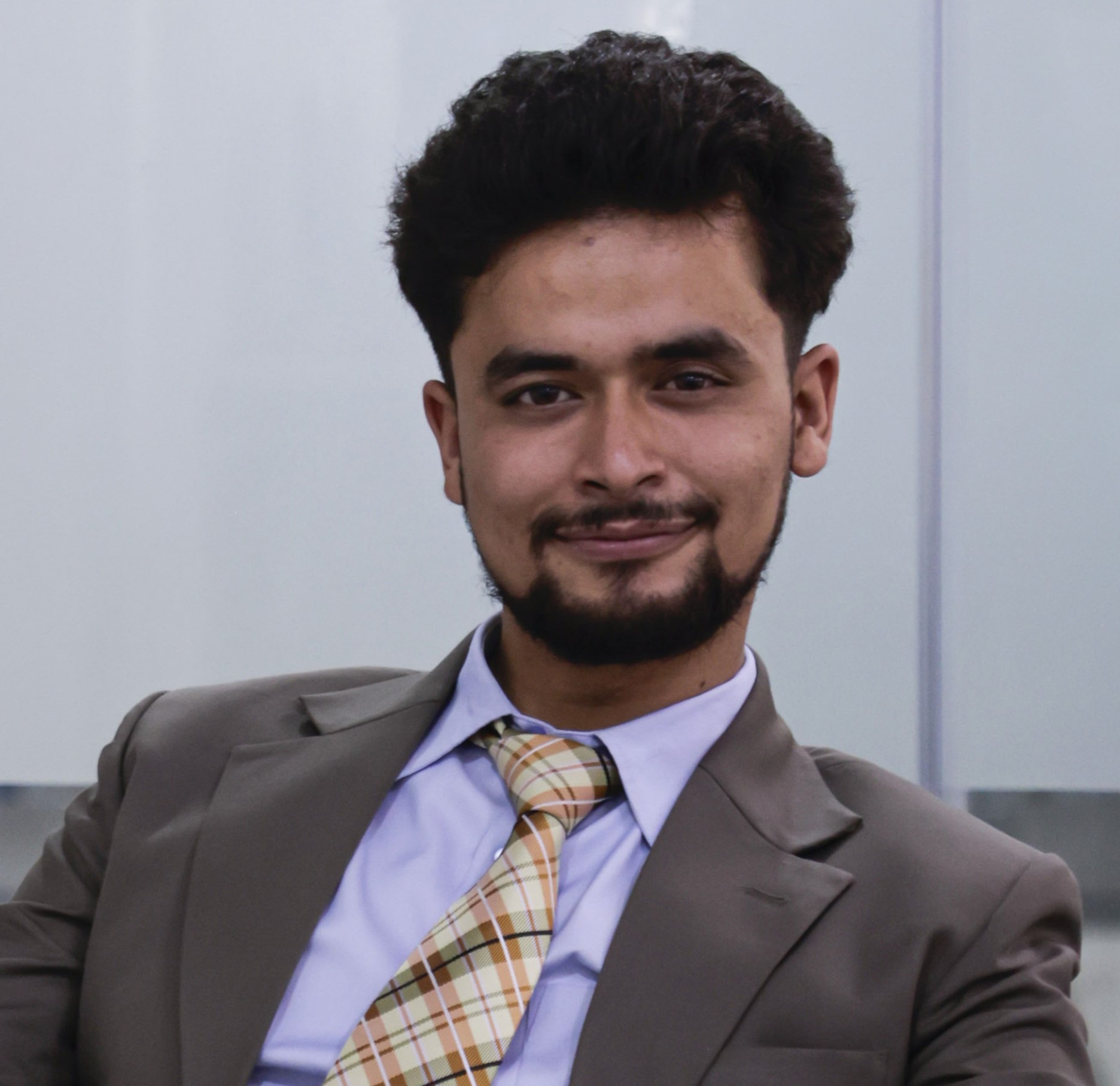
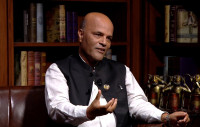
Provinces are prepared to advocate for their constitutional rights. People need services now, not when the centre finally gets around to it. Surendra Raj Pandey, Chief Minister of Gandaki Province Courtesy of CM Pandey's secretariat
Since the inception of federalism in Nepal, the provincial tier of government has faced constant criticism for being a redundant layer that merely increases government expenditure. The Rastriya Swatantra Party, which now commands a near two-thirds majority in the House of Representatives, had previously proposed to introduce an alternative model where provinces exist but function without provincial legislatures to reduce administrative costs. The Balen Shah-led government has rejuvenated hope with a recent meeting with the Chief Ministers of all seven provinces and his speech in Dhanusha during his election campaign trail.
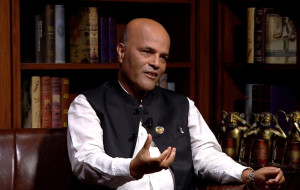
The Post’s Biken K Dawadi interviewed Chief Minister of Gandaki Province Surendra Raj Pandey at a pivotal moment for Nepal’s experiment with federalism. As the province embarks on its Second Five-Year Plan, Pandey sits at the intersection of local aspiration and federal constraint. Against the backdrop of a shifting political landscape and a national debate on the utility of the provincial tier, Pandey explores the vision for a self-reliant Gandaki.
How do you justify the existence of the provincial tier of government?
Scepticism is often the product of distance, and those who criticise the provincial tier are usually looking at it from the comfort of urban centres. If you venture into the rural heartlands of Gandaki, you will find that the work of the provincial government is actually the most felt by the general population. We are not a redundant layer. Rather, we are the tier that connects the mandates of the centre with the needs of the people. The irony of the ‘expensive’ argument is found in the actual data from the Office of the Auditor General. For the past two fiscal years, the federal government has stubbornly retained approximately 76 percent to 78 percent of the total budget, while provinces are forced to survive on a paltry 5 to 7 percent.
We are delivering results that matter to the daily lives of citizens while operating on a fraction of the national resources. We are currently transitioning from a nascent, struggling setup into a fully functional, self-reliant, and accountable tier of governance through our Second Five-Year Plan (2024/025–2028/029), which shifts our focus from subsistence to a production-oriented economic growth model. We are proving our indispensability not through constitutional rhetoric, but by creating a state that actually functions for its people.
The chief ministers of all seven provinces recently met Prime Minister Balen Shah. Do you believe this signifies a genuine shift away from the traditional Kathmandu-centric approach?
We reminded Prime Minister Shah during our three-hour meeting of the promise he made during his campaign trail in Dhanusha, where he explicitly stated that citizens should not have to reach the capital to demand their rights. Despite the whispers and political gossip suggesting the new central government might be anti-federalist, the prime minister appeared remarkably positive on strengthening provincial autonomy. He has given us a renewed sense of hope that the provinces will be empowered in the days to come. However, the shadow of the Kathmandu-centric approach is long. Fiscal decentralisation has shown almost no significant growth in the last two years, with the centre maintaining control over more than three-quarters of national resources. If the prime minister is serious about federalism, the first step is recognising that a strong centre cannot exist without strong provinces. We are looking for more than just positive words. We are looking for the structural devolution of power that the 2015 Constitution envisioned.
During that three-hour dialogue, what specific structural bottlenecks did you raise that are currently strangling Gandaki’s potential?
The most glaring policy knot is the Pokhara International Airport. Pokhara is the tourism capital of Nepal, yet we have an airport that has become a white elephant, seeing virtually no international flights despite being operational. I raised this urgently with the prime minister. We need a coordinated diplomatic approach with India to open up air routes and a move toward a public-private partnership for a revamped operation of the airport. Without international air traffic, we cannot capitalise on our status as a premier tourist destination.
Another knot is the agonisingly sluggish construction of the Daunne section of the Narayanghat-Butwal road project. Currently, people are forced to travel an extra 51 kilometres just to reach Butwal because of construction delays. These are not just provincial issues. Rather, they highlight the lack of coordination among government tiers. I urged the prime minister to move toward greater centre-province coordination to untie these knots so that Gandaki can actually breathe.
Administrative autonomy seems to be your Achilles’ heel. How can you claim to govern if the bureaucrats in your own ministries don’t feel answerable to you?
This is perhaps our greatest frustration. Currently, senior bureaucrats are dispatched from the centre to manage provincial affairs, but because their appointments and loyalties lie with the federal government, they often ignore the instructions forwarded by the provincial leadership. They simply do not feel accountable to us, which forces us to constantly coordinate with federal ministries just to get basic work done. The only definitive way out of this administrative paralysis is the passage of the Federal Civil Service Bill.
This legislation will pave the way for true provincial autonomy in civil service management, ensuring that employees are answerable to the government they serve. Prime Minister Shah has promised that this Act will be implemented within 45 days of our meeting. Until then, we are doing what we can by strengthening the Gandaki Province Training Academy (GPTA) to provide advanced management and service entry training for our own local-level employees, preparing them to flourish in a truly autonomous provincial administration.
Prime Minister Shah has set a goal of doubling the national economy. How can Gandaki contribute to such a massive target?
We are not content with being a dependent entity. Our roadmap to economic contribution is built on the pillars of tourism, hydroelectricity, and mineral excavation. Gandaki’s potential in these sectors is crucial for national growth, and we are moving away from a subsistence economy toward an export-and-production-oriented one. However, we must be realistic: These efforts cannot succeed through isolated provincial ownership alone.
Our ability to promote and strengthen these sectors is intrinsically linked to the policies built at the federal level. We can help implement the plans, but we cannot lead the national economy if the federal level does not provide an enabling policy environment. We are doing our part by targeting energy security through our ‘Bright Gandaki Province’ vision and modernising agriculture.
Good governance and anti-corruption are the buzzwords of the current federal government. What concrete steps has Gandaki taken to move beyond rhetoric and actually clean up its administration?
We have already moved from words to aggressive action. In the last year, we took the bold step of downsizing our administrative footprint, reducing the number of administrative offices from 32 to 19. We are also planning to build integrated offices where multiple services are administered through a single window. This shift alone has directly reduced the footprint of middlemen who often facilitate corruption, and it has saved an estimated Rs500 million in taxpayer money while actually fast-tracking service delivery.
We have proposed a further reduction of provincial ministries to a maximum of seven to ensure our governance is agile and financially self-reliant. Furthermore, we are mandating that all civil employees integrate technology into their service delivery to enhance efficiency and public accountability. We aren’t just following the federal lead on good governance; in many ways, we are setting the pace.
Digital transformation is often discussed but rarely implemented effectively. How is Gandaki using technology to bridge the gap between the government and the governed?
Digitalisation is a cornerstone of my administration. We are implementing e-governance through the Government Integrated Office Management System (GIOMS) to modernise our entire administrative framework. To ensure transparency and direct accountability, we have implemented the ‘Hello CM’ grievance handling system, which allows citizens to report issues directly to the provincial leadership. We are also deploying dedicated IT officers across our subnational government to support digital education and online monitoring. This is about creating a transparent digital trail that makes corruption harder and service delivery faster. We are even extending this to the private sector by supporting the digitalisation of businesses led by women entrepreneurs.
The ‘Kathmandu Model’ of free education and healthcare is a popular talking point for the prime minister. Is this feasible for Gandaki?
To be blunt: No, it is not currently feasible under the existing budget constraints. We must look at the structural reality of education and health administration in Nepal. Local units have jurisdiction over primary education, the province over secondary education, and the federal government controls the universities. When we are receiving such a small portion of the national budget, running comprehensive free education and health programs is easier said than done. While we can—and will—initiate such programs on a smaller, targeted scale, the provincial government simply does not have the resources to replicate the ‘Kathmandu Model’ across the board without a fundamental change in how national wealth is distributed.
Despite those constraints, you’ve pledged 10 percent of your budget to health. What is the logic behind trying to become a ‘National Medical Hub’?
We are thinking strategically about the future of our economy. By allocating 10 percent of our provincial budget to the health sector, we aim to develop Gandaki into a national medical hub. This effort encompasses “health tourism” and creates lucrative local opportunities for our specialist doctors and nurses so they don’t feel forced to leave the country. If we can provide high-end medical services here in Gandaki, we will create a sustainable revenue stream and improve the quality of care for our own citizens simultaneously. It is an investment in both our people and our economic autonomy.
Every day, 2,300 Nepalis leave for foreign employment. What hope can you offer to the youth who feel the provincial government has nothing for them?
The exodus of our youth is a national crisis that requires local solutions. We are focusing on creating a production-oriented economy that offers more than subsistence farming. We are prioritising women's entrepreneurship through financial and moral assistance, specifically supporting women-led businesses and homestays. By linking our natural heritage and lake conservation directly with income-generating activities, we are creating jobs that are rooted in our province’s unique identity. We are building a ‘Bright Gandaki’ where electricity and public services are reliable across all 11 districts, making it a place where young people can actually see a future.
Are you prepared to challenge federal laws if they continue to block these provincial revenue streams?
We are prepared to advocate for our constitutional rights. Sub-national governments cannot deliver development if they are denied full autonomy over their resources and bureaucracy. We are actively moving forward with our own laws to recognise these services because our citizens need services now, not when the centre finally gets around to it. The same applies to mineral excavation and the modernisation of agriculture; we are pushing for the complete constitutional rights that allow us to manage these sectors for the benefit of our province.
You come from the Nepali Congress, and the prime minister is from the Rastriya Swatantra Party. In a country defined by partisan friction, can you actually work together?
When you occupy a public-facing office of this magnitude, you must set aside party bias for the welfare of the country. During the election, I was a candidate for the Nepali Congress, but today I am the chief minister of the entire province, not just a provincial chapter of a party. Similarly, the prime minister must govern all of Nepal. We have a strong consensus on the need for development in Gandaki. Whether it is fixing the Narayanghat-Butwal road or revitalising the Pokhara airport, these are projects that transcend party lines. We are working together because the people of Gandaki care about results, not the colour of the party flag.
Finally, what is the one message you want to send to the federal government on the future of Gandaki?
My message is simple: Trust the provinces. The current fiscal reality, where the centre holds onto 78 percent of the budget and often transfers funds only in the final month of the fiscal year, is a recipe for inefficiency. We have shown that we can downsize, we can innovate with technology, and we can deliver services that rural populations actually feel. If the federal government truly wants strengthened federalism, it must stop treating the provinces as subordinates and start treating us as the essential partners we are. Gandaki is ready to lead, but we cannot run if the centre continues to hold the leash. Give us our administrative and fiscal rights, and we will show you what a self-reliant Nepal actually looks like.




 22.23°C Kathmandu