Q&A: Nepal wants a politics-free bureaucracy. Its methods are deeply political
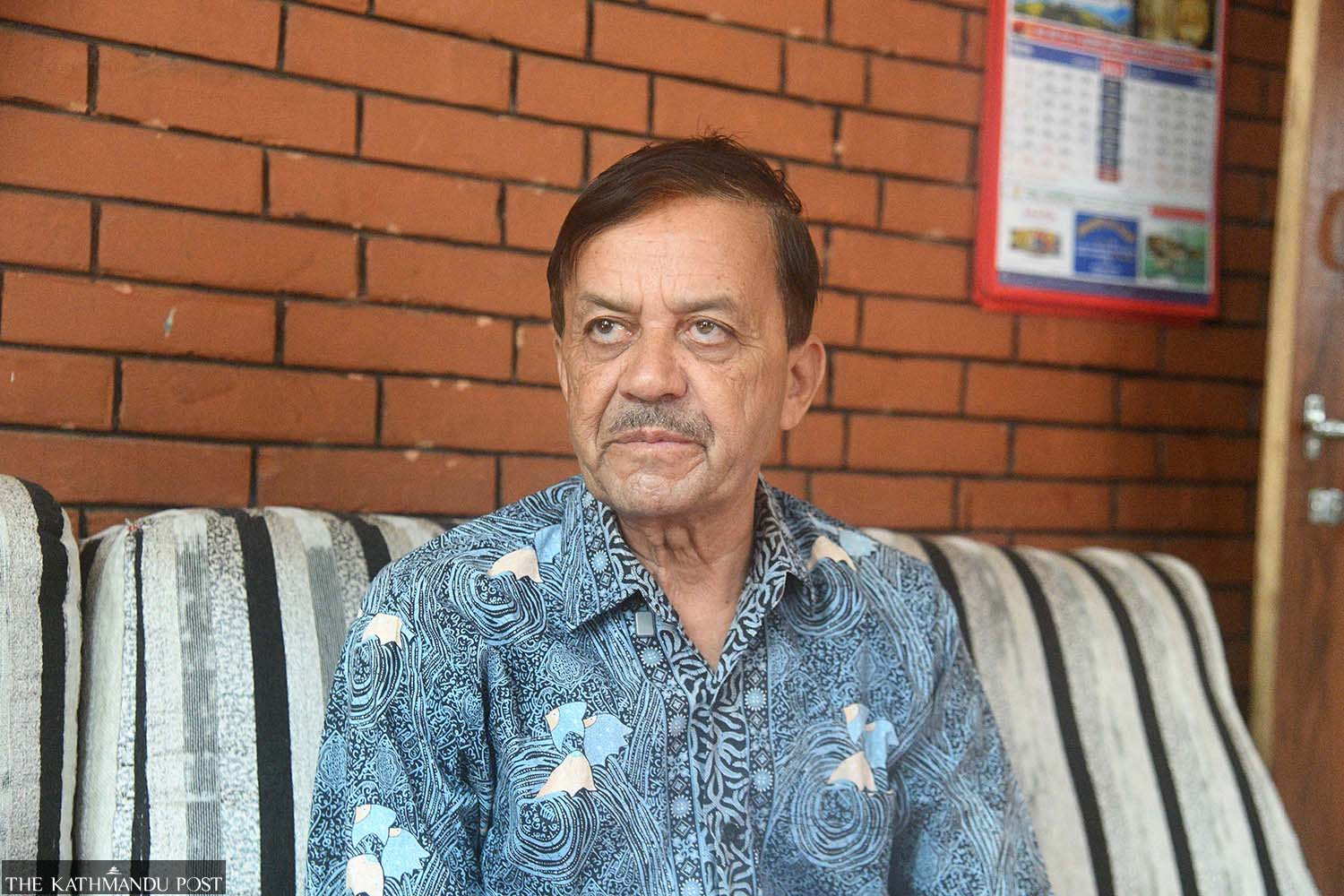
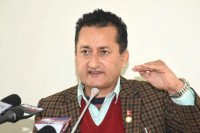
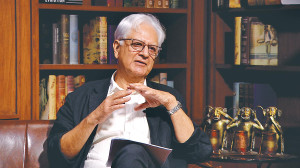
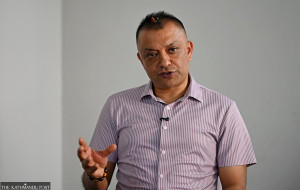
Umesh Mainali, who chaired the Public Service Commission, says the Balendra Shah government’s ordinance-driven purge is legally risky, institutionally damaging, and likely to backfire. Umesh Mainali, former Home Secretary Post Photo: Deepak KC
The Balendra Shah government’s recent set of ordinances has triggered a sweeping purge of political appointees across public institutions, raising questions about the independence, competence and morale of Nepal’s bureaucracy. The controversy surrounding the recommendation of a new Chief Justice has further intensified concerns over whether the state is moving toward a performance-based system or merely replacing one form of political patronage with another.
The Post’s Biken K Dawadi sat down with Umesh Mainali, former Home Secretary and former Public Service Commission chair, to discuss the risks of paralysing institutions if meritocratic systems are not strengthened, the pitfalls of politicised search committees, the erosion of institutional autonomy, and the incomplete federal transition in public administration. Mainali explains why bureaucratic morale has collapsed, how trade union politics has weakened the civil service, and why Nepal must resist turning its bureaucracy into a spoils system driven by partisan loyalty. Excerpts.
There has been quite a stir over the recommendation of the new Chief Justice, where a justice ranked fourth in seniority was recommended over those above them. How do you view this precedent, and what does it signal about the government’s intent?
The recommendation of a justice ranked fourth in seniority for the position of Chief Justice has naturally sparked controversy. In institutions like the Nepali Army and the Judiciary, seniority has traditionally been a sacrosanct principle. Adhering to it usually minimises controversy. However, the Judicial Council recommended six names—all those who met the three-year eligibility criteria—giving the government a wide range of choices. The prime minister has justified this choice based on ‘performance’ and the quality of case judgments.
If ‘performance’ is to be the primary metric, then the government must establish objective indicators for all appointments, not just select ones. Interestingly, the recommended individual is currently seen as someone without overt political exposure, unlike some higher-ranked peers who were former political appointees. However, we must be careful. I often use the analogy of a carpenter and a chair: Once a carpenter finishes making a chair, the chair no longer belongs to them; it belongs to the owner. Similarly, a justice or a bureaucrat must be accountable only to the ‘chair’ or the office they hold, not their past affiliations.
To determine if this appointment is truly impartial, we must look at closed impartiality—how those within the organisation, such as fellow justices and the Bar Association, react—and open impartiality—how the intellectual community and the public perceive it. Only when both align can we claim true fairness. While the prime minister argues this is a performance-based shift, breaking tradition without a clearly defined, the system invites scepticism.
The government also recently issued an ordinance that effectively removed approximately 1,600 officials from various public institutions. Does this ‘clean sweep’ method risk paralysing essential public services?
This is a significant move. Historically, we see such clean sweeps during major changes in the political system, such as after the 1950 (2007 BS) revolution or the 1990 (2046 BS) movement. For instance, after 1950, Tanka Prasad Acharya led a screening committee to test the competency of Rana-era administrators. In 1990, the Girija Prasad Koirala government used various strategies, including a 30-year service limit and dismissal notices, resulting in the removal of thousands of employees.
However, the current situation is not a change of political system. It is only a change of government. While a government with a strong mandate might feel a ‘lack of rhythm’ with existing appointees, a wholesale removal via ordinance is risky. It risks removing highly competent individuals who were selected through rigorous merit testing.
For example, during my tenure at the PSC, we led search committees for positions like the Chairman of the Teacher Service Commission (TSC) and the Health Insurance Board using strict competency assessments. Labelling these as ‘political appointments’ is factually incorrect.
A ‘clean sweep’ can halt essential services. We already see the Teacher Service Commission’s interviews being stalled, affecting the recruitment of educators. In universities and authorities, acting heads cannot make major strategic decisions. If the government wanted a fresh start, it should have followed a proper legislative process or established a system where political appointees of a previous regime resigned voluntarily upon a change in government.
How can we bridge the gap between ‘political supporters’ and ‘professional experts’ to ensure that future appointments are not just rewards for party loyalty?
The government claims they want a ‘politics-free’ administration, but we must see if this is more than a political slogan. The solution lies in institutionalising the selection process. In 2012, under Baburam Bhattarai, the Public Enterprise Management Board (PEMB) was established, led by former Secretary Bimal Wagle. Because the selection committee was chaired by the PSC Chairman and included the Chief Secretary, the appointments were beyond reproach.
We need a similar permanent arrangement. If a search committee is formed within a ministry, it will inevitably be politicised. But if the PSC is involved, it brings a level of institutional trust. People accept a ‘fail’ result from the PSC because they believe in the integrity of the system. When a person is selected via meritocracy, they feel no obligation to a political party. Their morale is high because they know they earned the position.
Deepak KC/TKP
Is there a specific model or instance where you felt this system was being actively undermined by political interests?
I recall a specific instance during my tenure at the PSC. The PEMB was still operational, and its schedule included specific institutions where it recommended appointments. I received pressure from a minister regarding a certain appointment. When I refused to comply and insisted on the board’s independence, the government simply amended the regulations to remove those institutions from the board’s jurisdiction. They systematically ‘peeled away’ institutions like the Employees’ Provident Fund until the board’s authority was hollowed out. This illustrates how a good system can be dismantled when it becomes an obstacle to political patronage.
Senior bureaucrats today seem increasingly risk-averse, fearing legal or political backlash for any decision they make. How can we restore their morale?
Currently, bureaucratic morale is at an all-time low. Senior officials have become risk-averse because they are subjected to bureaucrat-bashing rather than being motivated. There is a famous quote from the BBC series Yes Minister: The Opposition is not the real opposition; they are just the government in exile. The Civil Service is the opposition in residence.
Nepali politicians often view the bureaucracy this way—as an internal enemy that prevents them from working. This lack of trust is a two-way street. Politicians must believe the bureaucracy will sincerely implement their policies, and bureaucrats must feel safe to provide neutral, expert advice without the fear of retaliatory transfers.
We need to move toward a ‘Public Passion’ model. This concept, pioneered in places like New Zealand, suggests that internal motivation comes from a good working environment and placing the right person in the right job, while external motivation comes from a clear system of rewards and punishments. Bureaucrats are not the rivals of politicians. They are the ‘drivers’ of the state’s vehicle. The minister decides the destination, but the bureaucrat ensures the vehicle is in a condition to get there.
There is frequent criticism regarding the role of political trade unions within the civil service. Is the complete abolition of these unions the only way to restore integrity?
I have always maintained that there should be no party-affiliated trade unions. Their interference in transfers, appointments and promotions has decimated the merit system. However, we cannot simply abolish unions altogether. Nepal is a democracy, and we are signatories to ILO Conventions 87 and 98, which guarantee the freedom of association and collective bargaining.
The solution is to have a single official union for non-gazetted staff to advocate for their professional rights, safety and benefits. We must separate unionism from party politics. If we engage in a blanket abolition, it will likely be challenged and overturned in court, leading to more chaos.
Regarding federalism, many provincial leaders complain that the bureaucracy remains centre-heavy and that deputed staff do not respect local leadership. Why hasn’t administrative federalism kept pace with political federalism?
The current practice of the central government sending staff to the local and provincial levels is unconstitutional. Both our top-level bureaucrats and political leaders remain fundamentally unitary in their mindset. Some even openly question why such a small country needs federalism.
According to Article 285 of the Constitution, all three tiers of government have the right to manage their own civil services. Yet, the proposed Federal Civil Service Bill still insists that Chief Secretaries and local Chief Administrative Officers be sent from the centre. This contradicts the spirit of federalism. In the United States or Switzerland, the centre does not send staff to run local governments. Even in India’s IAS system, officers are assigned to a specific state cadre. We have moved to federalism politically, but administratively, we are still operating under a unitary shadow.
We see many young bureaucrats leaving the service for opportunities abroad as soon as they can. Is this a lack of patriotism or a lack of opportunity?
It is both. This generation is more individualistic, but we must also admit that the state has failed to provide them with growth opportunities. When a young officer enters the service and sees that postings are based on power and sycophancy rather than merit, they become frustrated.
Patriotism is not something that exists in a vacuum. It must be nurtured by a state that respects its citizens’ talents. If you find yourself blocked at every step by a corrupt or stagnant system, the feeling of belonging to the country fades.
There is a debate about moving toward a directly elected executive to ensure stability. Would this strengthen or weaken the steel frame of the bureaucracy?
While a directly elected executive might offer stability, we must beware of the Paradox of Stability. Excessive stability without checks and balances can lead to authoritarianism, as seen with figures like Marcos or Mugabe. We would need strong safety valves, such as the power of parliament to impeach the executive.
Regarding the bureaucracy, there are three main schools of thought: the Executive Leadership School (where the winner fills the bureaucracy with their people, common in the US or France), the Neutral Competency School (merit-based, permanent government), and the Nomenklatura system (where party membership is a prerequisite for service, as in communist systems). Given Nepal’s current stage of development, we must stick to the merit-based neutral competency model. Any shift toward a spoils system in our context would lead to utter disaster.
The proposed Federal Civil Service Bill has faced criticism regarding lateral entry. Are you opposed to this for
senior positions?
I am concerned about the provision for lateral entry into senior executive and expert positions. If we allow senior positions to be filled this way without a very strict, transparent merit process, it will simply become a tool for political appointments.
The civil service must remain a career service. Instead of bypassing the system, we should focus on improving the standards of evaluation for those within it. Bureaucracy exists to resolve societal conflicts and deliver the services promised by politicians. If the institution is rendered powerless or faceless by constant political intrusion, it cannot function as the fourth branch of government.
Promotion based solely on seniority is often criticised for rewarding deadwood. How do we implement a performance-based system without making it subjective?
Moving away from seniority is necessary, as it is an outdated principle. However, creating objective indicators for performance is extremely difficult in the public sector. How do you measure the workload or tension of a Chief District Officer (CDO) in numbers? Often, we must use proxy indicators.
We should also use potentiality tests for higher positions. A brilliant science teacher might be an introverted researcher, but a school Principal needs to be an extroverted leader who can deal with parents and the community. We should adopt techniques like the 720-degree evaluation (where even service seekers have a say) and leadership assessments similar to the SELX (Senior Executive Selection) system in Canada.
Nepal’s bureaucrats are often accused of going on ‘foreign junkets’ that have no relevance to their ministries. How do we ensure international exposure actually benefits the state?
The problem lies in the selection process. Currently, the same people often go on every trip, regardless of the subject matter. We see officials from one ministry attending programs meant for another. There is a high level of discrimination in how these opportunities are distributed.
We need a system-led policy rather than an individual-led one. We must identify where the best expertise lies. For instance, if we want to learn about regional diplomacy or peace-brokering, we might look at how Pakistani diplomats are currently engaging in Middle East conflicts—a model we could learn from. But instead, we often just send delegations wherever an offer is made. The government must be more discerning about which institutions and countries offer truly exemplary models for us to follow.
You mentioned that the PSC’s integrity is high because people believe in the system. How do we replicate this trust across other government bodies?
The PSC is successful because its systems are robust enough that they cannot be easily sabotaged by an individual. Even if an official wants to add a brick of progress, they can, but they cannot easily dismantle the foundation. We must adopt this systemic resilience in other institutions. When a candidate fails a PSC exam, they don’t attack the institution. They acknowledge their own shortcomings because they trust the meritocracy. This trust is the most valuable asset in governance.
If you were tasked with restructuring Nepal’s bureaucracy from scratch to ensure ‘good governance’, what would be your top priorities?
First, I would focus on reorganising and modernising the structures. We have many unnecessary institutions, such as district-level Hospital Development Committees or Squatter Commissions, which often serve as tools for patronage rather than service. These need to be streamlined.
Second, I would make service delivery seamless. Seamless means reducing the layers of hierarchy so that a citizen's request is handled and finished at one or two levels. We should adopt a Three-Level Formula for decision-making.
Third, I would institutionalise Citizen Advisory Committees or Citizen Senates within every service-providing office. This would involve the service-seekers in the design and delivery of public services—a concept known as co-production. When the public is involved in evaluating the staff, the bureaucracy naturally becomes more accountable to the people rather than just their superiors.
The journey of reform is incomplete and continuous. Our bureaucracy is still trapped in an old culture, while our politics has moved to a federal democratic republic. We must teach our administrators the values of this new system and ensure that the drivers and the passengers of the state are finally moving in the same direction.




 15.26°C Kathmandu