Q&A: RSP breaks norms to deliver results, no intent of circumventing constitution
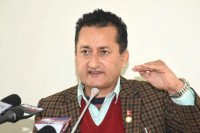
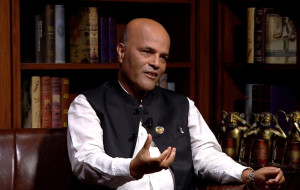
RSP Whip discusses the delicate balance between executive urgency and legislative oversight, the government’s approach to human rights and urban poverty, and the personal resolution to table a victim-centric Dalit rights bill by 2027. Prakash Chandra Pariyar, whip, Rastriya Swatantra Party Post Photo: Deepak KC
As the current Rastriya Swantantra Party (RSP) government, propelled by the Gen Z movement and alternative political forces, attempts to fast-track governance, it faces sharp scrutiny over its methods. Critics point to a flurry of executive ordinances, unusual judicial recommendations, and the aggressive use of bulldozers in urban areas as signs of overreach. Meanwhile, traditional structures continue to clash with new political philosophies.
In this interview with The Post’s Biken K Dawadi, whip of the ruling RSP, Prakash Chandra Pariyar addresses concerns of a dominant executive under Prime Minister Balendra Shah, details the party’s internal mechanics, and reflects on lessons learned from past alternative political movements. A former journalist built on the foundations of human rights and social justice, the lawmaker also opens up about the legislative crusade of replacing the ‘flimsy’ 2011 anti-discrimination act with a punitive, victim-centric law that ensures historical state apologies to the Dalit community are backed by budget and teeth. Excerpts.
Let’s start with some contemporary issues. How does the legislature ensure the balance of power when there are concerns about executive overreach, with the recent flurry of ordinances and the unusual recommendation for a new Chief Justice?
People might think the cabinet or the Prime Minister is becoming too dominant, but one must understand the style of this government. Prime Minister Balendra Shah wants to ‘talk in centimetres but work in kilometres’. Previously, it was the opposite. I noticed even as Mayor, he focused on his jurisdiction and what he could achieve without being dominated by traditional party structures. The PM respects democracy and is working to replace the vicious cycle of previous governments with visible results. Regarding ordinances, if the Constitution allows them, he utilises that provision to ensure work doesn’t stop. The government might break traditional norms to deliver results—a breaking of the cycle—but it does not commit constitutional erosion. Sending a letter or another minister to answer questions directed at the PM is more about practice than rules. Because we have the strength of 182 members, we allow the government to work with urgency while we in parliament handle matters with deliberation.
Regarding the management of squatters and the use of bulldozers, how do you personally view the human rights concerns raised?
This is a question of humanity, social justice and human dignity, which have no boundaries. Take the example of how we initially embraced Rohingya refugees based on the grounds of humanity, even before looking at national or international laws—those legal questions come later. Regarding the issue of squatters, unmanaged settlements, and urban poverty, the RSP is observing this closely and giving it high priority. As a lawmaker built on the triangular foundation of human rights, social justice and journalism, I am even more sensitive to this. I have been providing constructive warnings through national media, social media, and within the parliament and government. My stance is that this is a sensitive human issue where we must aim for maximum achievement with minimum loss. We must listen to the grievances of those affected and the opposition.
Regarding unmanaged settlements, the squatter problem, and the protection and management of encroached land, the government has acted for long-term positive results for the very benefit of those currently labelled as victims. Once the final results are visible, it will be genuinely welcomed; the inability to maintain certain humane behaviours in the process is the byproduct of compelling circumstances.
It is the responsibility of the RSP and the government to ensure we don’t just fall into the psychology of only criticising the government. Traditionally, there is a fear that the state only listens to the elite and power brokers rather than the oppressed who are outside the mainstream. We are practising politics in a background where the ‘rule of mob’ often supersedes the ‘rule of law’, and power precedes policy. This government is trying to break that cycle by remaining a voice for the voiceless and taking action against irregularities while following proper methods.
How are you ensuring that individual controversies involving party leaders do not overshadow the party’s work?
We prioritise the supremacy of the parliament and the people’s representatives. Even though we are the ruling party, the Speaker is not a secretary of our party. He belongs to the House to ensure the opposition gets their due time. We are maintaining a triangular balance between the party, the parliament and the government. Sometimes the party might try to dominate, or the government might try to dominate, but we work to balance them and separate the individual from the organisation when necessary. The PM does not interfere in the party, and the Party chair does not interfere in the government, though they coordinate closely. Meanwhile, neither of them nor the party as an organisation meddles with the individual controversy of the MPs.
We often hear about a possible rift between the PM and the party chair. What lessons have you brought from the fractures in the Bibeksheel movement to ensure stability within the RSP?
First, let me clarify that the PM and the party chair are in great sync with each other. My decade in alternative politics has taught me that continuity and honest effort refine a person. Success shouldn’t bring arrogance. You must continue raising the people’s voice, whether you are in power or on the streets. This electoral revolution occurred, and trust was placed in us, on the foundation of a decade-long journey of alternative politics and under the profound impact of the Gen Z uprising.
I’ve learned to be wary of ‘fast-food style’ politics where people seek quick political gains and get disappointed if they don’t get them. Another lesson is to avoid the trap of just wanting to be viral without doing the work. In a party system, many people work quietly behind the scenes, and this should be respected. You must respond to the smallest concerns from the grassroots, maintain coordination, and keep the party, the country, and the community at the centre. This builds a maturity that allows you to stand firm without having to bow down or be someone's slave. The RSP is built on four pillars: meritocracy, inclusion, excellence and results.
Let’s change track to your role as a whip. How do you plan to ensure the regular attendance of 182 MPs and their active participation in committees?
The Whip’s role has moved beyond merely collecting votes or gathering MPs during a crisis. With a significant presence of 182 MPs, management is a complex task, but we are guided by the fact that these representatives were elected on the foundation of the Gen Z movement. We frequently remind our MPs that their role in parliament is not just a position but requires a high level of accountability and responsibility towards the nation, especially in lawmaking. They are leaders, but for these five years, their careers are supported by the taxes paid by the Nepali people, from small grocery store owners to large taxpayers. While we view politics as a form of social service, we recognise that once we take our oath, the state invests billions in us, a sum that belongs to the people. We are encouraging our MPs to remain spontaneously accountable and result-oriented by reminding them of the spirit of this Gen Z movement and the vicious cycle of poverty and discrimination in Nepal. The Rastriya Swatantra Party’s office bearers are actively involved in this encouragement. We issue notices centred on national interests for even small matters to ensure that the old attitude of ‘it's always been this way’ does not take root in the new reality. We came here by questioning the past. We are aware that if we cannot perform and deliver results, tomorrow’s generation will hold us accountable.
Where do you draw the line between individual opinion and party unity regarding critical bills?
We are coordinating with the government, which wants to work on a fast track. There are many stages, including clause-wise discussions. Our primary duty for these five years is to make laws and pass bills. Our career for these five years is defined by the bills we produce. For those of us in parliament, our career is about creating new bills, amending old ones, and replacing others in coordination with stakeholders. When the government brings ordinances for speed, we are the ones who must eventually replace them within two months. We have representation from all seven provinces and various professional experts. We divide work based on the MPs’ interests, expertise and dedication. Because we are close to a two-thirds majority, our weight in parliament is high. We are treating committees as mini-parliaments to provide them with enough business so that the parliament’s work becomes easier.
How are you ensuring the opposition gets adequate time and democracy remains vibrant?
Parliament is the ‘Temple of Democracy’ and the supreme institution of the people’s representatives. I am someone who has a deep interest in the democratic republic, and I believe the spirit and concerns of the opposition must be assimilated. A democratic republic can advance development, prosperity and social justice. When we talk about prosperity, it must be equitable prosperity. We must balance inclusivity, proportional representation and the rights of the opposition. While parliament operates on processes and numbers, the first guiding principle is the Constitution, followed by the regulations. There is a separate Speaker and a General Secretary of the Parliament to ensure the principle of separation of powers. Our MPs are taught to support the government while also understanding how the opposition is preparing so they can counter them effectively. We conduct regular training and workshops. The RSP is the only party to have already conducted two such sessions for its MPs. We remind our MPs that their mandate is only for five years, and their work will get them re-elected. It’s not like passing a civil service exam. We even advocate for the ‘Right to Recall’. We want our MPs to be agenda raisers for marginalised groups in Karnali, Sudurpashchim and Madhesh. We tell them not to just praise the government, but to offer suggestions and remind the state when it drifts off track.
Where does the party stand on internal democracy and changing old procedures?
One of our major departures from traditional politics is our stance on trade unions. We do not have separate sister organisations for teachers, professors, lawyers, journalists, or engineers. We believe if you want to do journalism, do journalism; if you want to practice law, practice law. Using intellectuals as mere slaves for a party is something we have ended. We are also practising the ‘Right to Recall’ for our MPs and Ministers, and we are working on documenting and refining these procedures. We are a mass-based party, meaning we don’t have the burden of maintaining thousands of traditional cadres or 35-40 sister organisations. We operate through departments. We are always grateful to traditional leaders who contributed to the movements for social justice and the 2015 Constitution, but we are moving toward a phase of practical implementation. We have zero tolerance for corruption, untouchability, and violence against women, and the party is already moving into the action phase on these issues.
Belonging to the historically discriminated Dalit community, how do you view the lag in implementation of the government’s historical apology to the Dalit community?
In Nepal, the Dalit community is often called a minority, but in terms of numbers, we are a significant population of 6.3 million. It is only in policy-making and the national agenda that we are a minority. Historically, people were dehumanised, and their existence was denied based on religion and law. The reason behind the development and prosperity not fully progressing is that such a large population was marginalised and excluded from the journey of prosperity. Their skills and labour were devalued. It was only in 2011 that untouchability became legally punishable with the passage of the ‘Caste-based Discrimination and Untouchability (Offence and Punishment) Act. This establishes that discrimination is socially inferior, humanly hateful and legally punishable. The Caste-based Discrimination and Untouchability (Offence and Punishment) Act, 2011 is flimsy in terms of being victim-centric, fully punitive, and effectively implemented; its amendment is absolutely essential.
Before I was even elected, during the RSP’s primary election process, I presented a blueprint where I pledged to amend or replace the 2011 Act. The problem with the current law is that the relationship between the act, the lawyer, and the victim is weak. Although these are offences, the implementation is flimsy, leading people to think discrimination is just a minor social issue. But untouchability is violence. The RSP’s commitment paper made the state’s structural discrimination against Dalits its first point, demanding that the state acknowledge this and apologise. Following this, Prime Minister Balendra Shah included this as the fifth point in his 100 points for good governance, and the Party President has already apologised to the community from the parliamentary podium.
Can you elaborate on the context and necessity of tabling a new bill related to Dalit rights?
My resolve to table a new bill is born from the failure of existing legal frameworks to provide actual justice. For years, the Dalit community has demanded reform, but the results have not been outcome-oriented. The 2011 act has a weak connection between the law and the victim. Because it is a state-case offence, the victim often feels disconnected from the legal process, and the prosecution is frequently framed as ‘flimsy’, which allows perpetrators to escape serious consequences. We must redefine untouchability not just as a social ill, but as violence equivalent to other forms of severe assault. Within my five-year term, I have taken a personal resolution to either significantly amend or completely replace the 2011 Act to make it victim-centric and punitive. My specific focus is on the most marginalised sub-groups within the Dalit community, particularly in Madhesh—such as the Dom, Mushahar, Tatma, Paswan, Ram and Chamar communities. These groups suffer from a vicious cycle of extreme poverty and systemic exclusion that requires more than just slogans. They need meaningful representation in state structures and economic empowerment programmes. To achieve this, I am coordinating with other Dalit MPs within my party and even those on the opposition benches. If we can successfully table and pass a bill that truly protects victims and punishes offenders, it will serve as a historical footprint for my parliamentary career and for the RSP.
So, should we expect concrete programmes and funding in next year’s budget?
This isn’t a situation that can be solved in a single stroke. It requires state commitment, national resolve, and decade-long programmes. I spoke about this extensively when the Prime Minister called for suggestions, and he listened attentively. As a ruling party MP, it is my duty and dharma to provide constructive warnings to the government without any hesitation. We won votes by promising this work, and there must be a balance. Due to constitutional provisions, we must bring the first phase of the budget in two weeks. If we can touch upon the theoretical and ideological aspects this year, we must expect more comprehensive programmes by next year. Small, scattered programmes will not achieve empowerment. Minimising and ending discrimination requires national intervention. For example, the 2015 Constitution guaranteed scholarships for Dalits, but it took ten years to even start making the necessary laws for implementation. Without specific laws, even constitutional rights remain unpracticed. For the 2027-28 budget, if we don’t bring specific programmes and budgets, all our talk will be just hollow slogans. We need to see a specific bill, and I am pushing for that to happen by 2027-28 at the latest.
How do you reconcile a technology-driven, pragmatic ideology of the RSP with the framework of social justice?
This government was born from a decade of creative warnings and the Gen Z movement. It is a federation of people who have contributed significantly to national and international life. We are moving away from ‘extreme partisan-ism’ where even journalism awards or judicial appointments were divided among three traditional parties. Our minimum stance is a combination of social justice, proportional inclusion, and a democratic republic. I often say that in Nepal, we must practice the ‘5Ds’: democracy, development, diversity, dignity and the fifth is delivery. If we can take these five together while preserving our unique cultural tolerance, we can send a message to the world. We also believe in a social market economy and the expansion of the middle class to accelerate prosperity. Currently, 22 percent of Nepalis live under the poverty line, and a huge portion of that—nearly 4 million—are from the Dalit community who are trapped in a cycle of discrimination. Lifting them up is our number one priority.
What are your thoughts on the lack of full inclusion in the state bureaucracy?
Proportional inclusion is the spirit of the Constitution, but laws haven’t always been made to match that spirit. The Constitution was built on the foundation of movements for identity, language and inclusion. We must remain alert against those who try to reduce these achievements. Diversity is our wealth. Whether it’s the specific problems of Dalits in the mountains or the vicious life of Dalits in Madhesh, these cannot be solved with small efforts. We need a national resolve, specific programmes, and, most importantly, a budget. I see a low possibility of significant budget allocation in this immediate cycle because the ceilings were set early. But for the next budget, if we don’t bring specific programmes, all our talk will be just hollow slogans. This government has made ‘Good Governance’ its roof for now, but social justice must follow. We are in a difficult economic situation with debts and irregularities from the last decade. However, with a strong economist in the cabinet and our creative warnings, I believe we will set the right path. Sustainability cannot be achieved through development alone. It requires a balance with social justice and inclusion. Prosperity must be equitable, not just growth for the sake of growth.




 20.85°C Kathmandu