The best cultural platforms eventually outgrow their founders
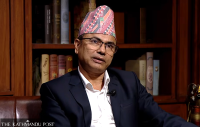
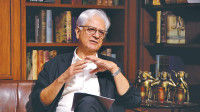
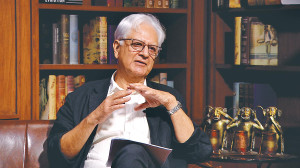
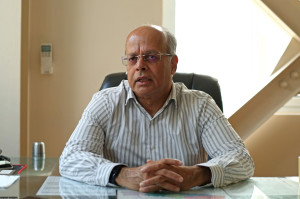
Kalinga Literary Festival founder Rashmi Ranjan Parida discusses literary autonomy, regional translation, and why cultural platforms must eventually belong to local communities.Photo: Courtesy of Kalinga Literary Festival
Cross-border cultural initiatives in South Asia have rarely been simple affairs. In a region tightly bound by shared histories but deeply fractured by contemporary geopolitics, artistic exchanges often carry the heavy baggage of diplomatic posturing. When the Kalinga Literary Festival (KLF)—fundamentally rooted in Odisha, India—established its footprint in Nepal, it was met with a familiar undercurrent of scepticism.
Yet, as the festival gears up for its latest iteration under the theme ‘Beyond Borders,’ its organisers argue that the initiative is designed to dismantle, rather than reinforce, these very hierarchies.
The Post’s Biken K Dawadi caught up with Rashmi Ranjan Parida, the founder and director of the Kalinga Literary Festival, to discuss the delicate politics of cross-border cultural co-creation, the push for direct regional translations, and why literature must remain rigorously independent from state power. Excerpts.
The theme for this year’s festival is ‘Beyond Borders’. Yet, the KLF remains fundamentally rooted in India. How do you ensure this isn’t just an exercise in Indian soft power?
KLF Kathmandu was never envisioned as a one-way projection of culture from India to Nepal. From its inception, we conceived it as a platform for mutual respect and equal literary conversation between traditions that, while historically connected, have always remained distinct and independent. We recognise that Kathmandu is not a peripheral location for us. It is rather a civilisational centre in its own right, possessing deep literary, philosophical and political roots.
The phrase ‘Beyond Borders’ is not an attempt to erase histories or identities. Instead, it is about creating a sanctuary where writers and scholars can meet outside the constraints of official state narratives. We approach Kathmandu with humility rather than entitlement, understanding that any cross-border initiative must respect Nepal’s proud and deeply rooted literary culture.
Independent literature requires distance from power. How do you maintain editorial autonomy when navigating the sponsorships and patronage necessary for such a large event?
We are acutely aware that literature loses its moral authority if it becomes a mere extension of power. While we collaborate with partners and sponsors, our curatorial decisions are never outsourced. Themes, authors, and moderators are chosen based on literary merit, regional relevance, and the need for meaningful public dialogue.
There is a firm line between support and control. Sponsors provide the platform, but they do not define its intellectual boundaries. In Kathmandu, this process is led by a local team that understands the specific nuances of Nepal’s literary landscape and its generational aspirations. We believe trust is only earned by rigorously protecting this curatorial freedom.
There is often a fear that local writers might be used as ‘window dressing’ for an international brand. How is the local literary community truly integrated?
This is a vital point. A festival in Kathmandu is meaningless if Nepali writers are relegated to the margins. They must—and they do—shape the very heart of the festival. KLF Kathmandu is managed and strengthened by a local team of writers, youth and organisers who are not just implementing a pre-packaged Indian format but are co-creating the platform from the ground up.
Nepal’s most impactful literature often exists in Nepali or indigenous languages. How do you prevent the festival from becoming an exclusive club for English-speaking elites?
We recognise that while English provides global visibility, it can also act as a tool for exclusion. We are committed to moving beyond the English-only circuit. Our agenda consciously includes sessions on Maithili literature, Nepali poetry and regional traditions.
We have already integrated these voices into our Bhubaneswar edition, hosting Nepali-language sessions and awarding Nepali writers there. In Kathmandu, we want to ensure that indigenous traditions and mountain cultures are at the forefront of the conversation.
Is there a more permanent strategy for bridging these gaps?
Yes, we believe the future of South Asian literature lies in institutionalising translation. One of our primary goals is to facilitate connections between the Sahitya Akademis of Nepal and India, as well as with institutions in Bhutan, Bangladesh and Sri Lanka. We want to see direct translation across regional languages—such as Nepali to Odia or Maithili to Sinhala—without always relying on Western literary circuits as intermediaries. This requires sustained publishing partnerships and literary exchanges, which we hope to help bridge.
South Asia is currently fraught with nationalism and censorship. How does a festival handle contentious topics like border disputes without sanitising the dialogue?
We cannot pretend that South Asia is an easy region. It is marked by memories of partition, migration and political conflict. While a festival must ensure that disagreement does not devolve into hostility, we refuse to sanitise difficult subjects. We believe that literature can open doors that formal politics often keeps bolted.
By approaching these themes through the lens of memory, biography and lived experience, we create a responsible public space. The Kathmandu agenda specifically engages with identity, marginal voices and social transformation. ‘Beyond Borders’ is an invitation to address these realities with both courage and sensitivity.
But isn’t there a risk of romanticising a ‘borderless South Asia’ while artists still struggle with very real visa regimes and physical barriers?
That is a very fair caution. We must be careful that ‘Beyond Borders’ does not become a slogan for privileged mobility. Many artists face systemic barriers, language hierarchies, and a lack of institutional support. While a literary festival cannot single-handedly dismantle visa regimes, it can humanise the people living across those borders. It provides visibility to the invisible and creates networks that help younger, lesser-known artists find publishers and audiences.
What do you see as the ultimate ‘endgame’ for KLF Kathmandu?
Our long-term vision is not control, but total co-creation. Success for us means KLF Kathmandu evolving into a fully homegrown, self-sustaining Nepali institution with strong global links. The best cultural platforms eventually outgrow their founders.
How does this fit into your broader regional strategy?
We see KLF Kathmandu as a crucial step in a larger regional journey that includes upcoming editions in Colombo, Thimphu and Bangkok. However, we do not carry a one-size-fits-all template. The spirit of the festival is shared, but the soul must remain local. In Kathmandu, this means honouring Nepal’s unique literary confidence and youthful energy.
Finally, how would you sum up the core mission of this collaboration?
At its heart, KLF Kathmandu is an invitation for South Asia to speak to itself. It is a space where poets, storytellers and dreamers can meet to address difficult histories with tenderness and dignity. We are not exporting an Indian festival to Nepal. We are co-creating a civilisational platform that places Nepal’s cultural leadership and indigenous languages at its very centre. It is about building a two-way bridge between the Himalayan imagination and the Jagannath tradition, and then expanding that imagination to the rest of the world.




 18.53°C Kathmandu