Q&A: You cannot expect the top of the world to be comfortable
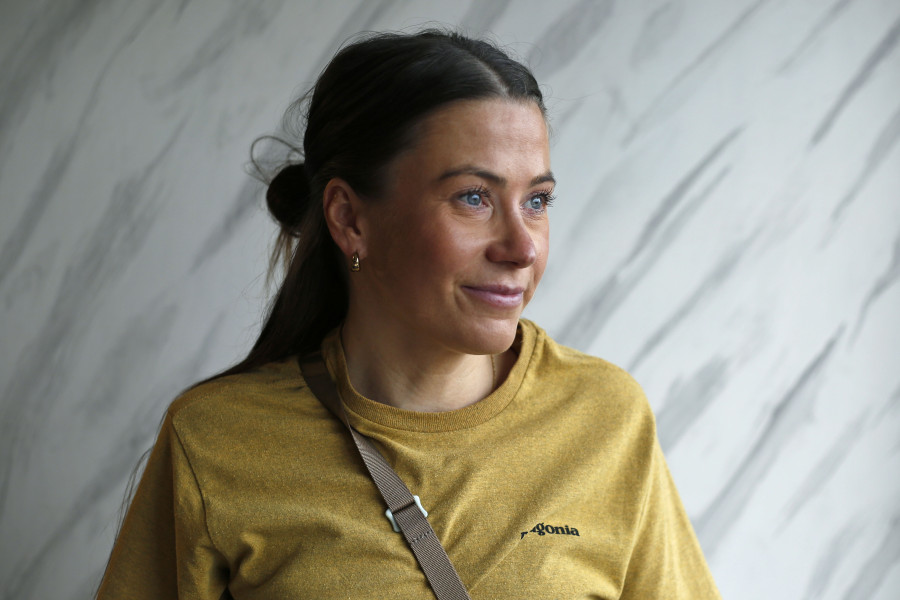
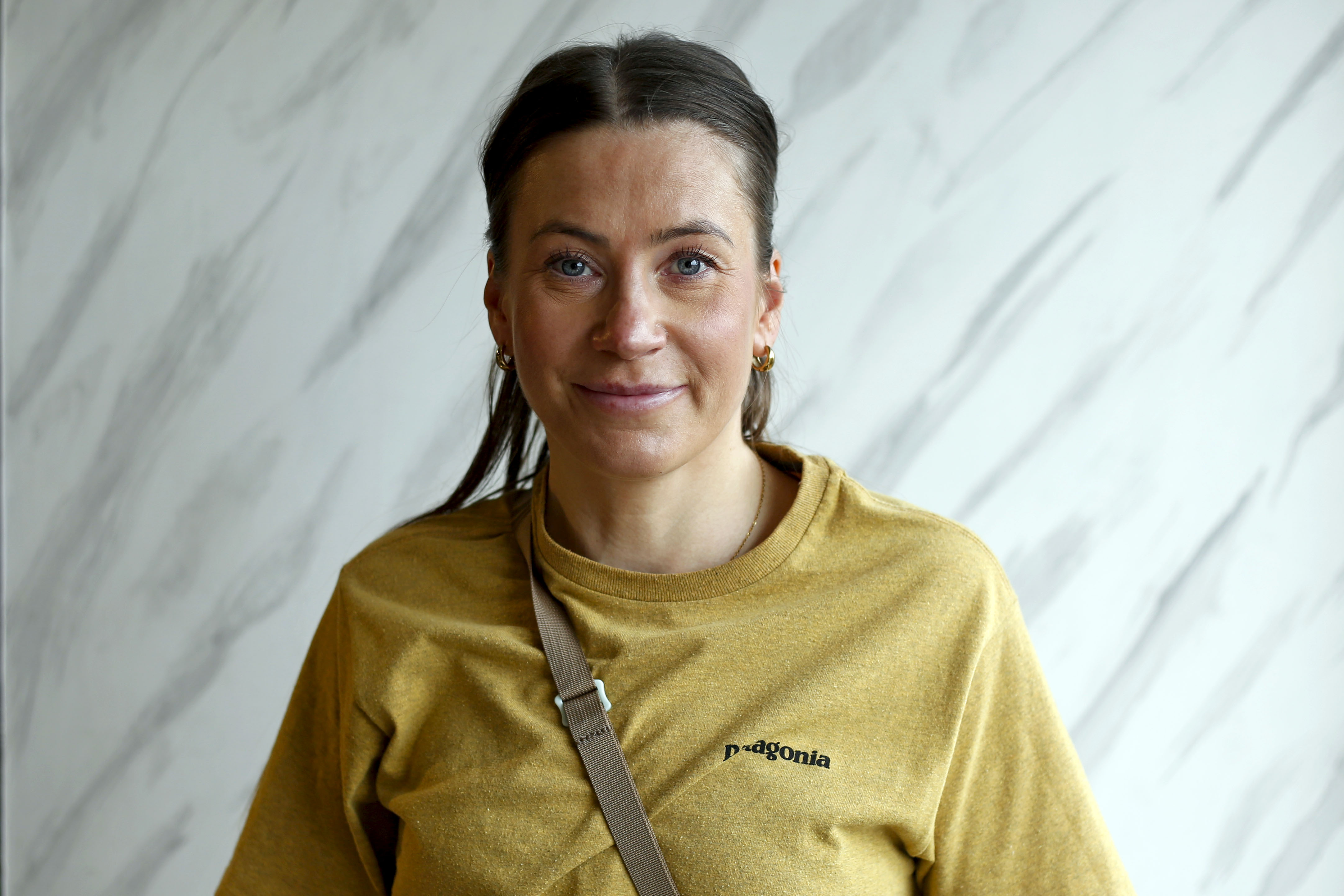
Norwegian mountaineer Kristin Harila, who summited all 14 of the world’s 8,000-meter peaks in a staggering 92 days, discusses her rapid rise to fame, the controversies that have followed her up the peaks, the urgent need to protect the Sherpa community, and why anyone eyeing Everest needs to be fundamentally prepared to suffer.Dipesh Darshandhari/TKP
In 2022-23, Norwegian mountaineer Kristin Harila set multiple speed records by climbing all 14 of the world’s 8,000-metre peaks in just 92 days alongside her late climbing partner Tenjen Lama Sherpa. Now Harila, who is 40, appears set to hang up her crampons. She has summited 8,000-metre peaks for 31 times over a relentless six-year stretch. This climbing season alone, she summited the ‘Himalayan triple crown’—Everest, Lhotse and Nuptse. The Post’s Biken K Dawadi and Suraj Kunwar sat down with Harila recently to discuss her steep rise, the heavy scrutiny she has faced, safety in the Sherpa community, and her transition away from elite mountaineering. The conversation has been lightly edited for length and clarity.
Let’s start with something very fundamental. What actually got you into climbing in the first place? Have you been climbing mountains in Norway?
No, I didn’t. I actually climbed my first high mountain, Kilimanjaro, in 2015. And then, after that experience, I eventually quit my job in 2019. And then, after quitting, I started to come here to Nepal. So, Kilimanjaro was a very high mountain for me at the time, but before that, I was mostly doing cross-country skiing. But you have to understand, we don’t have like real high mountains in Norway. We just have low mountains. So, yeah. Because of that, I was running more and more in the mountains back home to train.
How old were you exactly when you truly started out with this?
29.
What played a role in your becoming such a massive success in mountaineering in such an incredibly short period of time?
Well, like I said, I was doing a lot of cross-country skiing, and I was running extensively in the mountains back home. Because of that, I think I had pretty decent endurance to begin with. And I had climbed many mountains before coming to the Himalayas, but they were lower. So, I think that background was the main thing for me.
Everyone is so incredibly interested in the specific relationship between you and your former partner and climbing companion, Tenjen. So, how did you guys actually meet up for the very first time?
Well, I had heard about him before, and I met him briefly a couple of times through the company operations. Then, we climbed Manaslu first together in March of 2023. And then right after that, we went to Shishapangma and Cho Oyu, and we had a very good experience there together. And then, after experiencing that, we decided to climb all the remaining peaks together.
Although it’s been a very short career for you in professional high-altitude climbing, we’ve been hearing rumours that this is going to be your last time doing this. Is that actually true?
Yes. But it’s not like it’s been so short. I’ve been here every year, six years in a row now. And I have spent a lot of time in Nepal over the last six years, so it’s not so short a time anymore when you count the intensity. I have had 31 summits now on 8,000-metre peaks. So, of course, it’s a lot of summits, so I know now that it is over.
What made you hang up your crampons?
It’s mainly because I spend so much time away from home. And I want to spend more time at home. That is the reason. Yeah, but I would come back for trekking and to visit people, but not on long expeditions for a while.
I need a longer break now. It’s been a lot of mountains. When you spend such a long time away from your home, it takes a heavy toll on your body but also your relationships. I have my mother, my father, my brother and my sister. And my sister has two children. It is a normal family size in Norway. I want to spend time with my family, especially my sister’s children.
Dipesh Darshandhari/TKP
Critics accuse you of making these summits look easier by using a lot of heli-tech and setting up camps in places where others would generally not do so.
It is wrong information. Not all that the critics say is true. Many of them do not even understand high-altitude climbing. A lot of what they say is blatantly false information.
What kind of outlook do you have about the Sherpa community in general?
I think it’s safe to say there is too much risk for the Sherpas working on the mountains. The weather is brutal, and so is the terrain. I would love to see a change to reduce the risk and make the climbers more prepared. I have always advocated for low risks for Sherpas, as it is an issue close to me. We need to make the climbers more self-sufficient.
But if we make the climbers self-sufficient in mountaineering, don’t you think the jobs and livelihoods of the Sherpa community would be affected?
I think it would just be different in the future. The Sherpa community will be there, but they will be taking a lot less risk.
Do you think that overcrowding in Everest is a major problem?
I think it has a lot ot do with the climbing window for Everest. There is a rather narrow window for the Everest ascent. Normally, the expedition companies are pretty good at spreading out people. But I think there should be some kind of regulations for climbers coming, so the climbers that come have enough experience to go to Everest.
Making the climb easier and allowing a lot of new technology will attract many people. It’s the highest mountain in the world, so it will always be special. It will always be an objective for many people to come there. I think we just need to make sure that the people who get the permit to climb are prepared enough to do so.
Have you kind of felt the effect of climate change on the mountains in the last six years?
Yes, we can see changes. Especially at the Khumbu icefall. It’s different. It’s changing a lot. To see the icefall look very different is like the main thing we see. But of course, we see in general that the snow in the Himalayas is melting gradually, failing to recover the ice cover.But even when much of the ice melts, people will still continue to come here.
You’re rather optimistic.
I think people will always be attracted to the big mountains. The more they see the mountains on social media, the more people will be aware of the beautiful mountains and want to come. And I think that’s why we see every year the number of climbers is increasing. I think we will continue to see that. But I hope we can have some restrictions or a requirement for climbers.
Let’s change track to your record. You summited the 14 peaks above 8000 metres in the shortest time. At what point did you think, “I am going to summit the 14 peaks in the shortest time ever”?
I climbed Everest and Lhotse in 2021, and then I decided I wanted to try to take the record after doing that.
After just two peaks?
Yes. And it wasn’t about names at all. I just wanted to show that women can also take records and that we can also do it the same way as men can do it. So, that was the main reason for trying to take the record.
What is your message to the women who want to go out there and try new things?
Just go out and climb and try everything you want to. You can do it all.
Which one was the most difficult peak for you?
It’s hard to say. It always depends on the weather and conditions. And I have 31 summits on 8,000 metres mountains. Manaslu in 2022 was one of the hardest, and in 2023, K2 was one of the hardest. And it always depends on the weather.
What were you doing prior to climbing?
I was a leader in a big company. I had like 900 people working for me. It was a well-paid job. And I just needed to do something else, so I quit.
So it was not about money?
No, absolutely not. It’s not about money.
You summited the Himalayan triple crown—Everest, Lhotse and Nuptse—this season. What got you interested in them?
Well, I climbed Everest and Lhotse three times before. But Nuptse was always on my mind since the first time I saw it. It’s been like a dream to climb. It looks very, very steep and impossible to climb. So, I just wanted to climb to the top.
Was it some kind of an ode to your longtime climbing partner, Tenjen?
Yeah, he is always with me when I am higher up in the mountains, and I feel that we are getting closer to him when we are up there. When we climbed, we were focused on the 14 peaks, and then I thought I was finished already. But then I wanted to try Everest without oxygen, and I tried last year. I also wanted to go to Nuptse last year, but I didn’t have any chance to go. I’m very happy that it was possible to try it now.
You have a foundation in the name of your former climbing partner. So, what kind of stuff are you doing through the foundation?
The main thing is to make it safer in the mountains for the people working there. I think there are two parts to that: One part is that we need to make sure that the climbers are more prepared. Two, we need to make sure that it’s good conditions for working for the people in the mountains. We need to make sure that they have the right equipment, training and salary. So, it’s a two-way thing. I think the part with the climbers is really important because we see too many climbers coming not prepared enough, and that puts a huge risk on the people working there.
Where did you establish the foundation’s office?
In Norway. Not one in Nepal now, but maybe later. Let’s see.
There is a controversy surrounding your ascent of K2. There have been reports that you stepped on a dying porter’s body. Can you clarify?
What happened out there on K2 wasn’t controversial at all in reality. He fell, and we tried to rescue him for hours. That was what actually happened. And people were spreading false information even though they knew it was wrong. So, that’s the reason it became controversial that I supposedly went over a dying porter without helping just to take the record. That was the controversial part, but that wasn’t the truth. It didn’t happen.
I was there for one and a half hours, and the reports say that. The report didn’t say that it was something that we did wrong, something controversial. The report said that we tried to save him and that he shouldn’t have been there. So, it’s a misunderstanding too.
What kind of preparations do you think a climber going to summit Everest needs to have in their mind?
I think they have to be willing to suffer. I think that’s the main thing. You have to be prepared that it’s going to be very challenging and very hard, and you have to be comfortable with that. So, a very important thing.You cannot expect the top of the world to be comfortable.
What kind of nutrition and ideas do you send to the people who want to climb Everest?
Climb many mountains before and be prepared. If you have climbed many mountains before, you get experience with your stomach and what you need. And so, I think the good thing is that if you climb many mountains before, you will get some kind of experience with what you can have and what you cannot have, and how much you need, and yeah. So, getting the experience is the main thing.
Do you think it would ever be possible that mountaineers coming from abroad would be able to summit the peaks without any Sherpas at all?
I think it’s their job, and they do an amazing job. I think we should use their knowledge about the mountains. So, I think it’s good to partner up with Sherpas and be a good team together. It’s very important to be safe.
Even if you have drones and robotics and whatnot?
Yeah, it would never replace the thing about being together, because it’s not just about carrying. But it’s about discussing things together and being there for each other if something happens. There is a reason why we say ‘climbing partner’. We should have a climbing partner to share ups and downs, and the struggles and the happiness.
Besides mountaineering, what other aspects of Nepal attract you to come here?
I’ll continue to come here. I have Tenjen’s family here. So, I will come and visit them and see all the friends that I have here. And I will probably do trekking also, but it’s different to go for three weeks and to go for nine weeks.
What part of Nepal besides the outdoors attracts you to Nepal?
The people, of course. They are very welcoming of visitors. I like the culture, and it’s very similar to the culture where I come from. I love to be here.
What is your favourite food from Nepal?
Pizza from Fire and Ice pizzeria.
What about a Nepali dish?
Yeah, you know, in the mountains we eat dal bhat. I would have to go with that.
Suraj Kunwar is a reporter with over two decades experience covering Aviation, Tourism and Mountaineering. He received the IFJ Tolerance Award in 2005.




 24.12°C Kathmandu