Q&A: Why abolishing provincial assemblies isn’t as simple as RSP thinks
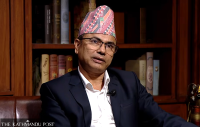
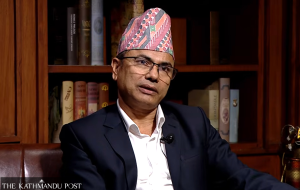
Constitutional expert Purna Man Shakya weighs in on the legal and democratic implications of the RSP’s sweeping proposed constitutional reforms. Purna Man Shakya, one of Nepal’s leading constitutional experts Photo: Deepak KC
As the Rastriya Swatantra Party continues to challenge Nepal’s established political order, its aggressive push for sweeping constitutional amendments has triggered a national debate. From advocating for a directly elected executive to proposing the outright abolition of provincial assemblies, the young party’s vision promises rapid efficiency but raises profound questions about the future of the country’s federal structure. Critics argue these proposals ignore the rigid legal safeguards of the 2015 constitution, while proponents see them as the only way out of chronic political instability.
With the next cycle of elections looming in 2027, the RSP finds itself at a critical juncture, balancing its anti-establishment rhetoric against the practical realities of governance. To make sense of these proposed structural shifts, The Post’s Biken K Dawadi recently sat down with Purna Man Shakya, one of Nepal’s leading constitutional experts. In this interview, Shakya dissects why scrapping the provincial tier is constitutionally near-impossible, the ethical contradiction the RSP faces as it prepares to contest an election for assemblies it wishes to destroy, the mechanics of a directly elected executive, empowerment of High Courts to decongest the Supreme Court and the risk of the RSP becoming the very authoritarian entity it fights against if it discourages internal competition.
What is your take on the RSP’s proposal to scrap provincial assemblies?
It is quite immature to be making such declarations at this stage. The RSP has only been in power at the central level for a few months, and they have yet to experience working within the actual framework of provincial governance. Without that hands-on experience, it is far too early for them to pass a definitive verdict on whether these assemblies are necessary or not. Beyond the lack of experience, their proposal overlooks a massive practical hurdle: The constitution itself makes it nearly impossible to abolish the provinces without the consent of the provinces themselves. I do not see a scenario where any province would willingly agree to eliminate its own constitutional setup.
Furthermore, we have local elections approaching in 2027. If the RSP cannot amend the constitution to wipe out these assemblies before then—which is highly unlikely—they will be forced to contest those very elections. This creates a massive ethical dilemma. How can a party run for seats in a provincial assembly while simultaneously campaigning on the agenda that the assembly should not exist? If they are clever, they might try to play down this agenda when the election arrives to avoid appearing hypocritical.
Could they win those elections and then abolish the assemblies?
That is the big question. Would they be willing to sign their own ‘death warrant’? Let’s assume there is a popular wave in their favour and they win a majority in the provincial elections. Once those RSP members are in office, performing services for the people and enjoying the power of their positions, will they actually stick to the plan of abolishing their own roles? It is highly unlikely. This shows a fundamental misunderstanding of the philosophy behind federalism.
The provincial tier was designed specifically to empower marginalised groups who might not find adequate representation at the federal level. From a constitutional jurisprudence perspective, if you remove the provincial assembly, you essentially kill the heart and soul of federalism. Without an assembly, a province ceases to be a self-governing entity and becomes a mere administrative unit. It would be a regression to the zonal system of the old Panchayat constitution. You lose the accountability that the assembly provides. Without that legislature, the chief minister is no longer accountable to the people of the province. Instead, the provincial government starts becoming accountable to the central government. This reverses decentralisation and marks a major step back toward centralisation and the end of provincial autonomy.
To clarify, do you believe that if the RSP wins at the provincial level elections, they will lose the incentive to abolish the provinces?
Yes, that is essentially the ‘death warrant’ argument. When you are on the outside, it is easy to call for the dismantling of a ‘useless’ or ‘expensive’ tier of government. But once your own party members are the ones sitting in those assemblies, once they are the ministers and the legislators with budgets to manage and local projects to lead, the perspective changes. They would be asking their own people to give up their jobs and their influence. Historically, it is very rare for a political entity to voluntarily dissolve its own power base.
Does the constitution protect the existence of provinces specifically?
It does, and very strongly. As I mentioned, you cannot simply pass a law in Kathmandu to get rid of the provinces. The constitution treats the territorial integrity and the jurisdiction of the provinces as matters that require their own participation in the amendment process. If you want to change a boundary, the affected province must consent. If you want to take away their exclusive powers listed in Schedule 6, you need a majority of the provinces to agree. The RSP’s plan to replace provincial assemblies with a council of mayors—effectively turning provinces into administrative units—would be a fundamental change to the heart and soul of the 2015 constitution.
Let’s discuss the RSP’s goal of a directly elected executive. Is it legally doable?
Yes, it is entirely possible under the current constitution, provided the system remains democratic. In fact, a directly elected executive can be viewed as more democratic than an indirectly elected one. The constitution of Nepal is not an inherent obstacle to this change. However, the RSP seems to be speaking without fully grasping the nuances of how this works. Even with a directly elected executive, you still need an elected assembly. You cannot have one person exercising both legislative and executive powers. That is a recipe for tyranny and a violation of the separation of powers.
The assembly is indispensable because the public cannot exercise day-to-day control over an executive. They do that through their representatives. You need that assembly to pass laws, approve budgets, impose taxes, and, in extreme cases, impeach the executive if they become tyrannical. So, while you can change the role of the assembly, you cannot get rid of it. The RSP leadership needs to decide if they want to work ‘inside the box’ or ‘outside the box’.
Working ‘inside the box’ means following the amendment procedures laid out in the current constitution. If they choose this path, their proposal to abolish provinces is practically impossible because, as I mentioned, the constitution requires the consent of the affected provinces for territorial or jurisdictional changes. You need the consent of at least four out of seven provinces just to change their exclusive jurisdiction. To end their jurisdiction entirely is not even a possibility under the current rules.
To do what they want, they would essentially have to go ‘outside the box’, which implies a revolution to create a new constitutional order. You cannot stay inside the system while trying to act outside of its fundamental limits.
How would a directly elected executive function at the centre?
We actually already have a version of this at the local level. The mayors of local units are directly elected for fixed five-year terms. They cannot be removed by a vote of no confidence, which provides them with the stability needed to focus on development and service delivery rather than worrying about their tenure. This has generally led to better performance compared to the provincial and federal levels, where governments are constantly shifting.
Applying this to the federal level is possible, but it requires a complete shift in how the parliament functions. In our current parliamentary system, the parliament is the source of the government—it hires and fires the executive. In a directly elected executive model, the parliament would no longer have the power to select or dismiss the leader. Instead, the parliament’s role would shift to oversight, passing legislation, and approving the budget. The executive would then have the freedom to handpick a team of experts or professionals who are not members of parliament.
Must the executive’s cabinet be separate from the parliament?
Absolutely. Mixing the two in a presidential model would create constant conflict. In a proper presidential-led government, the president must have the power to choose their own team. The parliament’s control over the president would then be exercised through its grip on finances and legislation, rather than through personnel. This ability for the chief executive to choose their own team is not just a preference. It is an indispensable part of the system they are proposing.
Is the directly elected executive model better for stability?
That is the primary argument in its favour. Our current provincial governments are often victims of whatever happens at the federal level. If a coalition breaks in Kathmandu, it ripples through all seven provinces, leading to a constant cycle of government formation and collapse. This instability is what has led to the poor performance of provincial governments. A directly elected executive, like our mayors, has a fixed term. They don’t have to spend every day managing a fragile coalition just to stay in office. This allows them to actually focus on their plans and programmes. So, while the RSP might be immature in some of their proposals, their desire for executive stability is based on a real problem in our current system.
What about RSP’s proposal for a fully proportional representation parliament?
They are essentially talking about the South African model. In this system, there are no individual constituencies. Instead, the entire country votes for parties. Seats are then allocated based on the percentage of the national vote each party receives. This system is very effective for ensuring inclusion. Parties are forced to ensure their lists represent all communities—including indigenous groups, Madhesis, Muslims, Tharus and Dalits—as well as maintain gender balance.
However, there is a catch. In Nepal, voters are very used to seeing a candidate’s face. They want to know exactly who is going to serve their local area. In a fully PR system, the individual becomes less important than the party. While it is a revolutionary concept, I am not convinced the people of Nepal are ready to give up their direct connection to local representatives in favour of a party-list system.
Is this a ploy to strengthen the RSP’s grip on power?
It is certainly a reflection of the ‘Gen Z mindset’ of the party leadership. They represent a new generation that is aggressive and has an irresistible desire for fast change. They see the current parliamentary checks and balances as unnecessary burdens that slow them down. While their intent might be good, they are being shortsighted. A constitution is a long-term document that must work for many generations, not just for the party currently in power.
We have seen in our history that parties with absolute majorities can vanish in three years. I would advise the RSP not to rush into fundamental changes. They should first try to implement their policies within the existing system to see where the actual ‘stumbling blocks’ are. If they can achieve their goals within the current system, then there is no justification for such drastic changes. Often, the problem isn’t the system itself but the people and parties running it. If the RSP can prove they can deliver services and eliminate corruption at the provincial and local levels using the current framework, they will have a much stronger argument.
Can a constitution really be ‘ideologically neutral’ as the RSP suggests?
To an extent, they have a point. Traditional constitutions in places like China or Russia were built on specific political philosophies born from revolutions. But the movement that brought the RSP to power wasn’t about a specific ideology. It was a movement against corruption and bad governance. For them, the priority is effective delivery and improving the quality of life, which makes political dogma feel irrelevant.
That said, you can’t truly escape ideology. The RSP’s focus on uplifting the poor and marginalised is, by definition, democratic socialism. Socialism is about ending exploitation and giving a voice to the voiceless. Even ‘social democracy’, which they are leaning toward, is a medley of capitalism and communism. So, while they might use cleverly designed neutral language, they are still operating within the sphere of democratic socialism.
Let’s change the track to the judiciary. How do we fix it and free it from political horse trading?
The RSP is right to want to free the judiciary from the shackles of old political parties. As long as judges are seen as being under political influence, the public will never fully trust them. However, fixing this requires more than just a new Chief Justice. Even if a leader is appointed with the hope of reform, they are limited by existing laws and the backlog of cases.
The Supreme Court is currently overwhelmed. It deals with 50 to 75 new cases daily but can only dispose of 25 to 50. We need to stop minor land and family disputes from reaching the Supreme Court. The solution is to empower the High Courts in our federal system. We should make High Courts ‘courts of record’, meaning their judgments are final for all lower courts in that province.
We should only allow appeals to the Supreme Court if they involve the interpretation of federal law, the constitution, or very serious matters like life sentences. This would make justice much more accessible and less expensive for people who currently have to travel all the way to Kathmandu for every dispute.
Will giving the National Assembly the power to pick office bearers help?
Probably not. Whether you use the Constitutional Council or the National Assembly, the outcome is likely to be the same. In our experience with parliamentary hearings, members usually just vote along party lines because of party whips. It wouldn’t materially change the partisan nature of the appointments.
How can the RSP ensure it doesn’t become what it hates?
This is a major concern. There needs to be internal accountability, not just accountability to the voters. Right now, the RSP president has the extraordinary power to nominate a huge number of central members. This is a dangerous trait because absolute power corrupts absolutely. It creates a system where the same person can stay in power indefinitely and eventually become a dictator within the party without even realising it.
When you see party chair elections held without opposition or where ‘consensus’ is forced by the supreme leader, it shows a lack of democratic culture. A leader must be open enough to accept that the party cadre might choose someone else. If the RSP continues to discourage internal competition, it might survive for five or ten years, but it will eventually lead to disaster. To be a truly ‘new’ party, the leader must be chosen by the party, not the other way around.
In the aggregate, what are the biggest risks of the RSP’s vision of constitutional amendments?
The biggest risk is centralisation under the guise of efficiency. By wanting to do away with provincial assemblies and giving the central executive the power to handpick a cabinet of non-parliamentarians, they are effectively removing multiple layers of checks and balances. They argue this will make the government faster and more efficient, and perhaps it would. But efficiency is often the enemy of democracy.
Checks and balances are supposed to be a burden. They are there to prevent the concentration of power in a single hand. If the RSP creates a system that works perfectly for a ‘good leader’ like themselves but is then handed over to a ‘bad leader’ in the next generation, they will have paved the way for a dictatorship. They must think about the system’s survival long after their popular wave has passed.
Does the RSP leadership understand these risks?
I don’t believe they have fully considered the crux of the matter. They are operating on aggressiveness and ‘Gen Z energy’. This is why I stress that they should focus on proving their worth within the system first. If they can run the current provincial setup cleanly and effectively, they will prove that the ‘people’ were the problem, not the ‘system’. If they fail to deliver even when they have the power, then they will have no justification for claiming that a new system would be any better. Ultimately, the party must also look inward. If they want to reform the country's democracy, they must first ensure that their own internal processes are not authoritarian. A party that doesn’t allow for internal competition or opposition is unlikely to be a good guardian of a national democracy.




 14.4°C Kathmandu