Q&A: Policy flip-flops and ‘midnight changes’ are eroding public trust
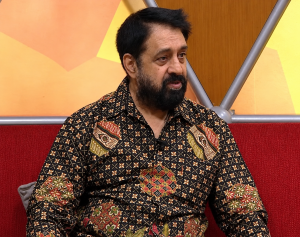
Former Finance Secretary Vidyadhar Mallik on why systemic policy flip-flops, entrenched special-interest exemptions, and outdated infrastructure continue to erode public trust and compromise Nepal’s economic governance. Vidyadhar Mallik, former finance secretary Photo: Courtesy of Vidyadhar Mallik
Nepal’s annual budgetary process has increasingly transformed from fiscal planning into a battleground of political friction and interest-group manoeuvring. The recent rollout of the federal budget has been quickly overshadowed by intense scrutiny over ‘midnight changes’ to tax lines, pushing the integrity of the Ministry of Finance back into the crosshairs of parliamentary debate. By bypassing formal legislative scrutiny and using the annual Financial Act to implement ad-hoc tax holidays and major structural shifts, the state continues to compromise predictability for investors. Meanwhile, the administrative machinery remains tethered to outdated infrastructure, attempting to manage modern digital economies with tools from a past era.
It has been two and a half years since the High-level Advisory Committee on Tax System Reform, led by former finance secretary Vidyadhar Mallik, submitted a roadmap designed to dismantle distortionary exemptions and broaden the national tax base, yet successive administrations have largely left the report to gather dust. To make sense of these overlapping systemic challenges, the Post’s Biken K Dawadi sat down with Vidyadhar Mallik. He brings decades of administrative insight to a blunt assessment of Nepal’s economic governance and argues that while technical errors are historically routine, systemic policy flip-flops erode public trust, and stabilising the economy will require the political courage to strip away entrenched special-interest exemptions. Excerpts.
Does a Finance Minister have the legal authority to alter tax rates after the Finance Bill is tabled, or does this violate budgetary protocol?
There are several dimensions to this issue, starting with administrative errors. In the past, when our systems were less IT-dependent, manual entries often led to mathematical mistakes, typing errors, or missing lines. Historically, if an error was discovered, the Finance Minister would consult with the Speaker, correct the pages, and place them in the parliamentarians’ pigeonholes while informing the House. If the mistake was significant, an apology might be necessary, and internal inquiries would be conducted to determine if staff negligence was involved. However, if the intention is honest, minor errors are generally corrected through these established protocols rather than formal amendments.
From a legal standpoint, the Finance Bill is a government bill. Parliament must either pass it or the government fails; under a majority system, this failure is rare. Theoretically, private members cannot propose amendments to reduce or increase the budget by even a single rupee; only the government holds that authority. For fundamental structural or long-term systemic changes, it is better governance to amend the primary laws—such as the Income Tax Act or VAT Act—through a deliberative process involving stakeholders and public white papers rather than rushing through a Finance Bill.
Furthermore, the government possesses the authority to issue executive orders. Because tax rates, particularly customs and excise, are sensitive and must take effect immediately upon the budget’s presentation, the government issues an executive order alongside the Finance Bill. Previous laws, such as sections 23 or 29 of earlier acts, have mandated that the government can adjust rates as necessary through these orders. Since the Cabinet decides to table the Finance Bill, the Cabinet also holds the theoretical authority to amend it before it becomes an Act. As long as the bill is in the deliberation stage and has not yet been passed, the Cabinet remains the official body for making adjustments, though this should ideally follow due process for the sake of policy stability.
How vulnerable is the Ministry of Finance to interest group influence during the critical hours before the budget presentation?
The influence of pressure groups and business interests is a reality, but this typically occurs before the budget is finalised. Traditionally, Finance Ministers may even restrict access or ‘lock’ themselves away in the final days to prevent allegations of undue influence. Good governance requires the government to judge these petitions based on public interest, revenue impacts, and transparency.
The current controversy regarding ‘midnight changes’ is unusual because the debate is happening post-budget. While errors—whether mathematical or clerical—can happen, repeated daily corrections damage institutional integrity and suggest a lack of management skill or potential betrayal by staff. If changes are made to favour specific groups after the bill is presented, it becomes a much more serious matter of integrity. However, distinguishing between a genuine correction of a rushed technical error and illicit favouritism is difficult without a formal inquiry.
Is a parliamentary inquiry necessary to settle the current dispute over tax amendments, or is this merely standard political friction?
Parliamentary committees, both formal and informal, have been formed in the past to investigate such matters. Whether an inquiry is necessary depends on whether the House views the issue as a simple error of ‘not being smart enough’ or a matter of illicit intent. If there are serious allegations that specific groups were favoured, the Parliament has the discretion to form a joint committee. These are internal political decisions, and sometimes such frictions can be resolved through dialogue between the ruling and opposition benches.
What are the geopolitical and diplomatic ramifications of the decision to tax the local staff of United Nations agencies and foreign missions?
Historically, this has been an intermittent issue. Diplomatic immunity under the Geneva and Vienna Conventions typically protects international staff, and the charters of organisations like the World Bank or ADB often exempt them from local taxes. If the government were to tax them, it would often have to refund those funds as tax expenditures, particularly for project-related consulting or procurement.
However, local staff who do not fall under diplomatic protocols or specific international immunity documents are generally taxable under Nepali law. In the past, agencies like the UNDP avoided the administrative burden of withholding tax (TDS) and instead required their local staff to file their own annual income returns. Unless there is a specific protocol signed with the Nepal government that grants local staff tax freedom, they must pay income tax like any other citizen. While this might cause minor administrative friction, it is unlikely to create significant geopolitical problems, as even in countries like the United States, most staff at international organisations are treated as taxable citizens.
How much of your 2024 High-level Advisory Committee roadmap has been adopted, and where is the implementation bottleneck?
It has been about two and a half years since the report was submitted, and while various governments have promised implementation, progress is limited. The IMF, through its Article IV missions and Extended Credit Facility, has urged the government and the central bank to follow the roadmap. Despite formal commitments, frequent changes in government have hindered consistent execution.
For instance, a carbon tax was introduced quickly on a few items, but more substantial administrative reforms—such as creating a semi-autonomous Revenue Authority similar to those in India, Pakistan, or Sri Lanka—have not materialised. There is a tendency to rely on donor-funded studies for IT reforms without investing government funds in the necessary hardware and infrastructure. We often see ‘better said than done’ scenarios where the commitment to digitisation is present in budget speeches but lacks the required financial backing to manage large-scale databases.
Why does the government continue to offer ad-hoc tax holidays despite your recommendation to abolish exemptions?
Our report estimated that Rs 3 trillion could be generated primarily by removing exemptions. The list of exemptions in VAT, customs, and income tax is extensive—some estimate there are hundreds of such tax breaks. Instead of narrowing this list, recent budgets have actually added more tax holidays.
The pressure for these exemptions comes from interest groups, and the government has struggled to resist this lobbying. A sound tax regime should be ‘touch-less’ and neutral, meaning tax policy should not dictate investment decisions. Ideally, we should have lower tax rates across a much broader base, with a clear list of tax expenditures presented to Parliament to show exactly how much revenue is being lost to these exemptions. Currently, we are stuck in a cycle of high distortion and low compliance.
Why do administrations continue to bypass formal legislative amendments to the Income Tax or Customs Acts by using the annual Financial Act?
Using the Financial Act for structural changes is a shortcut that avoids the five or six months of deliberation required for amending primary acts. While it is efficient for the government, it undermines policy stability and predictability, which are crucial for investors. We recommended a separate Tax Administration Act to harmonise procedures for income tax, VAT, and excise, including appeals, recovery, and penalties. This would standardise the administrative part of taxation and move it out of the annual Financial Act. A permanent Revenue Board or Authority would also provide more professional management of legal cases and policy advice, similar to the models in Singapore or Bangladesh.
Is Nepal’s revenue model inherently regressive, given the high taxes on the middle class and substandard public services?
This is a ‘chicken or egg’ problem. Taxation relies on trust; if people do not trust the government to spend funds transparently or efficiently, they are reluctant to pay. Public resentment grows when citizens see their taxes potentially lost to corruption or populist projects rather than being invested in social safety nets or infrastructure.
To build trust, the government must show quality in expenditure. It is not enough to build high-standard roads; the budget must also be pro-poor, focusing on employment and safety nets. Rule of law and deliberative legislative processes are essential for creating this trust, rather than an approach that relies on threatening citizens into compliance.
Will raising the personal income tax exemption to Rs 1 million spark voluntary compliance or widen the budget deficit?
Raising the threshold to Rs 1 million and reducing the peak rate from 39 percent to 29 percent were the right decisions. From an administrative perspective, it is inefficient to chase small earners because the cost of enforcement often exceeds the revenue collected—the ‘penny-wise, pound-foolish’ principle. By exempting lower-income individuals, tax officers can concentrate their resources on high-risk businesses and tax evasion.
Reducing rates can improve compliance, as people are more likely to be honest when the tax burden is perceived as fair. However, this must be coupled with a robust IT system that integrates banking and investment data to automate self-assessment. While individual rates were improved, I believe corporate tax rates should also have been lowered to remain competitive.
How can the state incentivise tax compliance among the booming digital and freelance workforce?
The latest budget has introduced some incentives, such as a 50 percent tax reduction for IT professionals working from home for international clients. However, tax rates are not the only factor; the entire business environment matters. We need to simplify licensing and approval policies for the IT sector.
Because many digital transactions involve informal channels or digital coins that are hard for the central bank to track, we must create an attractive ecosystem. This includes reliable power, high-speed internet, and a lifestyle that encourages smart professionals to stay in Nepal. We must also be careful not to rush into aggressive digital taxation that might trigger international sanctions or make us look like a tax haven. We should aim for a middle-level, stable regime that is at least as favourable as our neighbours.
How can federal tax policy be restructured to optimise revenue redistribution between provinces?
We need to move toward ‘One Nepal’ where the three tiers of government work in harmony. Currently, provinces rely heavily on tied grants, which often come with conditions that hinder efficient solutions. We should increase the proportion of grants and adjust the distribution formula to account for both population and hardship.
For instance, regions like Karnali or Madhesh, which have lower human development indicators, should receive more based on their specific needs rather than just population size. Additionally, we could gradually increase the provincial share of domestic VAT and excise revenue. However, provinces must also prove their accountability and capacity to spend effectively on employment generation rather than just local populist projects.
Is the primary hurdle to complete digitisation a lack of infrastructure or bureaucratic resistance?
It is a combination of both. There is a tendency to accept donor-funded consulting while neglecting the actual hardware investment. We are trying to manage massive modern databases using infrastructure from twenty years ago. Bureaucratically, we need to authorise digital technologies in our legal process—for example, while we file returns digitally, there is still no legal provision for a digital signature in many areas. We must move towards an automated, human-touchless system to reduce corruption and improve efficiency.
Which single tax reform from your report should the government execute immediately to stabilise the economy?
The government must find the courage to remove tax exemptions. Like a surgeon performing a necessary but painful operation, the government must endure the political pain of removing holidays and exemptions to broaden the tax base. These exemptions are often distortions that lead to corruption and unfair competition.
If we remove these distortions, revenue will naturally increase, which would then allow us to lower the overall VAT rate from 13 percent to perhaps 10 percent or 11 percent. A single, lower VAT rate is far better than the current trend of introducing multiple rates, such as the 5 percent on electricity, which complicates administration and creates loopholes.
We also should not panic about public debt. Taking loans is not inherently bad if the funds are used for high-quality, qualitative projects with a strong economic rate of return. Relying on charity or grants is not a sustainable model for a maturing nation; we should aim to be a country that is trusted enough to be given loans at commercial rates. The key is to ensure the best use of every rupee, whether it comes from taxes or debt. Finally, we must provide policy stability; if the government changes its mind every day, no investor will trust us. We must be mature and nationalist in our approach: stop saying ‘I can’t’ and start showing the world that we can manage our economy efficiently.




 22.94°C Kathmandu