Q&A: Impunity and nepotism remain major issues in the current government
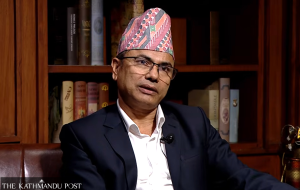
Our current state respects the property of the higher classes but ignores the rights of daily wage workers. Lily Thapa, NHRC Commissioner Post Photo: Deepak KC
Nepal is currently grappling with rapid urban displacement and growing public discontent. Amid these challenges, the relationship between the state and its citizens faces severe strain. The government is frequently criticised for executing top-down policies that alienate the working class. The National Human Rights Commission (NHRC), which works to monitor state accountability and protect constitutional rights, stands at the centre of these shifting dynamics.
The Post’s Biken K Dawadi sat down with NHRC Commissioner Lily Thapa to discuss the tragic self-immolation of a young ride-sharing driver in the capital, the aggressive enforcement tactics used by the metropolitan city police against street vendors and the commission’s recent, controversial report on the Gen Z protests. Thapa argues that the state consistently prioritises revenue collection and large infrastructure stunts over basic human needs. She warns that ignoring local realities is pushing vulnerable populations to the brink of desperation. She explores the urgent need for structural reforms, empathetic policy-making, and institutional accountability.
Let us begin with the most recent and tragic incident. What is your assessment of the death of Ganesh Nepali?
Ganesh Nepali recently committed self-immolation. He was a young man working for ride-hailing services. These services were his main source of livelihood. It is reported that he faced a fine of Rs1,000 for a parking violation. For a person in his economic position, such a fine is a massive burden. This incident highlights a failure to protect the constitutionally guaranteed right to livelihood. The National Human Rights Commission views this through the lens of systemic failure. We sent a monitoring team to meet his family immediately. This is not an isolated event. We have seen similar attempts at self-immolation in front of Parliament and in Buddhanagar.
How do current government policies contribute to such extreme actions?
Nepal is a country where over 20 percent of the population lives below the poverty line. However, our policies are often made from the top down. They do not target or consider the specific needs of the poor. Instead, the government often copies the policies of large, developed nations. These policies are often unsuitable for our citizens. Ganesh Nepali was trying to survive. He had attempted the civil service exams but failed. He was in the process of getting a passport to find work abroad. Until then, he relied on his motorcycle for income. Many young people buy bikes with bank loans and work day and night to pay the instalments. The fear of heavy fines and police impounding their vehicles creates immense mental pressure. There are hundreds of motorcycles currently sitting in police stations. This removes the only means of employment for these youths.
Are the road and traffic infrastructures sufficient to support the enforcement of these fines?
Fines are necessary, but they must be reasonable and supported by infrastructure. The government collects fines but provides no facilities. There are no designated pick-up or drop-off points for ride-hailing services. The traffic lanes and roads are poorly constructed. The government imposes rules without providing the necessary tools for the public to follow them. Lack of infrastructure, combined with high fines, creates a state of desperation.
What did your monitoring team observe about the medical response in this case?
The medical response was deeply concerning. When the incident occurred, the victim was reportedly dragged to the hospital because no ambulance was available. If the government can set a fine of Rs10,000, it must also be able to provide an ambulance within minutes in the city centre. Furthermore, we discovered that Bir Hospital, a major state facility, does not have a functioning mortuary that can hold bodies for more than two or three days. This is why they tried to move the body to the teaching hospital. It is a massive failure of the national health policy when a major trauma centre lacks such basic facilities. Our monitoring team is preparing a report on these gaps. We focus on how the state provides basic services. The state often focuses on large stunts and big policies while forgetting basic needs.
Does the government do enough to educate the public on new regulations?
No, there is a lack of awareness programmes. Many people come to Kathmandu from districts like Rukm or Kalikot. They do not automatically know every traffic rule. Even residents who grew up here find the signs confusing. One-way and two-way signs are often not clearly marked. The state should make these rules accessible to everyone. Instead, the focus remains solely on punishment and revenue collection.
Can you elaborate on other instances of basic service failures?
We recently received a report about a family unable to get an ambulance to transport a deceased grandmother to the cremation grounds. Her grandsons had to carry the body in a three-wheeler tempo. This shows that even the most basic human services are missing. We see this as an overarching systemic failure.
What is your view on the actions of the Kathmandu City Police?
There have been many controversies over the jurisdiction and training of the City Police. We have seen a lack of respect for private property. This is not just about land, but also mobile property like carts and motorcycles. They often destroy or seize these items indiscriminately. The NHRC has been raising concerns about this since the current Prime Minister was the Mayor. During the pandemic, small and micro-entrepreneurs (SMEs) supported 67 percent of the economy when remittances stopped. These are people with street carts or small shops. However, the government lacks affirmative policies to protect them. People are struggling for survival due to poverty and unemployment. Many see migration as the only way out.
How should the City Police handle street vendors and small businesses?
Other countries manage this through night markets or specific times for street stalls. In Nepal, the City Police often act as if they are the ‘kings of the road’ once they put on a uniform. They are told to clear the streets at any cost. They lack proper behavioural training. If they communicated respectfully, many conflicts could be avoided. Instead, they seize the goods of people who took out loans to start their small businesses. This impacts the most vulnerable members of society.
Why do you believe policies are consistently failing the poor?
Policies are made in Singha Durbar based on what officials see in places like China or Europe. They build highways and parks based on foreign models without considering the local impact. Local governments then follow these same flawed models. There is a famous saying by BP Koirala that plans should be made with the poorest in mind. He suggested thinking of a person with a small hut and a pair of oxen. Our current state respects the property of the higher classes but ignores the rights of daily wage workers. The state protects big traders while impounding the motorcycles of the poor. Decisions are made without data or public trust. We also lack the moral education and philanthropic culture that once balanced our society and nature.
On a separate note, what is the NHRC doing regarding the state’s eviction of landless squatter settlers?
We recently issued a press statement on this issue. Many landless people are living in holding centres that flooded during recent rains. The commission is investigating these complaints to provide recommendations to the government. A major problem is the lack of accurate data. Previous commissions failed to distinguish between real landless people and those who already own property elsewhere. Some families have lived in these settlements for thirty years. Evicting them without a proper plan is a violation of their right to housing.
Are the current relocation efforts adequate?
The government decided to provide Rs25,000 as immediate relief, but there is no long-term plan. People need a place to stay. The eviction has interrupted children’s education. Many children have had to drop out of school because the new centres are too far away. This causes significant mental trauma for both children and adults. We have seen cases of suicide following these evictions. For example, Indra Bahadur Rai took his own life after his home was destroyed. This is a clear failure of the state.
Does the state consider cultural rights during displacement?
Often, no. We saw this with the Majhi village displacement for a road project in Ramechhap. The Majhi people have a deep cultural connection to the river. Moving them to cement houses in the city led to suicides because their cultural rights were ignored. Nepal is a party to international treaties on social and cultural rights, yet we often ignore them.
Let us discuss the NHRC report on the Gen Z protests. Why did you name specific political leaders?
The report is not just about punishment. It is about preventing future occurrences. We looked at the role of the masterminds and influencers behind the protests. The report suggests that leaders like KP Oli and Ramesh Lekhak should be held responsible for their roles. During the protests, there was an excessive use of force. We also looked at the role of those who provoked the crowd to burn national heritage sites. These actions are criminal. Many of the people we recommended for further investigation are now policymakers. This makes fair justice very difficult to achieve.
How does this affect Nepal’s standing abroad?
It has a significant impact. Even if the government does not act now, history and the international community will. Human rights violators can face travel bans or difficulties in finding international employment. It affects our status in the United Nations Human Rights Council. If we drop to ‘B’ status, the government cannot participate fully in the council. It also damages the reputation of the country, affecting tourism and air services. It can even lead to a decrease in the value of our passport, resulting in stricter visa conditions.
What was the role of the Nepali Army during the Gen Z protests?
The Army’s role was questionable. They are supposed to protect heritage sites like Singha Durbar, but they did not intervene effectively. The prime minister, as head of the National Security Council, failed to give timely instructions. The Army claimed they did not want to cause more deaths by firing into the crowd, but we found fault in their justification. The NHRC initially recommended action against certain officials, but some of these recommendations were later adjusted following written statements.
Are there any positive developments in governance you wish to highlight?
There has been some progress in the civil service. Services are more timely, and corruption in some areas, like land revenue and transport offices, has decreased. Getting a passport is now easier. These are signs of good governance. However, impunity remains a major issue. There is still a lot of nepotism. There is also a harmful narrative that the older generation has done nothing, while the youth are the only ones with answers. We must respect the experience of the past while moving forward.
What specific changes do you recommend for future policy-making?
We must stop stunts and focus on needs. For example, widening a highway to 50 metres is unnecessary if it destroys people’s livelihoods without compensation. We should follow the model of the Lalitpur Metropolitan City, which allows street vendors to operate during specific hours. We also need to better utilise existing resources. For instance, empty ‘Bal Mandir’ buildings across the country could be used to decongest overcrowded juvenile correction centres.
Also, what is the NHRC doing about the issue of child marriage and the ‘Romeo and Juliet’ law?
We are conducting a national inquiry into child marriage. The government has suggested lowering the marriage age from 20 back to 18, but we are reviewing this carefully. Many young men, especially from Dalit backgrounds, are currently in jail for ‘statutory rape’ following consensual elopements with girls from so-called upper castes. We are looking at the ‘Romeo and Juliet’ provisions, which suggest that if the age gap is small and both are minors, it should not be treated as an automatic rape case. However, there are still gaps. For instance, the law is silent on the rights of the mother if a child is born from such a relationship. We expect to release our full report on this in a couple of months.
Have you personally faced any backlash for your work on these reports?
Yes, there is significant online harassment. People who support those in power often attack us. I have been targeted with very personal and offensive comments over my status as a widow. Even in parliamentary committee meetings, we face verbal attacks from members who do not understand our mandate. They blame us for human rights violations when our job is to monitor and recommend, while the government’s job is to implement our recommendations.




 14.69°C Kathmandu