Q&A: Focusing on the middle class and high-income groups will inevitably lead to increased inequality
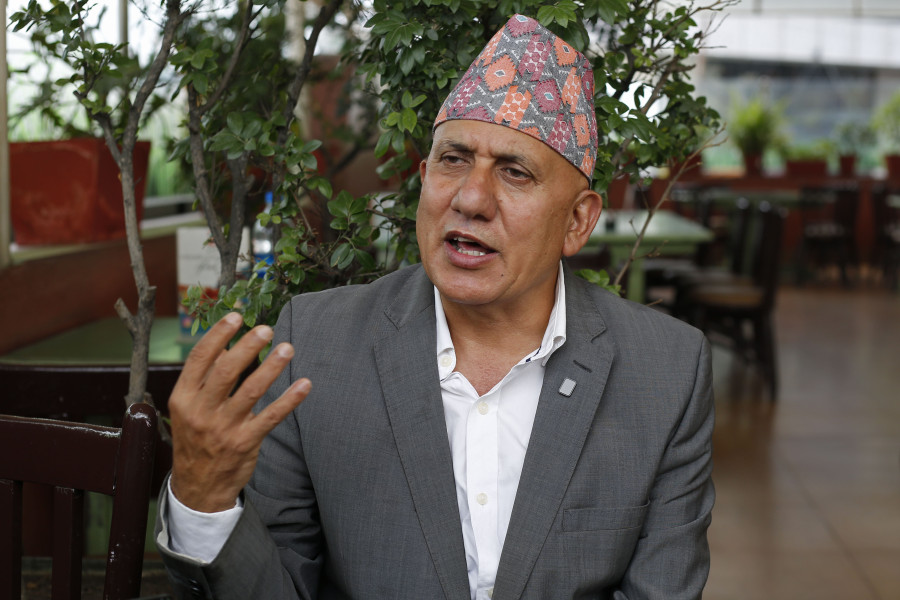
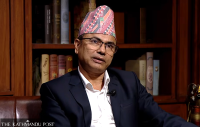
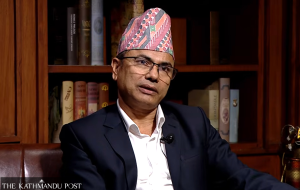
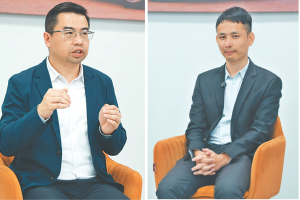
By reducing the intake from the wealthy and failing to transfer it to the poor, the budget disconnects from the principle of welfare state. Shivaraj Adhikari, former vice-chair, planning commission Post Photo: Dipesh Darshandhari
With the Rastriya Swatantra Party (RSP)-led government unveiling its fiscal blueprint for the upcoming year, the declarations of economic transformation are meeting with scepticism. Observers and planning experts note that behind the budget’s rhetoric lies a structural realignment—one that explicitly shifts focus away from traditional poverty alleviation toward an aggressive, tax-incentivised expansion of the middle class and the information technology sector. Critics argue this trajectory risks widening the country’s socio-economic cleavages and relies heavily on unproven economic assumptions.
The Post’s Biken K Dawadi sat down with former vice-chair of the National Planning Commission, Economist Shivaraj Adhikari, to dissect the structural mechanics of the new budget. Adhikari peels back the layers of the Balen administration’s fiscal choices, evaluating the volatile revenue projections that threaten an internal debt crisis, assessing the economic logic of high-tier tax concessions, examining the populist optics of urban digital infrastructure, and confronting the moral hazard of using taxpayer funds to underwrite the ongoing cooperative sector collapse. Excerpts
What distinguishes this budget from previous ones? What elements of it have captured your attention?
In previous fiscal iterations, the government of Nepal primarily focused on eradicating poverty while placing significant emphasis on industrial development and the support of small-scale enterprises. There was also a consistent focus on the advancement of national infrastructure. However, this budget demonstrates a strategic shift toward the expansion of the middle-class demographic. The objective appears to be the empowerment of the middle class, which is a notable departure from previous strategies.
How does the budget address the broader tax structure?
There has been a striking adjustment to the upper tiers of the tax structure, where the highest rates have been lowered to encourage participation. This reflects the desire to encourage people to pay taxes by removing the psychological barrier of excessive taxation. By opening this avenue, the government hopes to inspire a sense of duty toward the nation among those who previously felt discouraged by tax burdens.
What is the economic rationale behind targeting the middle class?
Within any community, there exist various income groups, and it is essential to understand which group best facilitates economic progression. The private sector, which possesses investment capacity, is undoubtedly the primary driver of economic activity. Alongside this, we find the middle-income group, which provides vital support to the higher-income brackets and the broader economy. They achieve this by consuming goods and services and by contributing to national savings. Furthermore, they often take loans from financial institutions to invest in various ventures, which supports the banking system. In contrast, those at the bottom of the socioeconomic pyramid require direct government intervention to elevate their status.
The RSP government appears to believe that most individuals have already risen above the threshold of absolute poverty. This might be why the focus has shifted toward encouraging the middle-income and lower-middle-income groups. Nevertheless, it must be acknowledged that 20 percent of the population remains in poverty. While the budget does not entirely ignore this segment, it relies heavily on indirect methods such as the trickle-down approach, where wealth generated by high-income groups eventually permeates through the economy.
But are the trickled-down benefits substantive for the poorest citizens?
If wealthy individuals increase their spending on services such as transport or other labour-intensive tasks, the benefits may eventually reach the impoverished through indirect channels. However, this approach is notoriously indirect and frequently fails to deliver effective results for those at the very bottom. Usually, a government would adopt direct targeted strategies to address poverty, but there seems to be a deficiency in that regard within this budget. Generally, taxation systems are designed to be progressive based on income levels, and while income tax slabs have been lowered to provide encouragement, the budget has simultaneously increased consumption taxes.
Does this change in taxation pose a risk to economic equality?
Consumption taxes are regressive in nature. This budget has increased such taxes, most notably through the introduction of a tax on electricity consumption exceeding fifty units. Such a measure is likely to disproportionately affect low-income groups and may lead to increased inequality within the nation. While every budget is subject to intense debate and discussion, the ultimate test lies in whether its implementation yields positive or negative effects. The government must be extremely cautious because the current targets could inadvertently widen the gap between the wealthy and the poor. Furthermore, the planning process itself must adhere to the Financial Procedures and Fiscal Accountability Act of 2076, which mandates specific rules for programme design and prioritisation.
Are there concerns regarding the selection and evaluation of major infrastructure projects?
There are legitimate doubts regarding whether the mandatory processes for programme prioritisation were strictly followed during the creation of this budget. This includes the entry of projects into the Project Bank, which requires a comprehensive cost-benefit analysis before approval. For instance, several large-scale projects were announced, but it remains unclear if they underwent proper evaluation or detailed project report preparation. The primary challenge in our history has been the failure to implement projects due to inadequate preparation. Projects that were intended to be completed within two or five years often stretch to twenty-five or thirty years, resulting in a loss of potential benefits. During my time at the National Planning Commission, we calculated the exact investments required to finish projects like the Sikta Irrigation Project or the Postal Highway within a specific timeframe. Unfortunately, this budget has extended the timelines for these projects, which suggests a lack of prioritisation. Delaying projects that could provide immediate returns makes it significantly harder to achieve the targeted 7 percent economic growth.
Some argue that extending project timelines is a move toward realism. What is your perspective?
We possess clear evidence from reports published by the Planning Commission, which outline the necessary timeframes for project completion. While it might be acceptable to provide more time for new projects that lack completed, detailed project reports, it is highly problematic to push back the deadlines for projects that are already under implementation. A budget is essentially a balance of income and expenditure, and we are currently seeing a trend where income is decreasing while expenditure continues to rise. The experimental sources of revenue are not particularly reliable, and the permanent source, which is tax revenue, is projected at 66 percent of the total. However, current trends suggest that we will likely fall short of these ambitious targets as the actual collection often lags behind projections.
How viable is the government’s plan for revenue collection and internal borrowing?
Our projections indicate that we might only collect Rs12 trillion instead of the proposed Rs14 trillion based on historical trends. The changes to income tax slabs mean that even high-ranking public officials may end up paying negligible taxes after accounting for deductions like insurance and provident funds. This loss of guaranteed tax revenue creates a significant fiscal gap. To fill this void, the government will likely rely on internal loans, which will place immense pressure on our domestic resources. As an economist, I believe that if we must take loans, they should be project-based. We have the legal framework to issue bonds for specific infrastructure, such as the Kathmandu-Pokhara road or the Sikta project. Using loans for dedicated productive purposes ensures they are not wasted, but it seems a lack of preparation prevented the inclusion of such innovative financing in this budget. If these connections are not rectified during implementation, the goal of 7 percent growth will be difficult to attain.
Critics suggest this budget ignores the poor in favour of a theoretical invisible hand. Is this a fair assessment?
The concept of the invisible hand suggests that the market will naturally correct itself, but many critics argue that this hand is non-existent and serves only to provide false hope within a capitalist system. This budget has been criticised for failing to provide direct relief or incentives to the lower-income class to help them transition into the middle class. There is a lack of targeted programmes for employment generation, and the current focus on outward migration does not strengthen the local market. To truly develop the economy, we need diversification and a focus on the real sector. We should be linking agriculture with tourism and industry to create additional employment opportunities. Without these connections, focusing solely on the middle class and high-income groups will inevitably lead to increased poverty and inequality. The budget currently prioritises a transaction-based approach over a production-based one, which risks neglecting the foundational industries of the nation.
Can the focus on emerging technologies like Artificial Intelligence be considered a populist attempt to attract the youth?
While I believe that budgets should be popular in the sense that people understand how they benefit from them, the current focus on Artificial Intelligence and Information Technology feels somewhat superficial. True populism should not be about the short-term distribution of resources but about encouraging people to participate in the economy. Regarding the proposal for an AI centre, I question whether placing it in a densely populated area is logical. AI and data centres require massive amounts of water and electricity for cooling. It would have been far more innovative to utilise the naturally cold regions of Nepal, such as Mustang, where the cost of cooling would be significantly lower. Such a move would show true visionary planning rather than simply using buzzwords to appeal to the younger generation.
What is your view on the tax relief provided to the highest income earners?
I find the significant relief provided to the top percentage of earners to be excessive, as a 10 percent reduction was implemented. A progressive tax system is essential because it encourages a willingness to pay and allows citizens to feel they are contributing to the state. Instead of merely cutting taxes, the state should create an environment where high taxpayers are respected and given a distinct identity similar to the systems used in other nations. Taxation should be a mechanism for transferring wealth from those who can afford it to those in need. By reducing the intake from the wealthy and failing to transfer it to the poor, the budget disconnects from the fundamental principle of a welfare state. This could lead to social and economic conflicts that carry a very high long-term cost for the nation.
Do you agree with the Finance Minister’s hypothesis that lower tax rates will lead to higher compliance?
This hypothesis is a conventional theory that might be applicable in other countries, but it does not align with the reality in Nepal. Our tax-to-GDP ratio has historically been among the highest in South Asia, which indicates that most people are already paying their taxes. My analysis suggests that high-income groups generally do not evade taxes to a large degree, and salary-based earners have no choice but to comply. The individuals who might evade taxes are often intermediaries operating in the informal economy. The solution is not necessarily to lower the rates but to make the payment and transaction mechanisms more formal. Lowering the rates is not inherently wrong, but I do not believe it will be as effective as the government anticipates.
Does the budget appear to overlook marginalised groups such as the landless and Dalits?
It is striking that terms like poverty are almost entirely absent from the budget document. Marginalised groups such as the Dalits and the landless squatters have received very little attention despite previous government promises. For example, there is a lack of funding for flood control or river management in areas where squatters reside. One might cynically interpret this as an attempt to let the market mechanism take its course, where the lack of protection eventually forces these communities to abandon their settlements. While one should not make such harsh assumptions without proof, it is clear that the welfare of the poorest citizens is not a priority in this fiscal plan.
How would you summarise this budget in terms of its future impact on Nepal?
Budgets are often characterised by path dependency, where they follow established processes, but we should still look for turning points or significant departures. This budget fails to include such a departure and remains largely within old patterns. However, the intense public debate surrounding it is a positive sign because it forces the government to be more careful during implementation. Future budgets must be more groundbreaking and realistic. We must also address specific issues like the crisis facing cooperative victims. The idea of using taxpayer money to bail out those who were exploited by cooperatives is a dangerous mechanism. The responsibility and the punishment should lie with those who committed the exploitation rather than the general public. Using public funds in this way creates a moral hazard and encourages future misconduct. Ultimately, while this budget lacks a bold new direction, we must monitor its execution closely to ensure the nation remains on the right track.




 14.69°C Kathmandu