‘Dollar fare’ is why foreign tourists avoid Karnali and Sudurpashchim
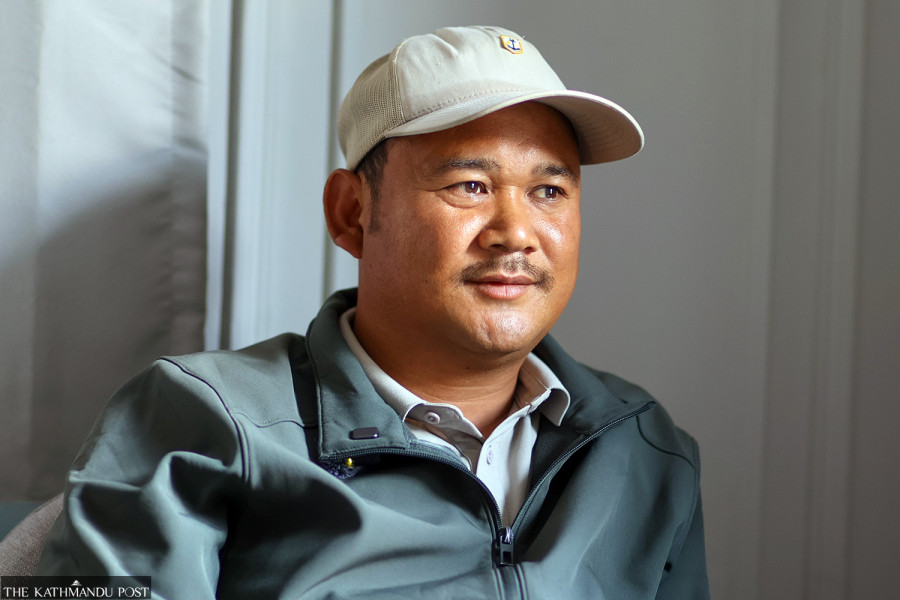
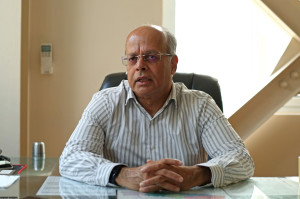
The ‘alternative wave’ did not reach the remote areas because most residents are of the older generation who do not use social media. Bhakta Singh Bohara, chair of Api Himal Rural Municipality Suryams Upreti/TKP
One of the most remote local units of Nepal, Api Himal Rural Municipality, in Darchula district of the Sudurpaschim province, garnered attention recently after the newly-formed Balendra Shah-led government included the promotion of Api Himal as a tourist destination in its 100-point work plan. The move brought hope to the locals, but the bitter fact remains that the local unit’s headquarters is still not connected by a motorable road, and many localities have no access to electricity. Its remoteness, however, is not the only challenge to its tourism targets. The ‘dollar fare’ system has taken a toll on the promotion of remote tourist destinations all over Nepal, as foreign tourists have to deal with the opportunity cost between travel fare and other expenditures.
The Post’s Biken K Dawadi sat down with Bhakta Singh Bohara, chair of Api Himal Rural Municipality, to discuss the tourism infrastructure and trends, migration and social dynamics, and the likely effect of the removal of the ‘dollar fare’ on tourism development in remote areas. Excerpts.
How do you introduce your municipality to the rest of Nepal?
Api Himal Rural Municipality is the most remote municipality in the Sudurpashchim Province. However, nature has also provided it with the most beautiful gifts. It is home to several mountains, including Api Himal, which is the highest peak in the province. In terms of religious tourism, we have the Surma Sarovar, the Surma Bhawani temple, and other pilgrimage sites. We possess a rich Maldeshi culture, which is a unique combination and integration of the Shauka community’s culture and the Khas culture. Therefore, we introduce Api Himal as an extremely important and beautiful municipality from religious, cultural and tourism perspectives. Our objective is to make these natural resources and heritage the foundation for the prosperity of our local unit.
Mountaineering began in Api Himal last year. What is the current trend? How is the flow of foreign and domestic tourists?
We have worked with the goal of developing Api Himal into a premier tourist destination for Sudurpashchim and an attractive destination for all of Nepal. We have developed trekking trails, routes, maps, tea houses and homestays. Consequently, over the past three years, nearly 4,000 to 5,000 tourists have visited the Api Himal Base Camp and other religious or natural sites annually. Last year alone, more than 5,000 tourists visited. Most of these are domestic tourists, with only a small number of foreign visitors.
While trekking-based tourism is flourishing, what steps are being taken to promote mountaineering and Himalayan tourism?
At the initiation of the Api Himal Rural Municipality, the Nepal Government, through the Ministry of Tourism and the Department of Tourism, has made 97 mountains in the Sudurpashchim and Karnali provinces royalty-free for two years. This has encouraged domestic and foreign climbers to start visiting. Last year, in collaboration with the Nepal Mountaineering Association, we conducted mountain guide training on Lhayul Peak (6,397 metres), situated near Api Himal. This is part of our effort to produce mountain guides for western peaks and introduce these mountains to the world. I understand that some groups have already taken permits to climb Api Himal and other peaks this fiscal year. I believe mountaineering tourism in Sudurpashchim and Api Himal will move forward alongside trekking.
Api Himal features in Prime Minister Balen Shah’s 100-point work plan. How does trekking relate to the plan?
We are currently expanding the trekking trails, which already have basic facilities. Following the formation of the new government, Api Himal’s trekking tourism has been included as a priority within their 100-point agenda. I am confident the current government will prioritise the trail tourism we started. Since arriving in Kathmandu, I have met with the Tourism Minister and visited the Department of Tourism; they have assured me that this region is a high priority for them. We hope the new budget will reflect this cooperation.
As one of the most remote local units of Nepal, what are the primary challenges regarding infrastructure and road access?
The main challenge is physical infrastructure. Api Himal is the only municipality in Sudurpashchim whose headquarters is not connected to a motorable road; about five to seven kilometres of track still need to be opened. Previous governments did not prioritise this, leading to insufficient budgets. Furthermore, the national electricity grid has not reached our villages, although it is currently under construction following a successful tender. These infrastructure deficits make the journey long and arduous for tourists. If vehicles can reach the municipal headquarters, it will significantly ease life for our citizens and enhance trekking, mountaineering and religious tourism.
Given the recent election results, what are your expectations from the new government?
In the recent elections, the Rastriya Swatantra Party (RSP) secured nearly a two-thirds majority. We hope this leads to a stable government for the next five years. Nepal’s misfortune has been unstable governments, which have prevented the proper execution of large projects and consistent policy-making. We believe this government can provide the stability needed for development. The local government is ready to cooperate, particularly on our tourism-based work. One specific issue we have raised is the ‘dollar fare’ for foreign tourists on domestic flights. Tourism Minister Khadak Raj Paudel has committed to removing this fare. If this happens, it will be much easier for foreign tourists to visit remote destinations in Karnali and Sudurpashchim, as they currently pay nearly triple the airfare [for Nepalis].
You spoke of the need to remove the ‘dollar fare’. Yet airline operators vehemently disagree on this score.
This is a discriminatory policy that exists only in Nepal; no other country we know of has such a dual-fare system. It was originally created during the Panchayat era to encourage fledgling airline companies. Today, passenger numbers and occupancy rates are high enough for airlines to remain profitable without it. A middle path could be removing the dollar fare for large ATR aircraft on long-distance routes while perhaps maintaining it for smaller planes in very specific areas. For example, flights to Dhangadhi are sustained by Nepali passengers, so removing the foreign fare wouldn’t hurt the airline operators. Currently, a round-trip ticket to Sudurpashchim for a foreigner can cost over Rs60,000. For that price, a tourist could visit India or stay a week in Pokhara or Chitwan. It is cheaper to fly from Kathmandu to Delhi, than to Dhangadhi. This policy is a barrier to tourism development.
To be clear, are you saying this policy—which lacks a modern legal basis—negatively impacts rural tourism as most of a tourist’s budget is consumed by airfare before they even reach the village?
Precisely. It is the main reason foreigners avoid Karnali and Sudurpashchim. Why would someone pay Rs60,000 just for a flight when they could spend a whole week elsewhere for the same amount? If this is removed, destinations like Api Himal and Kanchenjunga in the east will flourish.
Moving to your personal life, you are part of a relatively younger generation in politics. You lived in Kathmandu. What inspired you to return to Api Himal?
During my student days, Nepal was in the midst of the Maoist insurgency. I became involved in the movement for democracy and the establishment of a republic, eventually joining underground politics. Later, I led student organisations in Kathmandu. However, I believe the greatest gift of the 2015 Constitution is federalism and the empowerment of local governments. It allows for proportional development and makes citizens feel the presence of the state. I decided to run for local office to serve my people directly using the skills and knowledge I gained. My study of the region showed that prosperity wouldn’t come from industry or general trade, but from mobilising our natural resources: our mountains, heritage and culture.
What have been the major achievements of your municipality in the past few years?
We created a five-year strategic plan. Now, in our fourth year, Api Himal has been honoured by the Nepal Government as one of the best municipalities for tourism out of 753 local levels. In agriculture, we promote ‘Organic Api Himal’. We are the first municipality in Sudurpashchim to complete the ‘One House, One Tap’ drinking water project. We also launched health tourism, where specialist doctors from cities are invited to conduct free health camps in exchange for the municipality hosting their visit to the mountains. Similarly, we have volunteer teachers and Agro-tourism programmes. We are even building the highest altitude cricket stadium in Nepal; the tender is out, and it should be completed in two years.
You come from a mainstream political background, while the federal government is now led by an alternative party. Has this caused coordination issues?
I haven’t felt that. People who work are generally encouraged. I have met representatives of the new government in Kathmandu, and they have assured me of their support. Political bias should not exist in development. My suggestion to the new party is to avoid the mistakes of the old ones and work collaboratively across local, provincial and federal levels.
Let’s change track. Remote areas in the Far West often suffer from high migration. Is this a problem in Api Himal?
Yes, it is a national trend. People seek better salaries abroad because our state policy effectively encourages migration. While there is a shortage of workers in the villages, we are trying to engage youth as trekking and nature guides or in homestays. While we cannot stop everyone, developing rural tourism is the key to bringing them back.
Does the absence of men provide an opportunity for women empowerment?
Absolutely. Women’s participation in social and developmental programmes has increased significantly. They are performing roles traditionally held by men and taking on leadership in consumer committees. We provide them with entrepreneurship and homestay training to ensure they have sustainable livelihoods.
With so many mountains in Nepal, what differentiates Api Himal for a tourist?
It is the highest peak in the Far West. To visit Api Himal is to understand the Maldesh culture and the local way of life. The base camp offers a 360-degree view, but uniquely, Api Himal is one of the few mountains where you can actually touch the mountain itself from the base camp. You can walk right to the source of the Chameliya River at its foot. Furthermore, if you visit in the month of Baisakh, you can witness the live collection of Yarsagumba (cordyceps), which is a very exciting experience for visitors.
You have mentioned the Maldesh culture twice now. Could you briefly explain what it is?
Ancient stories suggest that in the past, the communities indigenous to our area were not connected with the lower regions. The people were entirely self-sufficient, trading only with Tibet for salt and producing their own clothes, metals and food. Legend says that when people further down the river saw a cut branch floating by, they realised people must live upstream and called it ‘Mallo Desh’ (Upper Country), which eventually became ‘Maldesh’. It is a distinct culture with unique dress and language, including the rare Shauka community.
What are your tourist targets for the coming year?
Our goal is to reach 10,000 tourists by the end of our fifth year. We are focusing heavily on Indian tourists, particularly from Uttar Pradesh and Uttarakhand. Once the immigration post at the new Mahakali bridge is operational, we expect a massive influx. We are already engaging Indian content creators and bloggers to promote the region.
Regarding the general election, why did the ‘alternative wave’ seen in cities not reach the remote West, where candidates of traditional parties won?
Several factors are at play. Remote areas are more traditional and have less social media connectivity; older generations often do not use mobile phones or social media. Old parties have very strong grassroots organisations there. Furthermore, the one-month campaign period is too short to reach every settlement in a remote constituency; it takes months to cover the terrain. Finally, many young voters—the ones most likely to vote for change—were away in cities for study or abroad for work and could not return home to vote due to the time and expense involved.




 18.81°C Kathmandu