



 28.33°C Kathmandu
Tue, Sep 29, 2026
Health
Health Ministry urges aid agencies to boost nutrition funding
Teams of nutritionists have been sent to provinces to coordinate immediate measures after a government assessment found over 200,000 children under five acutely malnourished.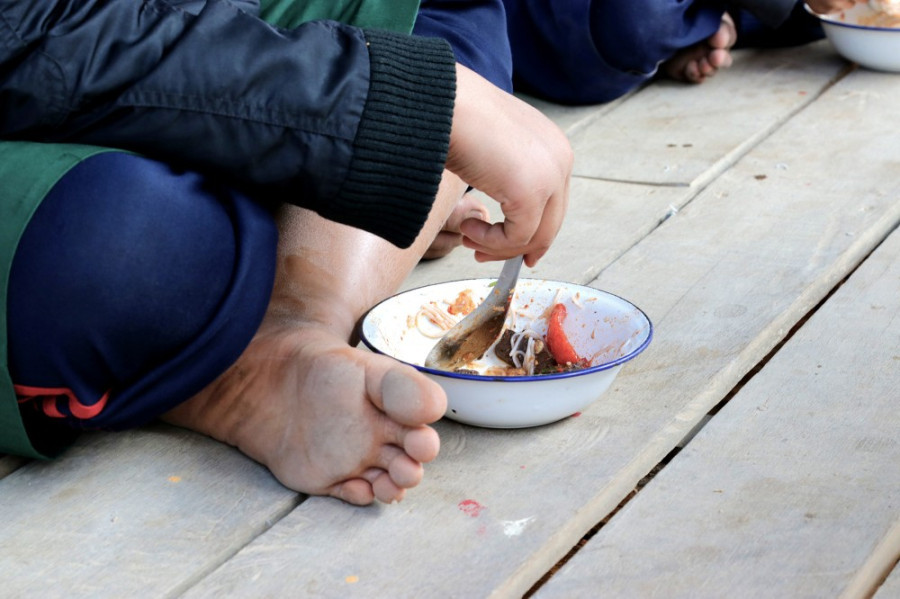
bookmark
Arjun Poudel
Published at : June 26, 2026
Updated at : June 26, 2026 18:47
Kathmandu
As the nutrition crisis deepens, the government has requested different aid agencies, including international non-governmental organisations, increase investment in nutrition sectors. Investment in nutrition sectors has deteriorated in recent times.
Officials say that they have requested the United Nations Children’s Fund, FHI 360, Helen Keller International Nepal, World Vision, and Care Nepal, among other development partners, for investment in the nutrition sector and additional support to address the ongoing crisis.
“As nutrition is a political issue, without the help of all agencies concerned, the Health Ministry cannot address the problems. So we request help from all sectors,” said an official at the Ministry of Health and Food Safety, asking not to be named as he fears interrogation for speaking to the media. “We have also written to the Ministry of Land Management, Co-operatives, Federal Affairs and General Administration for instructions to the local units to prioritise nutrition issues while making the budget.” The ministry has also deployed teams of health workers to provinces to coordinate with provincial and local authorities on immediate intervention measures.
A recent study by the ministry divulged that nutrition conditions have deteriorated sharply, with more than 200,000 children under five suffering from acute malnutrition.
According to the preliminary report of the National Nutrition Assessment conducted across all 77 districts in May, nine percent of children aged six to 59 months were found to be wasted, up from eight percent in 2021, as shown by the report of the Nepal Demographic and Health Survey-2022.
Wasting, an acute form of malnutrition, is considered an emergency and may require urgent medical care. Experts say children suffering from severe acute malnutrition are 10 times more at risk of dying compared to healthy children. Experts warn that once wasting problems exceed 10 percent, child mortality can rise sharply, hence the need for immediate interventions.
Experts say rising inflation, declining household incomes, and fewer job opportunities could have directly affected household budgets and worsened malnutrition. They say people often cut spending on food first, including reducing consumption of milk and other protein-rich foods. A growing trend of consuming junk food, including processed and packaged foods, and sugary beverages, has also worsened nutritional conditions.
They warn that if malnutrition is not addressed in time, it will affect children’s physical health, growth, and cognitive development. Poor cognitive development can limit productivity in adulthood, increase the risk of infection with multiple diseases, and affect the country's overall progress.
Nepal also has an international obligation to improve children’s nutritional status and has committed to meeting the Sustainable Development Goals. The SDGs, a follow-up on the Millennium Development Goals (MDGs), aim to end poverty, hunger and all forms of inequality in the world by 2030.
To meet SDGs, the country must reduce stunting to 15 percent from the existing 25 percent, wasting to four percent from the current eight percent, underweight prevalence to 10 percent from the existing 19 percent, and anaemia to 10 percent from over 43 percent at present.
“At least three teams of health workers, comprising nutritionists, have been deployed in the provinces,” said an official at the Department of Health Services, asking not to be named, as he is not authorised to speak to the media. “They will reach the hotspots, discuss with provincial officials and health workers serving at the local units and discuss measures required to be taken immediately.”In a bid to address the ongoing nutrition crisis, the Ministry of Health and Food Safety has deployed teams of health workers to provinces to coordinate with provincial and local authorities on immediate intervention measures.
Arjun Poudel
Arjun Poudel is a health reporter for The Kathmandu Post. Before joining the Post, he worked for Sagarmatha Television, Naya Patrika, Republica and The Himalayan Times.
Most Read from Health
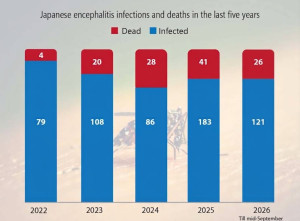
JE is killing more adults in Nepal as vaccination only covers children
Flood survivors face water shortages, disease risk in crowded holding centres
24 days after flood, hunger grips three Rasuwa wards
Four die in three weeks as scrub typhus spreads in Salyan
Seven die of scrub typhus in one month in Salyan
Editor's Picks

What triggered the Rasuwa flood? Scientists piece together a complex chain of events

The floods keep coming. Nepal keeps starting over

In a settlement destroyed by the Bhotekoshi flood, a disabled couple offer strangers the little they have

Nepal working on detailed assessment as Bhotekoshi flood reconstruction could cost up to $5 billion

Rabindra Dhant gave Nepal a reason to smile. Now his camp wants real action behind the praise
E-PAPER | September 29, 2026

×