Snow puts HPV vaccination on hold in five mountain districts
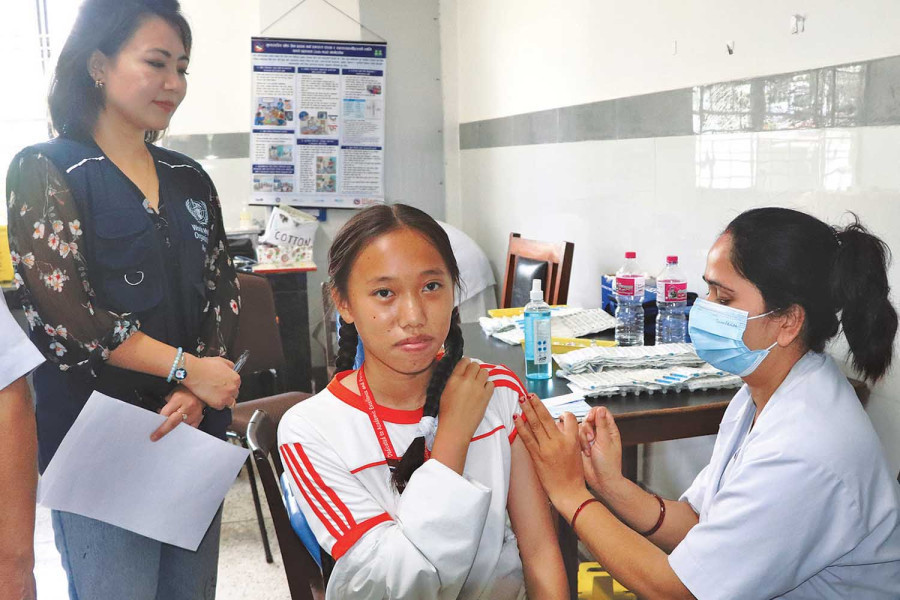
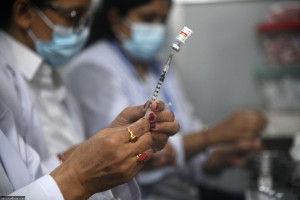
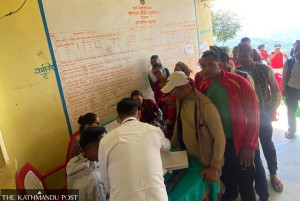
Vaccination is ongoing in 72 districts targeting grade-six girls in schools and 10-year-olds out of school to curb cervical cancer. Vaccination in Manang, Mustang, Humla, Dolpa, and Mugu to begin after March 5 elections. RSS File Photo
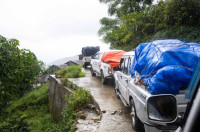
Vaccination against human papillomavirus (HPV) will begin only after March 5 in five mountain districts—Manang, Mustang, Humla, Dolpa and Mugu—as chilling weather conditions have forced health authorities to delay the rollout.
Health officials say that the ongoing vaccination drive in 72 districts across the country will be completed by the end of February, and immunisation in five mountain districts will start only after the snow melts.
“Snowfall in various parts of Manang, Mustang, Humla, Mugu and Dolpa districts has delayed the vaccination,” said Dr Abhiyan Gautam, chief of the Immunisation Section at the Family Welfare Division under the Department of Health Services. “All eligible girls will be administered the vaccine once the weather improves.”
HPV infection spreads through skin-to-skin contact and is a leading cause of cervical cancer—the second-most common cancer in the developing world. Cervical cancer is a major cause of death among Nepali women, with hundreds diagnosed every year.
The government has included HPV vaccine in the regular immunisation list and has decided to administer the vaccine between mid-February to mid-March.
However, this year, the Ministry of Health and Population directed the agencies concerned to postpone vaccination citing possible disruptions due to the parliamentary elections.
Officials say all girls aged 10, or those studying in grade six will be inoculated with the vaccine.
Around 345,000 girls studying in class six are the target population for vaccination. An additional around 55,000 girls, who are out of school, are also eligible to receive the vaccine, according to officials. Health workers will administer the vaccine in schools, while 10-year-old girls not attending school can receive the vaccine at health facilities.
Gautam said that the vaccination programme has been running smoothly in 72 districts.
Although the exact number of patients suffering from cervical cancer in Nepal is not known, it is estimated that every day, at least four women die of the disease. BP Koirala Memorial Cancer Hospital in Bharatpur said that more than 700 new cancer patients seek treatment at the hospital every year.
Doctors say HPV exists in more than 100 different forms, ranging from low-risk to high-risk infections. HPV types 16 and 18 are frequently associated with invasive cervical cancer compared to other types and are considered more carcinogenic.
Most cases of cervical cancer are associated with HPV, according to doctors. Widespread immunisation could significantly reduce the impact of cervical cancer and other HPV-related cancers. Early treatment can prevent up to 80 percent of cervical cancer cases, according to them.
The Ministry of Health and Population launched a nationwide HPV drive in February-March last year and inoculated around 1.5 million girls between 11 and 14 with a single dose of HPV vaccine.
Experts say the HPV vaccine is effective when given before a girl becomes sexually active. The vaccine is less effective for women who are sexually active.
The Global Alliance for Vaccine and Immunisation (GAVI) has supplied required vaccine doses for last year’s campaign and this year’s routine programme. Officials say that the alliance has committed to supply vaccine doses for routine immunisation programmes also.
The World Health organisation says HPV vaccination is recommended as part of a coordinated strategy to prevent cervical cancer and other diseases caused by the virus. According to the UN health body, cervical cancer is the fourth most common cancer in women worldwide and claims over 350,000 lives each year.




 19.27°C Kathmandu