No hospital in Nepal is equipped to handle potential Ebola cases
Doctors warn that delay in preparedness could turn even a single infection into a major health crisis. over 970 Nepali peacekeepers are currently deployed in the Democratic Republic of Congo under a UN peacekeeping mission, including in Bunia in Ituri province, the epicentre of the outbreak. Reuters
At a time when Ebola was spreading across several African countries in September 2015, a Niger national had come to Nepal without legal documents. When infrared thermal imaging cameras at the health desk at Tribhuvan International Airport detected a high temperature, health workers stationed there for temperature screening fled in panic. Even some police personnel reportedly fled from the scene.
Two policemen pointed their guns at the man and ordered him not to move. The frightened man started to cry.
“A kind of panic broke out at the airport. I myself had reached the airport to take stock of the situation,” said Dr Baburam Marasini, a public health expert who was then director at the Epidemiology and Disease Control Division. “The foreigner had entered the country illegally, and the fever was likely due to stress. We kept him in the custody room overnight and deported him on the same plane he arrived on.”
Ebola is a highly contagious viral disease caused by infection with an orthoebolavirus found in sub-Saharan Africa. According to the US Centres for Disease Control and Prevention, it can cause serious and often fatal illness, with mortality rates as high as 80-90 percent.
Currently, a new Ebola outbreak in the Democratic Republic of the Congo and Uganda has caused widespread concern, with approximately 170 suspected deaths and over 900 infections since last month.
Health experts in Nepal say the country remains vulnerable to infectious diseases due to high global mobility. With thousands of international arrivals daily and frequent movement of migrant workers, diseases can enter the country from any region.
Moreover, over 970 Nepali peacekeepers are currently deployed in the Democratic Republic of Congo under a UN peacekeeping mission, including in Bunia in Ituri province, the epicentre of the outbreak.
Public health experts, virologists, and infectious disease specialists say Nepal is not prepared to handle even a single Ebola case. They add that little has changed regarding preparedness since 2015.
“Whatever officials claim, our health system is fragile and not ready to handle highly contagious diseases like Ebola,’’ said Marasini. “Even if a single infected patient reaches major hospitals like Bir Hospital, Tribhuvan University Teaching Hospital, Patan Hospital, it will be a major disaster.”
Experts say designated hospitals are needed for handling highly contagious diseases like Ebola. The government has not yet designated any hospital for Ebola treatment or started preparations accordingly.
Officials say airport health desk staff have been alerted, but doctors warn that infected individuals could enter the country during the incubation period, when symptoms are not yet visible but transmission can still occur.
“What guarantee is there that an infected person will go directly to a designated hospital?” asked Dr Prabhat Adhikari, an infectious disease expert. “They may first visit a pharmacy or clinic, which is completely ill-equipped to handle infectious diseases.”
Doctors say the virus is transmitted through bodily fluids and secretions, which must be properly disinfected before being disposed of in sewage systems. Such systems are not available in any hospital in Nepal, according to doctors.
“We have neither testing kits, nor vaccines, nor treatment for the Bundibugyo strain of Ebola virus,” said Adhikari. “Authorities have not taken the risk of a possible outbreak seriously, which could prove to be another blunder. During the Covid pandemic, officials initially claimed cases would remain in the double digits. We all know what happened. Ebola is far more deadly than coronavirus.”
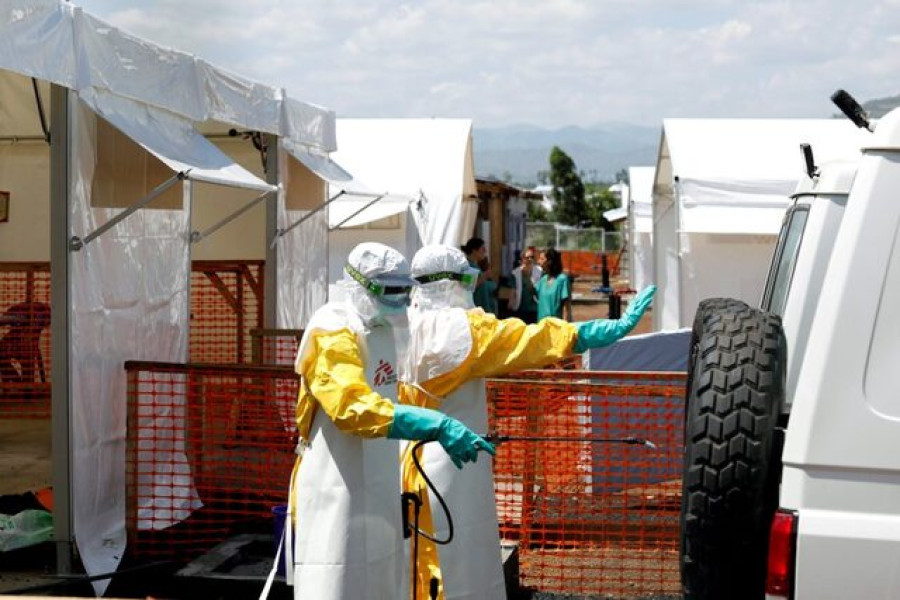
Experts say quarantine and isolation centres far from settlements are needed for suspected cases, along with double-cab ambulances and trained drivers and security personnel. However, nothing has been done so far.
Former health officials say that during the 2014-16 Ebola outbreak in Africa, they trained over 1,000 health workers, designated treatment centres, and coordinated with security agencies for preparedness.
They say that Ebola testing requires sending samples to the World Health Organisation’s Collaborating Centres abroad, international airlines are often reluctant to transport infectious samples.
“We have provided training to health workers on donning and doffing—putting on personal protective equipment and taking off,” said Dr Anup Bastola, director at the Sukraraj Tropical and Infectious Disease Hospital. “Preparedness is needed not only for Ebola but also for other deadly diseases, as outbreaks can occur at any time.”
Ebola symptoms include fever, headache, vomiting, severe weakness, abdominal pain, nosebleeds and vomiting blood.
Experts have urged authorities to strengthen lab capacity, train health workers, and step up surveillance measures. They say even though the current risk of Ebola spreading in Nepal is low, it would be a mistake to rule it out and become complacent.
“We should not wait for the infected patient to come to the hospital for treatment to start necessary preparation,” said Dr Sher Bahadur Pun, chief of the Clinical Research unit at the Sukraraj Hospital. “Complacency from a part of the government kills and invites disasters.”
Meanwhile, the Nepal Army said that it has decided to enforce mandatory 21-day isolation for its peacekeeper troops returning from the Democratic Republic of Congo.
“We will not allow personnel arriving from the Ebola-hit countries to meet anyone or go home until they complete 21 days of isolation,” said Brigadier General Raja Ram Basnet, who is also the spokesman for the army. “We are coordinating with all relevant agencies, including the Ministry of Health, the Ministry of Foreign Affairs and also with the United Nations to prevent any risk of transmission through returning troops.”
The army said that none of the Nepali peacekeepers has contracted Ebola so far.
Arjun Poudel is a health reporter for The Kathmandu Post. Before joining the Post, he worked for Sagarmatha Television, Naya Patrika, Republica and The Himalayan Times.




 19.73°C Kathmandu