



 17.53°C Kathmandu
Tue, Sep 29, 2026
Health
Cervical cancer screening in Kathmandu finds 90 women positive for HPV
While the HPV vaccine included in the routine immunisation list targets types 16 and 18, recent screening shows infections with multiple HPV types, including those not covered by the vaccine.
bookmark
Arjun Poudel
Published at : July 20, 2026
Updated at : July 20, 2026 20:59
Kathmandu
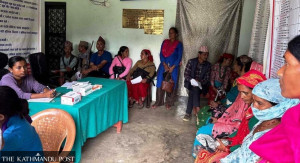
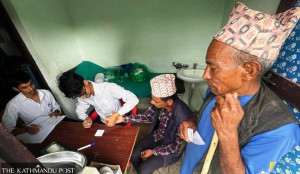
Ninety women who underwent random cervical cancer screening carried out by the Kathmandu Metropolitan City have tested positive for human papillomavirus (HPV).
According to officials at the municipal health department, the women had no symptoms and were unaware of their condition until the screening.
“Of the total positive cases, 12 were infected with HPV-16 and 13 with HPV-18,” said Chandra Bhatta, focal person of the cervical cancer screening programme of the metropolis. “The remaining 65 women were infected with other types of HPV.”
Human papillomavirus is a viral infection that spreads through skin-to-skin contact and is a leading cause of cervical cancer—the second-most common cancer in the developing world. Cervical cancer is a major cause of death among Nepali women, with hundreds diagnosed every year.
Although the exact number of patients suffering from cervical cancer in Nepal is not known, it is estimated that at least four women die of cervical cancer every day.
The screening was carried out between March 30 and May 4, during which 2,975 women were examined. Of them, 2,779 underwent HPV DNA testing and 1,450 underwent genotype testing of the HPV virus. DNA testing detects HPV genetic material in cells collected from the cervix, while genotyping identifies the specific type of HPV present in the cervical cell samples.
As the city office had a limited number of testing kits, only 1,329 women were tested specifically for HPV types 16 and 18. HPV types 16 and 18 are estimated to cause about 70 percent of cervical cancer cases.
“First, we organise a screening camp for around a month and then perform other testing, including biopsy, mammogram, ultrasound scanning and others, which takes several weeks,” said Bhatta. “Our findings show that many women, who believe they are healthy may be living with various forms of cancer and infected with cancer-causing viruses.”
Officials say the finding also shows that women in Nepal are infected not only with HPV types 16 and 18, but also with dozens other HPV types. HPV types 16 and 18 are frequently associated with invasive cervical cancer compared to other types, meaning that they are more carcinogenic than other types.
Experts say HPV has more than 200 types, ranging from low-risk to high-risk strains. Around 40 infect the genital tract, and around 14 types are classified as high-risk because they can cause cervical and other cancers. Low-risk types generally cause genital warts or no symptoms at all.
Health officials said colposcopy was performed on all 90 women who tested positive for HPV. It is a medical procedure in which a doctor closely examines the cervix, vagina and vulva using a colposcope—a special instrument with a bright light and magnifying lenses.
Six women underwent polypectomy to remove uterine polyps, and 24 underwent cervical biopsy.
Eleven of the women who tested positive for HPV were diagnosed with cervical intraepithelial neoplasia (4 high-grade and 7 low-grade), which refers to precancerous changes in cells lining the cervix.
Doctors say cervical intraepithelial neoplasia is not cancer, but if left untreated, high-grade lesions can develop into cervical cancer over time.
Nepal has included the HPV vaccine in its routine immunisation programme and provides a single dose to all 10-year-old girls. The HPV vaccine, included in the routine immunisation list, targets types 16 and 18 of the virus.
Apart from screening for cervical cancer, the health department of the city office had also carried out breast examinations on 2,961 women, and mammography was performed on 411 of them. Breast biopsy was performed on four women, and of them, two tested positive and are currently receiving treatment.
“Most cancer patients in Nepal seek treatment only after symptoms start to emerge,” said Dr Ujjwal Chalise, executive director at the Bhaktapur Cancer Hospital. “Symptoms often do not appear in the initial stages of the disease, and by the time they do, it is often too late, resulting in poor treatment outcomes.”
Experts say local governments should ensure that services for basic cancer screening are available in local health facilities, stressing that early detection markedly improves treatment outcomes.
Arjun Poudel
Arjun Poudel is a health reporter for The Kathmandu Post. Before joining the Post, he worked for Sagarmatha Television, Naya Patrika, Republica and The Himalayan Times.

Most Read from Health
JE is killing more adults in Nepal as vaccination only covers children
Flood survivors face water shortages, disease risk in crowded holding centres
24 days after flood, hunger grips three Rasuwa wards
Four die in three weeks as scrub typhus spreads in Salyan
Seven die of scrub typhus in one month in Salyan
Editor's Picks

What triggered the Rasuwa flood? Scientists piece together a complex chain of events

The floods keep coming. Nepal keeps starting over

In a settlement destroyed by the Bhotekoshi flood, a disabled couple offer strangers the little they have

Nepal working on detailed assessment as Bhotekoshi flood reconstruction could cost up to $5 billion

Rabindra Dhant gave Nepal a reason to smile. Now his camp wants real action behind the praise
E-PAPER | September 29, 2026

×