JE is killing more adults in Nepal as vaccination only covers children
Immunisation experts urge authorities to vaccinate everyone above 30, citing a shift in the age group at risk and a high risk of fatality among unvaccinated people.
Nepal is witnessing a steep surge in cases of Japanese encephalitis infections, a viral disease that causes inflammation of the brain. The disease is not only making people sick but also taking a heavy toll, which immunisation experts say is alarmingly high.
Health ministry data shows that out of 121 infections since June this year, 26 people have died, a 21.5 percent fatality rate, the highest of all vector-borne diseases in the country.
Japanese encephalitis cases have risen steadily in Nepal since 2022, when at least four people died out of 79 infections. In 2023, 108 people were infected, of which 20 had died; 2024 saw 86 infections and 28 deaths; while in 2025, 41 people had died out of 183 infections.
The number of infections is likely to rise further this year, health officials say, as peak JE season is ongoing and more cases are being reported from various parts of the country.
The death rate has increased from five percent of total infections in 2022 to 33 percent in 2024. The death rate was 19 percent in 2023 and 23 percent in 2025.
A comparison with neighbouring India reveals a stark contrast, with Nepal’s JE fatality rate over twice as high.
“India’s lower infection and fatality rates stem from its free, two-dose vaccination programme, which established widespread immunity,” said Dr Shyam Raj Upreti, an immunisation expert. “Nepal cannot reduce JE infections, severity, and deaths without mass vaccination.”
A shift in the trend of JE infection has also emerged in recent years as more people above 30 years of age are getting infected, becoming severe and dying, unlike in the past, when more children used to get infected and succumb to the killer viral disease.
Data shows that those who are unvaccinated are at high risk of getting infected, developing severe disease, and dying.
“In the past, more children died from JE infection, and when the government administered the vaccine to people in the under-30 cohort, severity and deaths in that group have lessened,” said Dr Arun Kumar Neopane, a senior paediatrician who is also a member of the National Immunisation Advisory Committee. “Now people above 30 are getting severe and dying. Most people above 30 in Nepal have not been vaccinated against JE.”
JE has long been a major public health problem in Nepal. The virus killed nearly 2,000 people in Nepal in 2005, mostly children in the Tarai districts.
Nepal started administering the JE vaccine in 2006, eight years before the WHO officially issued prequalification certification, due to high rates of infection and deaths. The programme was later expanded with support from donors and global health partners. In the initial stage, the vaccine was administered to all in the high-risk districts. Later, it was administered to children under 15 in areas endemic for the JE virus.
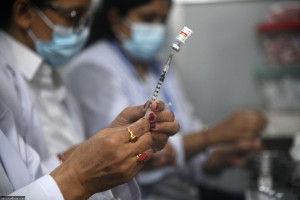
The vaccine was included in the routine immunisation programme in 2015 and is provided free of cost at state-run health facilities. But the programme does not cover adults, even though it has been killing many adults in recent years.
As risk has shifted by age group, experts urge the government to administer the vaccine to everyone who has not yet received it.
“Those who were jabbed with the vaccine have immunity against the disease,” said Neopane. “Those who are not immunised against JE are getting infected, becoming severe and dying. Such people are in large numbers and are at high risk of infection.”
Japanese encephalitis is a viral brain infection that kills about a third of those who develop severe illness, while up to half of survivors are left with severe, lifelong disabilities, according to the World Health Organisation.
This year, the deadly disease is found to have spread in 84 local units in 36 districts, and cases of the infection have been reported from all seven provinces across the country.
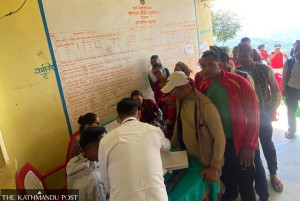
Meanwhile, the health ministry said it has completed all necessary preparations to launch a vaccination drive in three local units in Kailali district. All people above 30 in three local units—Dhangadhi Sub-metropolitan City, Lamkichuha Municipality and Ghodaghodi Municipality—will be given JE vaccines from Thursday.
“Vaccination drives will start from September 21 in the entire Jhapa district,” said Dr Abhiyan Gautam, chief of the Immunisation Section at the Family Welfare Division of the Department of Health Services. “Vaccination is the most effective method to address ongoing severity and deaths from infections.”
At least six people have died in Jhapa from JE infection, the highest in the country. Two deaths have been reported each from Sunsari, Saptari, Parsa, Kailali, and Arghakhanchi, and one each from Morang, Ilam, Rautahat, Dhanusha, Kavrepalanchok, Dang, Tanahu, Nawalparasi-West, Kanchanpur, and Rolpa. Seventy-seven percent deaths occurred among people above 50 years of age, and all deceased were found unvaccinated, according to government officials.
Doctors say JE can cause permanent damage to the brain and nervous system, and there is no specific treatment. Care focuses on managing symptoms and complications.
Experts say the government should launch vaccination for all age groups, especially in high-risk areas. They say the government’s primary responsibility is saving lives, and once it is accepted, funds should not be an issue in protecting the population.
“One can talk about sanitation and other measures, but infection will not stop at once by those measures,” Upreti said. “Vaccination is currently the only available option to control the infections.”
Health officials, however, said the government has not allocated funds to vaccinate the entire unvaccinated population this year and has no immediate plan to do so.
Along with vaccination, experts said awareness, improved sanitation and hygiene, and behavioural changes are important to reduce transmission.
JE is transmitted to humans through bites of infected Culex mosquitoes, which breed in areas such as paddy fields. Pigs and ducks are natural reservoirs of the virus. Pig farmers and people living near paddy fields are particularly vulnerable to JE.
“Had the vaccination started before monsoon, it would be more effective and more lives could have been saved,” Upreti, the immunisation expert, said. “Vaccination is being launched in the midst of the disease outbreak, which has a chance of adverse effects on those who are in the incubation period after infection.”
An estimated 12.5 million people in Nepal are thought to be at high risk of JE infection.
Arjun Poudel is a health reporter for The Kathmandu Post. Before joining the Post, he worked for Sagarmatha Television, Naya Patrika, Republica and The Himalayan Times.




 16.18°C Kathmandu