A four-year-old died of rabies at home last week, but his death does not appear in government records
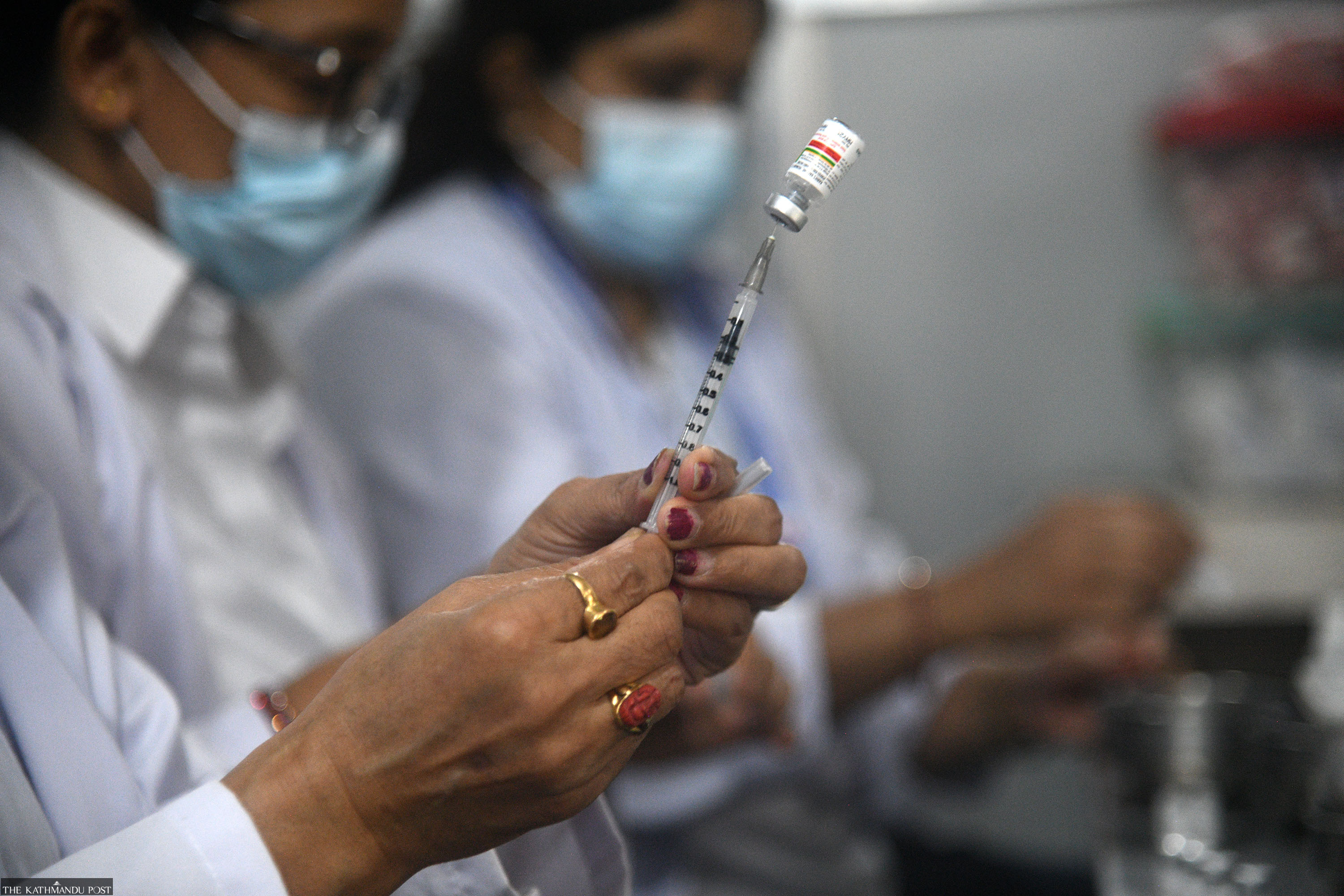
Children are particularly vulnerable to rabies, while misconceptions about puppies can delay lifesaving treatment. Health workers prepare rabies shots for patients at Sukraraj hospital, Teku. Post File Photo
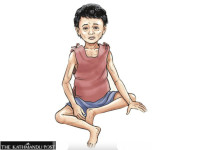
On September 23, a four-year-old boy from Sindhuli was rushed to Sukraraj Tropical and Infectious Disease Hospital in Kathmandu after he developed rabies symptoms. The following day, his health worsened, and doctors shifted him to the intensive care unit.
After learning that treatment of rabies is impossible once the symptoms appear, and seeing the child’s health deteriorate, his parents took him home from the hospital.
“We’ve been informed that the patient died on the way home,” a doctor at the hospital told the Post on condition of anonymity, as he is not authorised to speak to the media. “His death does not appear in government records, as the government only records deaths that occur in state-run health facilities.”
Rabies is a deadly viral disease spread through the saliva of infected animals, especially dogs and jackals. In Nepal, the virus is transmitted mainly through dog bites.
The Epidemiology and Disease Control Division recorded 223,510 animal bites in the fiscal year 2024-25. Dogs were responsible for 96 percent of them. An estimated 100 people die from rabies in Nepal every year. Over 600 people get bitten by dogs every day in Kathmandu Valley alone.
Health workers prepare rabies shots for patients at Sukraraj hospital, Teku. Post File Photo
Experts, however, say the number could be just a tip of the iceberg. People who were never vaccinated or those who received vaccines from private health facilities and from pharmacies paying out of pocket do not appear in government records. Often, deaths from infection go unrecorded due to flaws in the health data system, as in the case of the child from Sindhuli.
According to a report by the division, around 99 percent of human rabies cases are transmitted by dogs. Children are disproportionately affected by dog bites and rabies, as per the report.
Doctors say most rabies deaths occur when dog bite victims do not receive the anti-rabies vaccine on time. People also become complacent when they assume the dog is a pet, a familiar animal, or a puppy.
The victim who succumbed to rabies last week was reportedly bitten by a puppy.
“Children often love to play with puppies,” said Dr Sher Bahadur Pun, chief of the Clinical Research Unit at Sukraraj Hospital, Teku. “Even if puppies bite, children don’t report to their parents due to fear of getting scolded. Parents also become complacent, believing that puppies don’t carry the rabies virus. This is a misconception which has led to the death of many people bitten by puppies.”
This year, health officials expect more rabies cases in Nepal, as health authorities failed to supply anti-rabies vaccine to health facilities for months. Dog bite victims, who could not afford to purchase vaccines out of pocket, were deprived of rabies shots. Patients were either forced to travel to Kathmandu for rabies shots or pay up to Rs1,000 for each dose of the vaccine. A dog bite victim needs at least four doses of vaccine within a month.
Health facilities in several provinces purchased rabies vaccines on their own and requested the vaccine supply from provincial government bodies and local governments. Even the Sukraraj Hospital, the central referral facility for animal bite management, requested the Kathmandu Metropolitan City, Bagmati provincial government and Gandaki provincial government for rabies vaccine earlier this year.
Nepal aims to eliminate dog-transmitted rabies by 2030, a target set by the World Health Organisation (WHO). However, the health ministry’s data show that dog bite cases have been rising every year.
Rabies kills 59,000 people globally every year—one person every nine minutes—mostly children and the poor, according to the WHO.
Arjun Poudel is a health reporter for The Kathmandu Post. Before joining the Post, he worked for Sagarmatha Television, Naya Patrika, Republica and The Himalayan Times.




 14.72°C Kathmandu