Government’s two-day weekend cuts off telemedicine for migrant workers
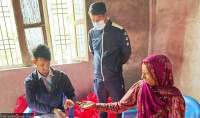
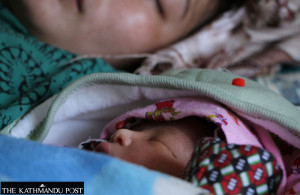
Bir Hospital’s hotline now operates only during office hours on weekdays, so workers in over 46 countries no longer have access to timely medical advice on weekends and after hours. Public health experts say the government ignored Nepal’s commitment to universal health coverage and migrant workers’ well-being by suspending the telemedicine service on weekends, public holidays and after office hours. Dipesh Darshandhari/TKP
Last month, on a Sunday, a 29-year-old woman from Abu Dhabi, UAE, called the hotline for the telemedicine service run by the Bir Hospital.
The woman, who hails from Kailali district and works as a domestic help in the UAE, had been suffering from cervicitis, a condition that causes severe abnormal vaginal discharge and abdominal and pelvic pain.
“She said she had also tried to call on Saturday and made every effort to contact a doctor, but couldn’t get through,” said a health worker at Bir Hospital, asking not to be named, as he is not authorised to speak to the media. "Since the government introduced a two-day weekend in April, the telemedicine service for migrant workers has been available only on working days [Monday to Friday]."
Her complaint echoes those of hundreds of Nepali migrant workers who have been deprived of healthcare services or forced to endure pain in a foreign land because of the government’s decision to enforce a two-day weekend.
Many migrant workers struggle to access healthcare services because of language barriers, limited access to health facilities, lack of health insurance, high transport costs, poor awareness of available services, and fear of losing their jobs if they take leave. For many, the telemedicine service is their only source of medical advice.
It is estimated that over 3 million Nepalis live and work abroad, with West Asian countries of Qatar, Saudi Arabia, and the UAE among the major destinations.
Every day, more than three dozen ailing migrant workers seek medical help through the telemedicine service jointly run by the Secretariat of the Foreign Employment Board and Bir Hospital. The service was launched about three years ago. Nepalis living in 46 countries use the service.
“Like other healthcare services, telemedicine has also remained unavailable on Saturdays and Sundays after the government enforced a two-day weekend,” said Dr Prakash Budhathoki, spokesperson for Bir Hospital. “The agreement signed with the Secretariat of the Foreign Employment Board states that the service will be available only during official working days and office hours.”
To address the fuel crisis triggered by the West Asian conflict, the government decided to close public offices for two days a week instead of the usual one day (Saturday) and extend office hours from 9 am to 5 pm on the remaining weekdays.As a result, thousands of people seeking public services and patients relying on state-run health facilities have been affected.
Many patients complain that they are forced to wait several days for services in the capital city and district headquarters, scheduled surgeries have been postponed, and they have had to pay high fees at private clinics.
Doctors at Bir Hospital said the woman broke down in tears when she finally managed to contact them on Monday and complained about the suspension of the service over the weekend.
“I was in serious trouble because of the unbearable pain,” a doctor quoted the woman as saying. “I hoped to contact a doctor and get medical help, but couldn’t when I needed it the most.”
Bhim Bahadur Saru Magar, a resident of Sankhuwasabha district who works as a security guard in Malaysia, told Bir Hospital staffers that he cannot call the telemedicine service during Nepal’s office hours because he does not get time off from work. When he returns, the telemedicine service has already closed.
“If the service is meant for migrant workers, what is the point of operating only during Nepal's office hours?” a hospital staffer quoting the man said.
The man, who has been struggling with insomnia and loss of appetite for months, also sent a long complaint to health workers, saying he does not have health insurance and that his employer does not care about the health issues of migrant workers. According to him, the employer’s representatives have threatened to punish anyone who complains.
Doctors at the telemedicine unit said many migrant workers suffer from insomnia, anxiety, lethargy, and alcohol abuse. Others struggle with loneliness and homesickness. Many have reported suicidal thoughts, while some complain of excessive fear for no apparent reason, which need immediate medical attention.
Officials at the Bir Hospital acknowledge that migrant workers keep calling the hotline even on holidays and weekends.
“The service should be available 24/7 if we are serious about addressing the health issues of migrant workers,” said Budhathoki, the hospital spokesman. “But that will require adequate financial and human resources.”
Health workers at the telemedicine unit said they used to respond to calls from migrant workers on holidays and weekends, but were not paid for the additional work.
Officials at the Ministry of Health and Food Safety said that they were unaware that the servie had been suspended on weekends and public holidays.
“The service should be made available 24 hours a day, seven days a week,” said Dr Samir Kumar Adhikari, joint spokesperson at the ministry. “I will inquire about this with officials concerned.”
Public health experts say the government ignored Nepal’s commitment to universal health coverage and migrant workers' well-being by suspending the telemedicine service on weekends, public holidays and after office hours.
“Such a decision can have a far-reaching impact on the health of migrant workers, their families, and society as a whole,” Dr Baburam Marasini, a public health expert, said.
Arjun Poudel is a health reporter for The Kathmandu Post. Before joining the Post, he worked for Sagarmatha Television, Naya Patrika, Republica and The Himalayan Times.




 23.14°C Kathmandu