Nepal’s health worker shortage is driving doctor-patient conflict
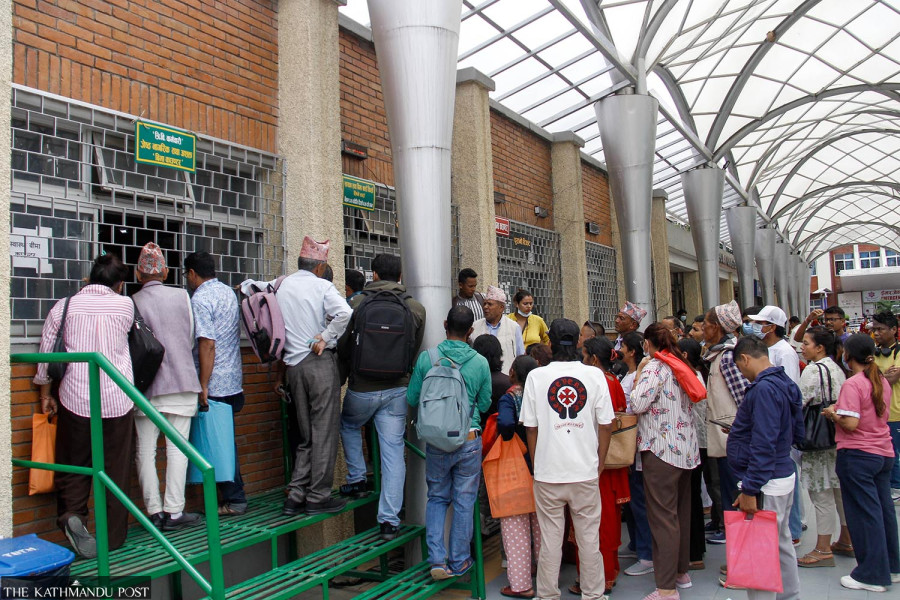
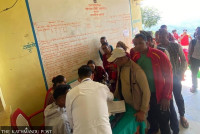
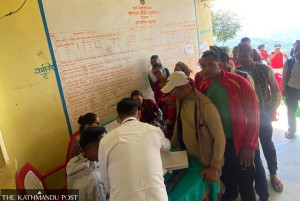
Decades of government failure to expand the health workforce have left doctors overworked, patients underserved, and assaults on health workers on the rise. People queue for tickets at TU Teaching Hospital in Maharajgunj after outpatient services resumed on Thursday. Outpatient services at hospitals across the country had been shut for two days after doctors protested the attack on a colleague at Narayani Hospital in Birgunj. Dipesh Darshandhari/TKP
On Wednesday, a doctor serving at a primary health care centre in Dolpa district called Dr Bishwa Raj Dawadi, general secretary of the Nepal Medical Association, with a dilemma. As the association urged doctors to boycott services after a colleague was assaulted in Birgunj, he wanted to know whether he too should join the protest.
The doctor explained that he was the only physician at the facility, responsible for the outpatient department, inpatient ward and emergency services.
"I could not ask him to stop providing services in support of the association's protest against the assault on fellow doctors," Dawadi said. "As human beings, we also have a moral responsibility towards our patients. If we continue the protest in its most extreme form by boycotting services, it could lead to unfortunate consequences."
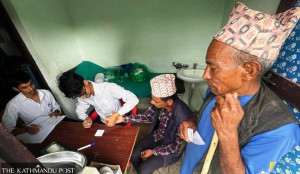
The predicament is not unique. Most of Nepal’s 187 primary health care centres have only one doctor and many of them are contract employees or scholarship doctors deployed by the Ministry of Health. They are expected to provide round-the-clock service to patients.
Successive governments’ failure to address chronic shortages of health workers has left doctors overstretched, patients underserved, and relations between the two increasingly strained.
“The problem is not with patients, and patients should not have problems with doctors either,” said Dr Sanjeev Tiwari, senior vice president of the association. “The government’s failure to recruit enough health workers is the root cause of the growing conflict between doctors and patients. It is turning them into sworn enemies, which is not good for society.”
Doctors say whether it is daytime or the middle of the night, a lone doctor at a primary health care facility is expected to be available whenever patients arrive. Even when doctors have personal health problems or family emergencies, they are expected to remain on duty.
Doctors say such chronic understaffing lies at the heart of the growing friction between health workers and patients.
“Like many other doctors, I also worked under the same circumstances,” said Dawadi. “Whenever I felt exhausted or burned out, I would take leave and go home to rest.”
Even in such a situation, the government does not send a replacement, and patients are deprived of basic health care services. Aggression of the relatives of patients often grows when they cannot find a doctor.
In the recent case at Narayani Hospital, Birgunj, a doctor on duty in the emergency department was assaulted following the death of a 45-year-old heart patient, who suffered a massive heart attack. Doctors said the hospital lacked the trained human resources needed to handle such critical cases. Enraged relatives attacked Dr Pramod Ram, leaving him injured and bleeding.
The injured doctor, who was admitted to the National Trauma Centre in Kathmandu, told office-bearers of the association that verbal abuse of health workers and doctors in hospital emergency departments had become routine, with such incidents occurring almost every day.
“We stopped caring about verbal abuse and threats long ago, but this time they hit me and broke my head,” Dawadi quoted Dr Ram as saying.
Multiple doctors the Post spoke to say that the government’s longstanding failure to recruit doctors and health workers is the main reason for the rising conflict between doctors and patients.
The government has not increased permanent doctor posts for 34 years. At the time when the organisational structure of state-run health facilities was approved in 1991, the country’s population was 18.4 million. According to the 2021 national census, the population has grown to 29.1 million.
There are around 1,500 permanent doctor posts under the three tiers of government—federal, provincial and local. Some also take leave, some take unpaid leave, and the Health Ministry itself sends some of them abroad for further studies.
“Around 1,500 additional doctors, including those hired on contract and scholarship doctors, are serving across the country,” said Dr Samir Kumar Adhikari, joint spokesperson at the Ministry of Health and Food Safety. “This year, the new government has approved 977 new permanent doctor posts, but it will take time for the Public Service Commission to recruit them.”
Experts say that, along with health posts and primary health care centres, most provincial and federal-level hospitals have been facing a severe crunch of human resources for years.
“We cannot ensure universal health coverage to all and retain trained doctors in the country unless we create permanent positions," said Dr Roshan Pokhrel, former health secretary. “Multiple services have increased and expanded, but human resources have not increased accordingly. It will be difficult to continue services in the long run if the underlying problems are ignored.”
The World Health Organisation Global Strategy on Human Resources for Health states that countries need at least 4.45 doctors, nurses and midwives per 1,000 people to achieve universal health coverage. Nepal’s health workforce remains below this benchmark.
Meanwhile, officials at the Nepal Medical Association said that they received reports of vandalism of the intensive care unit of a Bhaktapur-based hospital on Wednesday evening, while agitating doctors and the government representatives were signing an agreement to resume services and for the government to address their safety concerns.
Arjun Poudel is a health reporter for The Kathmandu Post. Before joining the Post, he worked for Sagarmatha Television, Naya Patrika, Republica and The Himalayan Times.




 19.85°C Kathmandu