As demand for human milk grows, ministry to operate van for collecting surplus from mothers at home
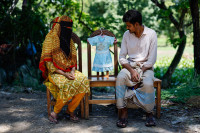
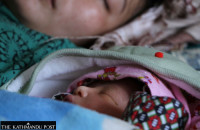
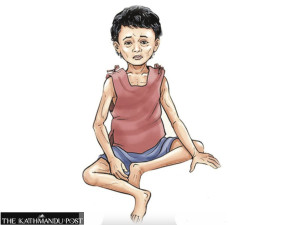
Since demand is excessively high and collection low, Human milk bank has been prioritising the infants with low weights and those critically ill for service.AI generated
In a bid to address a growing demand for human breast milk from maternity and children’s hospitals, the Ministry of Health and Food Safety is preparing to mobilise a van in the Kathmandu valley to collect breast milk from mothers with a surplus.
Officials say that a specialised mobile unit is dispatched by a human milk bank for safe transport, to visit donors at home and to transport fresh or frozen expressed breast milk under cold-chain storage conditions to the human milk bank run by the Paropakar Maternity and Women’s Hospital, Thapathali.
“Demand for human milk for newborns is much higher than the collection,” said Lila Bikram Thapa, chief of the Nutrition Section at the Family Welfare Division of the Department of Health Services. “Since it is impractical for new mothers to travel a long distance to the hospital to donate milk, we have introduced the concept of a human milk bank.”
Officials say that the United Nations Children’s Fund will provide a state-of-the art vehicle for collecting human milk to operationalise the service within two months. With the financial and technical assistance of the UN agency, the Thapathali hospital has been operating a human milk bank since August, 2022.
The hospital administration said that demand for breast milk is very high and the bank has not been able to supply to vulnerable infants as per the demands.
“Vulnerable infants, whose mothers are sick or died after giving birth or their breasts do not yield milk or critically ill newborns in neonatal intensive care units, premature babies with low birth weights need breast milk supplement,” Dr Sailendra Bir Karmacharya, a senior consultant paediatrician at the hospital.
“Since demand is excessively high and collection is low, we have been prioritising the infants as per the low weight and those critically ill to provide breast milk.”
Around 300 infants are admitted to the neonatal intensive care unit of the Thapathali hospital every month, and most of those infants require breast milk. Apart from that, several other hospitals in the Valley, including Tribhuvan University Teaching Hospital, Patan Hospital, and several other community and private hospitals, also seek breast milk at the bank for ailing and underweight infants.
Doctors say breast milk is collected mainly from mothers of ailing babies who are unable to breastfeed their infants admitted to intensive care units, as well as from mothers with an excess milk supply who wish to donate their surplus. The milk is then tested, pasteurised, and stored at minus 40 degrees Celsius.
Every day, 60 to 80 women deliver babies at the Maternity Hospital, which is the main source of breast milk collection. As most of the normal new mothers get discharged within a day or two, the bank cannot collect milk from such mothers.
“As breast milk cannot be manufactured, some new mothers have to donate it, and new mothers with surplus breast milk cannot visit the hospital for donation,” said Karmacharya. “So we have been preparing to operate a human breast milk collection van so that we can collect more.”
The hospital itself needs 1.5 to 2.5 litres of breast milk for babies admitted to the intensive care unit every day.
Doctors say human milk helps in reducing necrotising enterocolitis (NEC), a serious gastrointestinal problem that mostly affects premature babies.
Health officials say that the van will make rounds of all three districts of the Valley—Kathmandu, Lalitpur and Bhaktapur—to collect breast milk from mothers who are willing to donate their surplus.
Collected milk will be stored at the bank and can be used for six months, they say.
Doctors say human breast milk is the best source of nutrition and ensures the survival and healthy growth of babies. It bolsters brain development and has lifelong benefits for both the baby and the mother.
The human milk bank, launched in August 2022, aims to reduce neonatal deaths, which remain constantly high. The Ministry of Health and Food Safety has launched various programmes, including hiring staff nurses to promote exclusive breastfeeding. Exclusive breastfeeding has the potential to prevent 13 percent of under-five deaths, according to doctors.
A recent Nepal Multiple Indicator Cluster Survey carried out by the National Statistics Office in partnership with UNICEF shows that neonatal deaths are still 17 per 1,000 live births. The global target for Sustainable Development Goals is to reduce neonatal mortality to 12 deaths for every 1,000 live births by 2030.
The SDGs, a follow-up on the Millennium Development Goals (MDGs), aim to end poverty, hunger, and all forms of inequality in the world by 2030. Nepal has committed to meeting the goals.
Arjun Poudel is a health reporter for The Kathmandu Post. Before joining the Post, he worked for Sagarmatha Television, Naya Patrika, Republica and The Himalayan Times.




 19.72°C Kathmandu