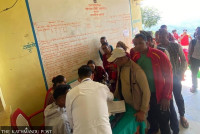
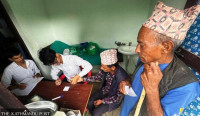
Officials at the Family Welfare Division under the Department of Health Services are scrambling to secure vaccine doses following a measles outbreak in the Malangawa Municipality of Sarlahi district.
Past experience shows that after an outbreak in one area, new outbreaks can occur anywhere at any time. Officials are concerned that the government has no doses in stock for a mass vaccination response.
The measles outbreak in Nepalgunj in 2022 spread to 23 districts nationwide, including in the Capital, Kathmandu. Experts say the risk of viral spillover to other areas is high due to heavy public movement to and from disease-hit Malangawa and the March 5 parliamentary elections.
“We do not have vaccine doses in stock for a mass vaccination campaign, which is required if an outbreak occurs,” said Dr Abhiyan Gautam, chief of the Immunisation Section at the Family Welfare Division. “We have alerted our development partners about the risk and have also requested vaccine doses in case of new outbreaks.”
Measles is a highly contagious viral disease transmitted through fluids from the nose, mouth or throat of an infected person. It can be potentially deadly for unvaccinated people.
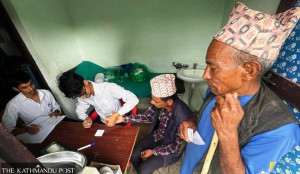
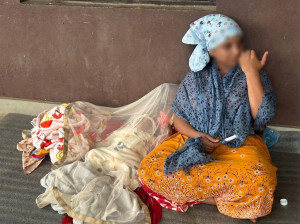
At least seven children tested positive, and 16 others were hospitalised with measles in the first week of January. The outbreak occurred in the Muslim community in ward 3 of the municipality. The 16 lab-unconfirmed cases are epi-linked (linked to a confirmed case) measles cases, according to officials. Several new suspected cases have been reported from disease-hit areas, according to the Health Ministry.
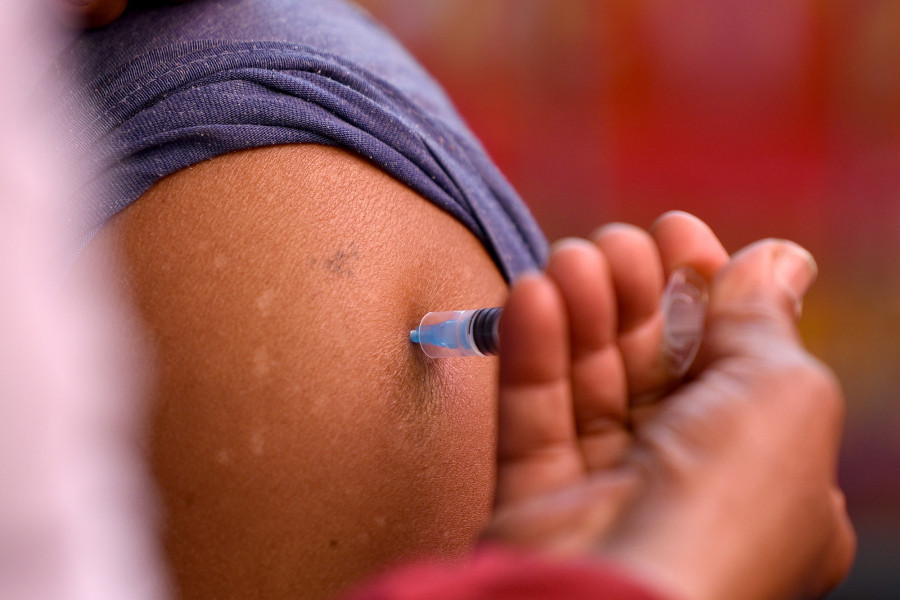
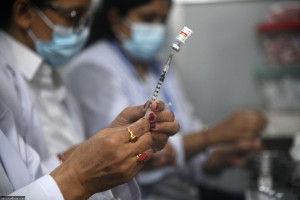
The disease can be prevented with a two-dose vaccine, administered to babies at the age of 9 months and 15 months. The government provides measles vaccines free of charge from health facilities across the country.
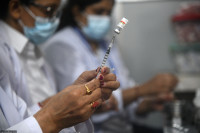
The Ministry of Health and Population plans to vaccinate all children aged 6 months to 14 years in the Malangawa Municipality to reduce the risk of further spread. It has requested the Measles & Rubella Partnership, a global alliance of major international organisations working to eliminate measles and rubella, for vaccine doses.
“We will vaccinate all eligible children of the municipality once we receive the doses from aid agencies,” said Gautam “We have also alerted relevant agencies about the risk of new outbreaks in other areas and stepped up surveillance measures.”
Nepal had aimed to eliminate measles by 2026, as there had been no outbreak since June 2023. However, the outbreak of the contagious virus in Malangawa hindered the country’s progress towards meeting the goal.
The country earlier missed the 2019 and 2023 deadlines. A massive measles outbreak occurred in 2022 and 2023.
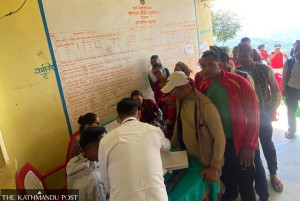
Meanwhile, Health Ministry officials say the ongoing vaccination campaign will be completed within the next couple of days as around 70 percent of the targeted children have already been inoculated. The ministry aimed to administer a measles vaccine dose to around 8,000 children under 15 years of age.
Child health experts say the outbreak in Muslim communities in Sarlahi points to gaps in Nepal’s vaccination coverage.
They say that the outbreak has also hindered Nepal’s aim to meet the Sustainable Development Goals (SDG) targets, as more outbreaks could occur in the coming days.
The SDGs, a follow-up on the Millennium Development Goals (MDGs), aim to end poverty, hunger and all forms of inequality in the world by 2030. Nepal has committed to meeting the targets.
To declare measles eliminated, the number of cases should be fewer than five per 1,000,000 people per year. The country must verify progress through foreign, independent verification. For independent verification, there should be no new outbreak for three consecutive years, officials say.
Doctors say people of all age groups are vulnerable to measles. Underage children, pregnant women, elderly people and those with weak immunity, such as HIV-infected people, are particularly susceptible.
Early symptoms, which usually appear 10-12 days after infection, include high fever, runny nose, bloodshot eyes and white, tiny spots inside the mouth. Several days later, rashes develop on the face, upper neck and other parts of the body.
Some people may suffer from severe complications, such as pneumonia and encephalitis, and these diseases may also lead to death.
Child health experts say a low vaccination coverage, floating populations, lack of public awareness of the importance of vaccines and apathy of government agencies for plugging the loopholes are some reasons behind the regular outbreaks of measles in various parts of the country.
Measles was endemic in Nepal, and an average of 90,000 cases were recorded every year from 1994 to 2004. Routine measles vaccination began in the country in 1979, starting with three districts. The campaign was made nationwide after 10 years.




 19.27°C Kathmandu