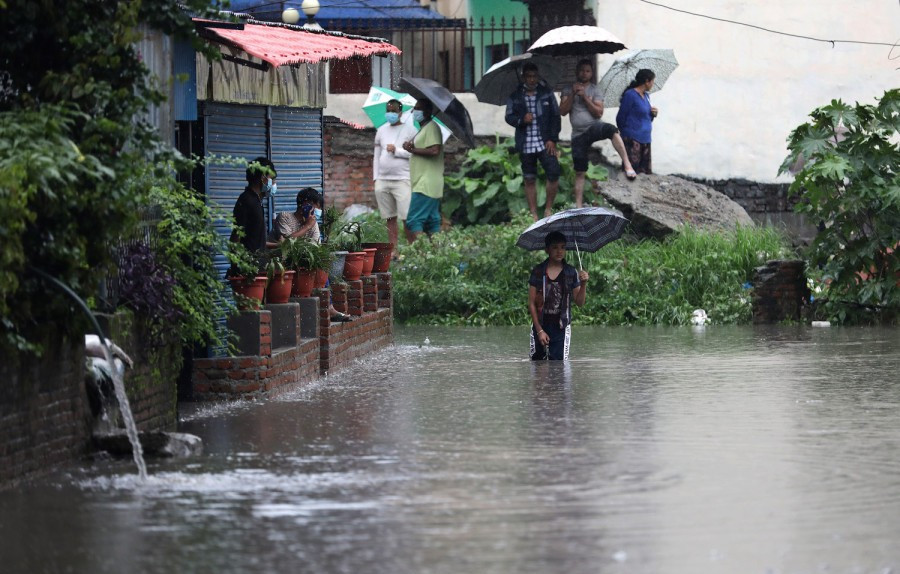
This year’s monsoon, which arrived a week later than usual, has swept across Nepal with new vigour. In response, authorities have activated rapid response and rescue operations, preparing for the worst. Speaking at a recent meeting of the National Disaster Risk Reduction and Management Authority (NDRRMA), Home Minister Sudhan Gurung announced that the government aims to ensure no lives are lost to monsoon-related disasters this year.
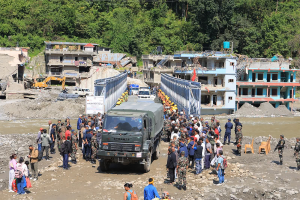
To this end, highly vulnerable and inaccessible areas have been identified, and 54 temporary monsoon response bases established. Permanent disaster management units are already operational in 16 high-risk locations. Security personnel have been placed on standby, helicopters and rescue equipment are ready, and emergency engineering assets are deployed near vulnerable highway segments. Additionally, the Armed Police Force has launched the “APF Community Alert System” mobile app to enhance real-time response and rescue efforts. Such mobilisation of resources is promising. It indicates significant improvement in the country’s disaster response capabilities, including timely weather forecasting, early warning systems that reach local populations, and better coordination among agencies.
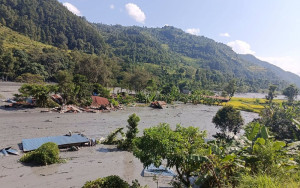
Yet every monsoon exposes vulnerabilities to disasters that emergency responses alone cannot conceal, raising a vital question: Are we truly preventing disasters, or are we simply managing them? Following constant rainfall, Nepal’s roads become impassable, and haphazard construction of infrastructure is putting many communities at risk. Moreover, repair works on major highways and roads are frequently delayed. For example, the BP Highway was severely damaged during the October 2024 floods. But since permanent road structures are as yet incomplete, people are forced to rely on temporary diversion roads, leaving them vulnerable. Even though communities know the risks of floods, many continue to build their homes in high-risk areas, encroaching on rivers and recklessly cutting hillsides through mining activities, which puts downstream settlements at risk. These structural issues that worsen the impact of floods and landslides remain largely unchanged.
Most crucially, in a country where climate change has amplified the risks of monsoon-related disasters, preparedness should not be solely measured by how fast rescuers arrive after landslides and floods have struck. Instead, it should evaluate whether our infrastructure can withstand heavy and erratic rainfall patterns, whether settlements are protected from flash floods and glacial lake outburst floods, and whether communities can withstand the monsoon without displacement. Erratic and intense rainfall means that structures built to meet the needs of the past may not meet the needed standard of the present. These issues must be integrated into our disaster response and preparedness plans without further delay.
Even before the monsoon’s onset, the NDRRMA reported that 27 people had died in disaster-related incidents since mid-April. This exposes the limits of an emergency-centric approach. High-alert measures will always be necessary in a country where successive governments have delayed rescue operations that could have saved many lives. During the previous monsoon, under the KP Oli-led government, when disaster struck, many were left to fend for themselves. However, after his government fell and Sushila Karki took the lead following the Gen Z protests, timely information and the closure of dangerous highways significantly reduced potential losses. Still, true preparedness means ensuring resilient infrastructure, sustained investment in disaster risk reduction and stabilising fragile slopes long before the monsoon clouds gather.




 13.68°C Kathmandu