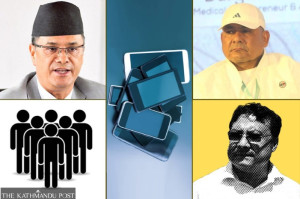
While the opposition has stretched its protests, the Speaker’s handling of recent disputes has done little to ease the growing trust deficit. Post File Photo
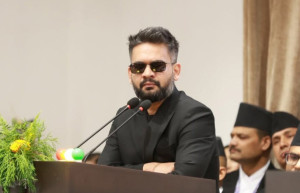
For the past few weeks the opposition, in every meeting, has been resorting to the obstruction of the House of Representatives. Their demand? That Prime Minister Balendra Shah clarifies on his controversial border encroachment remarks. The opposition is also dissatisfied with Speaker Dol Prasad Aryal. Every opposition lawmaker demanding Shah’s clarification is also castigating Aryal for failing to play an impartial role. On Wednesday itself, Nepali Congress and Shram Sanskriti Party lawmakers questioned if Aryal is still a member of the Rastriya Swatantra Party from which he made it to the House of Representatives. Even as there were some minor issues from the beginning, the trust deficit between the opposition and the Speaker deepened after Shah, without a House agenda, wanted a question-answer session with the lawmakers—and in which he made the controversial remark. In practice, the prime minister has to answer the lawmaker’s queries in Parliament on a prescribed date.
However, Aryal swiftly acted as Shah wanted, ignoring the Parliament’s regulation. Aryal was criticised for his apparent helplessness, as the prime minister left the legislature in the shadow of the executive. The same evening he pushed through the House of Representatives Regulations despite obstruction and sloganeering by opposition parties. The regulations have sparked controversy as they contain several iffy provisions. When the opposition gave continuity to its protests, the Speaker’s responsibility should have been to seek consensus through the Business Advisory Committee. He never called the meeting, and rushed through the endorsement using marshals. There have been incidents in the past where parties have discussed regulations for months.
Aryal was elected unopposed on April 5, which is uncommon in Nepal’s parliamentary history. It might be because his victory was imminent. However, it was also a message that he was an acceptable figure across party lines. The Speaker is legally required to give up party membership after being elected to the position, while in practice he must neither take nor appear to be taking any side. Such an impartial role is even more important when the government is powerful. However, many aspects of Aryal’s recent handling of parliamentary proceedings as the presiding officer of the House are problematic.
The responsibility for maintaining the dignity and credibility of Parliament rests largely on the Speaker. The way the opposition parties have been stretching the matter for weeks is also inappropriate. However, it is the Speaker who should be taking the initiative for intensive dialogue to resolve the disputes, a path Aryal does not seem to be pursuing. Nepal’s parliamentary history has seen figures such as Daman Nath Dhungana, who is widely remembered for upholding the principle that the House belongs to the opposition. Even though he was criticised for not being accommodative during the latter phase of constitution promulgation, Constituent Assembly Chairperson Subas Nembang was, for most of his tenure, known for prioritising dialogue whenever there were disputes. Yet, Nepal’s parliament has also seen Speakers, particularly in the recent past, who have been accused of toeing their respective party lines, making their tenures controversial—and who have thus brought disrepute to the office. Aryal has only just started his tenure. If he continues on his current course, the parliament will see more confrontation rather than deliberative lawmaking, to the detriment of the democratic process as well as his own public image.




 14.4°C Kathmandu