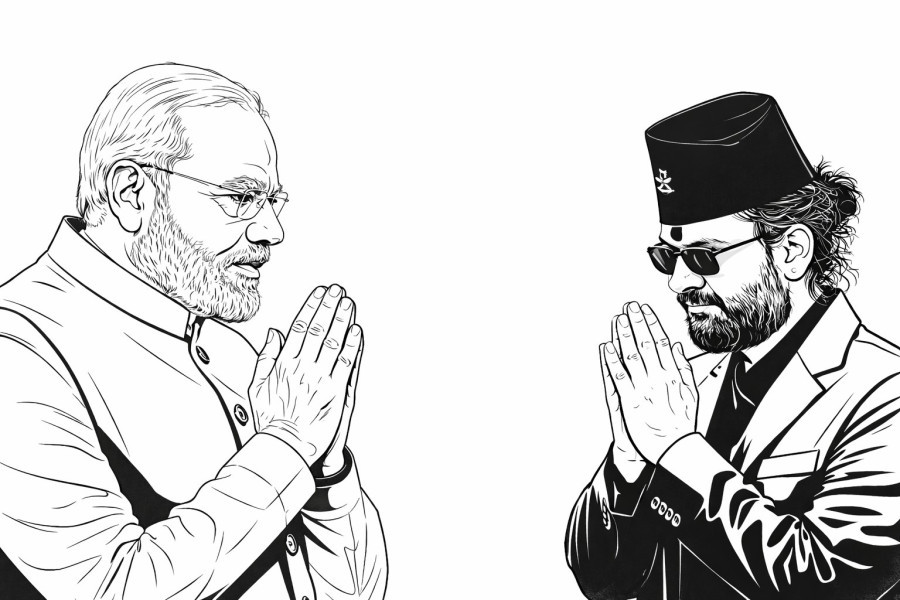
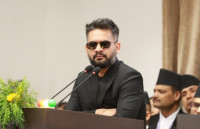
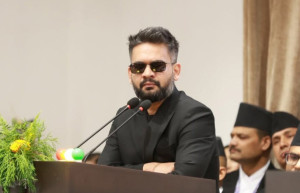
In keeping with the tradition of Nepali government heads making India their first foreign trip, Prime Minister Balendra Shah is expected to visit New Delhi soon. Speaking to The Post on Saturday, Foreign Minister Shisir Khanal revealed that Modi had extended a formal invitation right after Shah assumed office on March 27. It is also heartening to learn that both sides are determined to make the visit count by going above and beyond its symbolic value. Kathmandu and New Delhi seem to be in a mood for reset in bilateral ties after the topsy-turvy relationship under KP Oli, the previous, three-time Nepali prime minister. New Delhi had been increasingly hesitant of doing business with Oli, starting with his dogged nationalist stand during the 2015-16 border blockade. India’s initial suspicions of Oli—who was often projected south of the border as ‘China’s man’ in Kathmandu—solidified when Oli took the initiative to amend Nepal’s constitution to include a new map of Nepal. This map showed the territories of Kalapani, Limpiadhura and Lipulekh—all of which India claims—as falling firmly inside Nepali territories. He mocked India’s national emblem and made dubious claims like Nepal rather than India being the birthplace of Lord Ram.
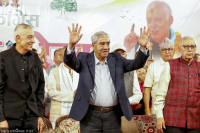
With Oli now sidelined from Nepali politics and the coming to power of the strong Rastriya Swatantra Party (RSP) government under Shah, there could be no better opportunity to mend the fraying Nepal-India ties. Rightly, there is optimism in both the capitals. Yet a touch of realism is also warranted. On many of the issues mentioned above, the Shah government will struggle to deviate much from the stands of the previous Oli governments. For instance, without committing a political hara-kiri, it would be impossible for the new RSP leadership to negotiate any deal that involves giving up sovereign Nepali territory in the Kalapani area. India and China have already announced reopening of trade through the Lipulekh pass, their trijunction point with Nepal, without consulting Kathmandu. Prime Minister Shah will be under pressure to at least raise this thorny issue with India while he is there. More than that, being seen as making many concessions to India so early in his tenure could be insalubrious for his political health.
But if the two sides are determined to improve ties, there is no reason they cannot find common ground. On India’s part, it could grant an additional air route to its landlocked neighbour that has struggled to improve its air connectivity with the rest of the world given the congestion in its current international air routes. It could also announce that Nepal would be taken into confidence on future trade through Lipulekh. For Nepal’s part, the new prime minister should make it clear, through words and action, that he has no intention whatsoever of trying to ‘play’ India against China and that all foreign policy decisions will be made strictly in adherence to Nepali national interest. Unlike in the case of some of his immediate predecessors, such a promise will be more credible coming from someone who has no baggage with any of the foreign powers. An agreement on an additional air route or in ensuring Nepal’s say in trading via Lipulekh would be another prominent feature in the cap of the popular Nepali prime minister who has captured the attention of people far beyond his country’s borders. If the two capitals choose pragmatism over posturing, PM Shah’s upcoming visit could mark not just a reset, but a rare moment when history stops dictating the future of Nepal-India ties.




 24.79°C Kathmandu