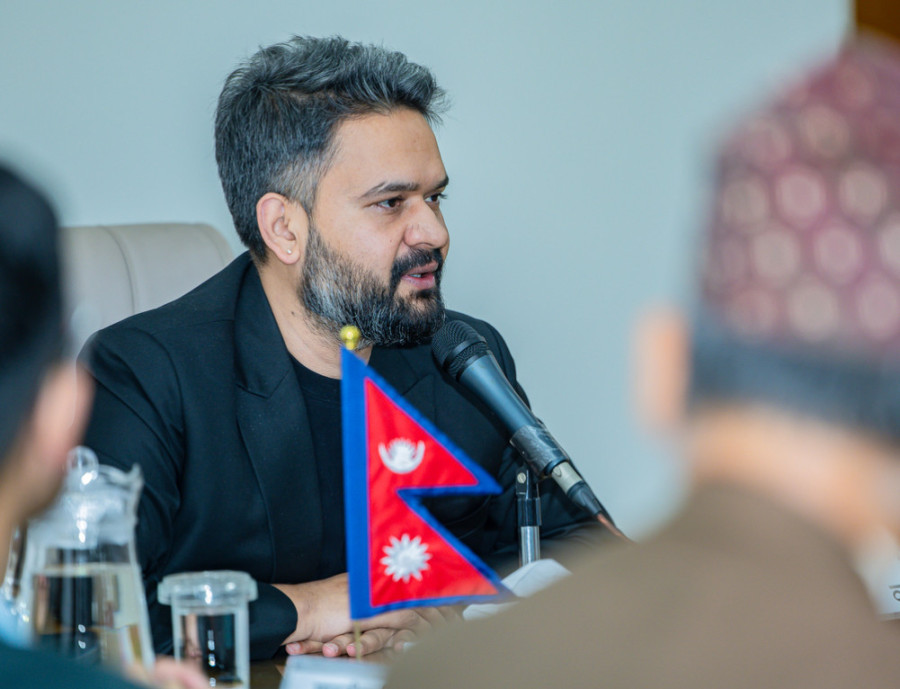
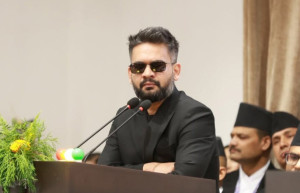
On assuming office, Prime Minister Balendra Shah set an important precedent by jointly briefing foreign ambassadors on the new government’s priorities. Earlier, ambassadors, especially from powerful countries, were often seen making a beeline to the private residence of a new Nepali prime minister. There was no institutional record of such meetings, which were held without representation from the foreign ministry. Even at other times, resident envoys of major powers like India, China and the US sought—and easily obtained—such off-the-record audiences with the executive head. Such meetings focused more on building interpersonal ties rather than on improving bilateral relations. This created a conflict of interest. Easy access of foreign diplomats to the private quarters of our top state officials has, over the years, been corrosive to Nepali national interest. But no one before Shah had dared to draw a red line. This is why the new prime minister’s initiative to enforce a strict diplomatic code of conduct came as a breath of fresh air in Nepali diplomacy.
Yet we believe a sense of proportion is also warranted. Prime Minister Shah has not only declined to individually meet foreign envoys, but also some top visiting officials. Most recently, Indian Foreign Secretary Vikram Misri’s scheduled Kathmandu visit was cancelled after his repeated requests for an audience with the Nepali prime minister went unanswered. Before that, Sergio Gor, US President Donald Trump’s special envoy for South and Central Asia, had failed to secure a meeting with Shah. Interestingly, both in the case of Misri and Gor, other members of the Cabinet like Swarnim Wagle and Sisir Khanal had urged Shah to reconsider his decision. But Shah was firm on his stand. Context is vital. Misri was coming to Nepal to officially invite Shah to visit India, on behalf of Indian Prime Minister Narendra Modi. The Nepali prime minister had earlier accepted an unofficial invitation and preparations were underway in both Kathmandu and New Delhi for Shah’s visit. Yet it was later revealed that Prime Minister Shah would not be making any foreign visits for a year. India must understandably feel snubbed. Even in the case of Gor, who has President Trump’s mandate to engage top government officials in the region, he was in Nepal after meeting—in the capacity of a top official of the Trump administration in South Asia—the prime minister and the king of Bhutan, as well as the president of Sri Lanka.
In other words, Shah can—and should—refrain from meeting every foreign official who arrives in Nepal. Such casual meetings only degrade the image of the highest office in the land. Yet he should also be mindful that Nepal’s close friends do not feel offended and the country’s interests are not compromised in the process. As ministers Wagle and Khanal must also have advised Shah, Nepal occupies a precarious geopolitical landscape and preserving its sovereignty entails maintaining a delicate balancing act with outside powers, especially India and China, as well as the ‘sky neighbour’, the US. Just as the Nepali state should not be perceived as weak by acceding to each and every request of foreign officials, it also cannot be seen as aloof or unmindful of the interests and sensitivities of Nepal’s important partners.




 17.08°C Kathmandu