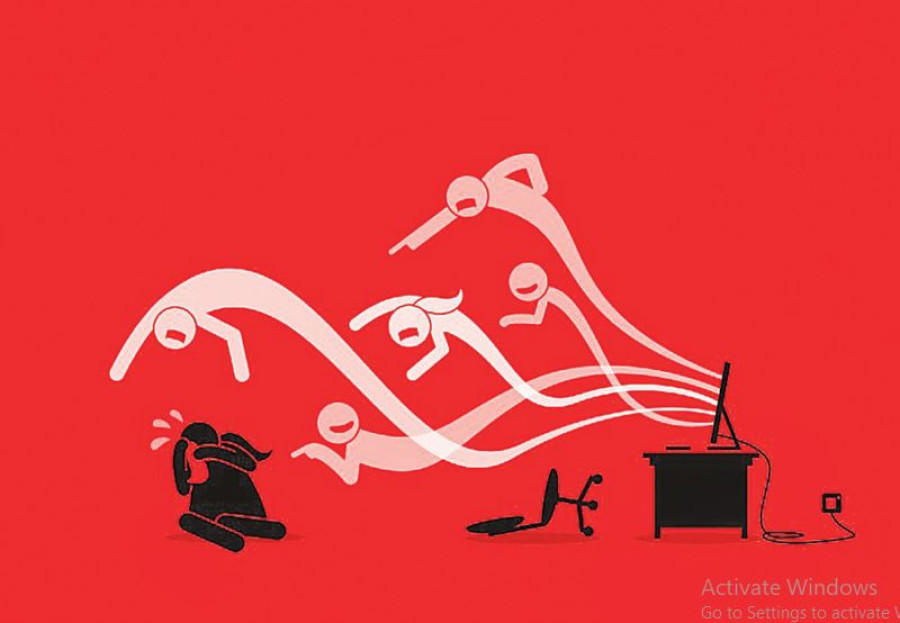
Nepal’s digital landscape is slowly transformed from a promising forum for democratic discourse into a vitriolic arena where dissent is met with digital lynching. This phenomenon represents an effort to silence individuals through harassment, character assassination and violent threats. The recent surge in cyber-related complaints from 1,801 in FY 2024-025 to 2,678 in the first nine months of FY 2025-026 signals a society teetering on the edge of a communication crisis.
The harrowing experiences of individuals like Amisha Parajuli—who faced a deluge of obscene abuse, rape threats and the distribution of AI-manipulated pornographic images—illustrate the sheer brutality of this digital mob culture. Such attacks often exploit platform algorithms that prioritise provocative and hate-driven content. These algorithms trap users in echo chambers where only one viewpoint is validated, and any deviation is viewed as a national betrayal, fostering an environment rife with dangerous division, leaving no room for the nuance essential to healthy governance.
The fear of digital evisceration is forcing people into self-censorship. Content creators, journalists and even artists now think multiple times before posting, wondering if a single sentence will trigger a boycott campaign. The message to the public is clear: Silence is the only safe option. This erosion of freedom of expression weakens democracy by eliminating dialogue and fostering a system centred on fear rather than debate.
The current legal framework is inadequate for the complexities of modern cybercrime. Nepal relies primarily on Section 47 of the Electronic Transactions Act 2008, a provision that has become a catch-all for various digital offences. The enforcement of this law is plagued by slow procedures and technical hurdles. Police often find themselves clueless when perpetrators use fake identities or when social media giants fail to respond to requests for IP addresses and URL details. Because some of these platforms lack offices within Nepal, law enforcement must navigate a bureaucratic maze that often leads to a dead end. This lack of accountability emboldens the digital mob, as the ‘online disinhibition effect’ convinces users that their anonymity grants them immunity from the consequences of their hatred.
To curb this growing menace, the government must move beyond reactive policing and establish a comprehensive policy on digital accountability and reform. An immediate step in the right direction involves updating the legal code to empower law enforcement. For example, if defamation cases were included under Schedule 1 of the National Penal Code, rather than requiring victims to navigate the courts independently, the police could investigate these crimes more effectively. Clarifying the legal definitions of digital lynching and harassment would also prevent the law from being used as a tool for state-sponsored intimidation, as observed when Smriti Timsina was interrogated for three hours over a video she posted on social media platforms.
It is equally important to demand institutional accountability from social media corporations. Authorities need to mandate that digital platforms establish local offices to facilitate faster cooperation with law enforcement. Without direct channels for data sharing regarding fake accounts and violent threats, the state remains powerless against anonymous agitators. Furthermore, the government must invest in technical training for the Cyber Bureau to enhance its ability to trace coordinated bot networks.
Finally, the solution requires a shift in digital literacy. Educational initiatives must be launched to help citizens recognise the manipulations of algorithms. Promoting a culture of healthy political debate and dissent is another way to counteract the ‘good versus bad’ narrative that currently dominates the online sphere. The state has a duty to protect its citizens, not just in the physical world but in the digital spaces that have become central to modern life. If the authorities fail to act, the digital gallows will continue to claim the voices of the bold, leaving behind a society defined by a hollow and fearful silence.




 14.69°C Kathmandu