The Chure range, a string of low hills stretching from Mechi in the east to Mahakali in the west, once supplied enough groundwater to Nepal’s southern plains, which were vital for sustaining life and supporting agriculture. Unfortunately, that is no longer the case. The already fragile range, with a weak geological structure, is steadily losing its ability to recharge groundwater. As a result, water scarcity is taking a heavy toll on residents. Just last year, Birgunj and Janakpur, major cities in the southern belt, saw an acute drinking water shortage during the monsoon, as borewells, their primary water source, failed to recharge. In mid-2025, Madhesh Province faced a severe, prolonged drought. Climate change has worsened the situation. Erratic rainfall patterns, reduced precipitation and short bursts of rain are all too common, intensifying the vulnerability of the Tarai-Madhesh region.
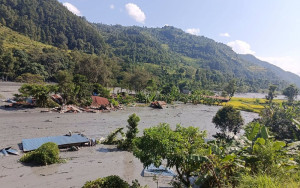
The reason for this is the haphazard extraction of riverbed materials and unplanned urbanisation along the Chure foothills. Such anthropogenic activities have worsened the weak geological landscape of the range, leading to soil erosion and frequent landslides. As a result, flat, fertile plains which were capable of absorbing and storing water are on the verge of becoming useless. Many rivers that once flowed along the East-West Highway have dried up because their sources in the Chure hills have disappeared, and they are waiting for heavy rainfall to revive them. Even rivers such as Sirsiya, which have not yet dried up, are polluted by toxic industrial waste. When people couldn’t access water resources, borehole drilling for irrigation became rampant, further exacerbating groundwater recharge problems. Now, it is not just humans who have been affected; both aquatic and terrestrial species are bearing the brunt.
Successive governments, which ought to have protected the region from further degradation, were reckless in excavating construction materials for export. During the budget announcement for fiscal year 2021-22, the then government went so far as to mine construction materials from the Chure hills and nearby rivers to minimise the trade deficit, flouting the 2014 ban on the export of such items. The fact that groundwater once found at 20 to 25 feet below is now well below 100 feet shows the depth of harm caused to the Chure range. It would therefore not be an exaggeration to say that Nepal’s southern plains are slowly being desertified. Not that conservation efforts are lacking in the region. For instance, the President Chure Conservation Programme, formed in the fiscal year 2009-10, aimed to prevent desertification. Millions of rupees have been poured into the cause, yet the plight of the Chure and the southern plain remains the same. Conservation policies will be of little use when the state itself seeks to profit by degrading the environment.
The slow destruction of the Chure hills shouldn’t be just seen as an environmental concern but addressed as a national emergency. It affects not only humans but also flora and fauna, rare wildlife and the country’s entire economy. The new government formed with a popular mandate has the opportunity to adopt a comprehensive national strategy for Chure conservation. Those involved in illegal mining of sand, soil and pebbles must be held accountable. Similarly, large-scale afforestation programmes can be launched to restore the soil’s groundwater recharge capacity. More effort must be put into the protection of wetlands, ponds and open spaces. Most crucially, there is a need to ensure that development in the Chure and environmental conservation go hand in hand. If the government doesn’t act on time, the damage could affect the health and well-being of millions of people.




 16.62°C Kathmandu