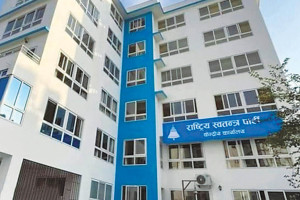
The Ministry of Education, Science and Technology released the results of the Secondary Education Examination (SEE) on Monday, just a month after the students sat the exams. The ministry deserves credit for conducting on-site evaluations, which eliminated the three-month delay in disseminating results. This suggests that the government, formed with a mandate to bring about a sea change in governance, has responded to the demands of the country’s youth, showing that with political will, administrative reform is achievable. Yet the good SEE results should not mask the need for an overhaul of the country’s school education system. With around a 4 percentage point increment in the pass rate from last year, 65.98 percent of students passed the exam this year, while 145,507 students fell under the ‘non-graded category’. As in previous years, the results expose the structural inequalities that plague our teaching-learning system.
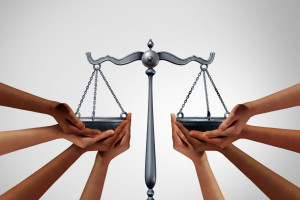
The disparity in pass rates between provinces and between public and private schools is staggering. While Bagmati Province boasted a 78 percent pass rate, Sudurpaschim recorded just around 51 percent. Karnali Province, which demonstrated encouraging progress last year, fell far behind the national average this time. Meanwhile, Madhesh Province is 7.5 percentage points below the national average. These statistics indicate that geography continues to shape the academic futures of hundreds of thousands of students, even as Nepal transitioned to federalism, giving local governments the power to make vital decisions on school education.
Even today, as textbooks don’t reach students in far-flung schools in the remote areas of Karnali and Sudurpaschim provinces on time, they miss the crucial first months of the academic year, a travail unbeknownst to their counterparts in the capital. Worse, many schools still lack subject teachers. Last year’s data paints an alarming picture: In Karnali Province’s public schools, almost 5,000 teacher posts were vacant. These schools also suffer from a lack of good learning environments and proper infrastructure, such as libraries, laboratories and digital access. Amid such inequality, how can a uniform national examination do justice to public school students?
The very concept of the SEE is flawed. It was introduced to reform the examination system by improving the pass rates and replacing the ‘iron gate’ perception of the erstwhile School Leaving Certificate (SLC) exams. But social attitudes remain unchanged. The exam puts psychological pressure on students, while parents await their children’s GPAs to flaunt on social media. Parents’ tendency to compare their children with other kids puts unnecessary pressure on young minds. Schools also prioritise higher grades and rote memorisation over fostering critical and analytical skills, creativity and practical learning. The students who ‘failed’ to qualify for further studies will continue to face social stigma and uncertainty.
The new government, with a strong mandate, has a great opportunity to address the shortcomings of school education. The curriculum should meet the needs of a changing world. Most crucially, teaching and learning should not be limited to securing higher grades but defining what success in education truly means for a student who sits in exams. The education system must prepare students to face real problems with practical solutions. To its credit, the government is on the right path; it must now ensure that every student, regardless of their location, school or income, receives an equal chance to learn and succeed.




 14.69°C Kathmandu