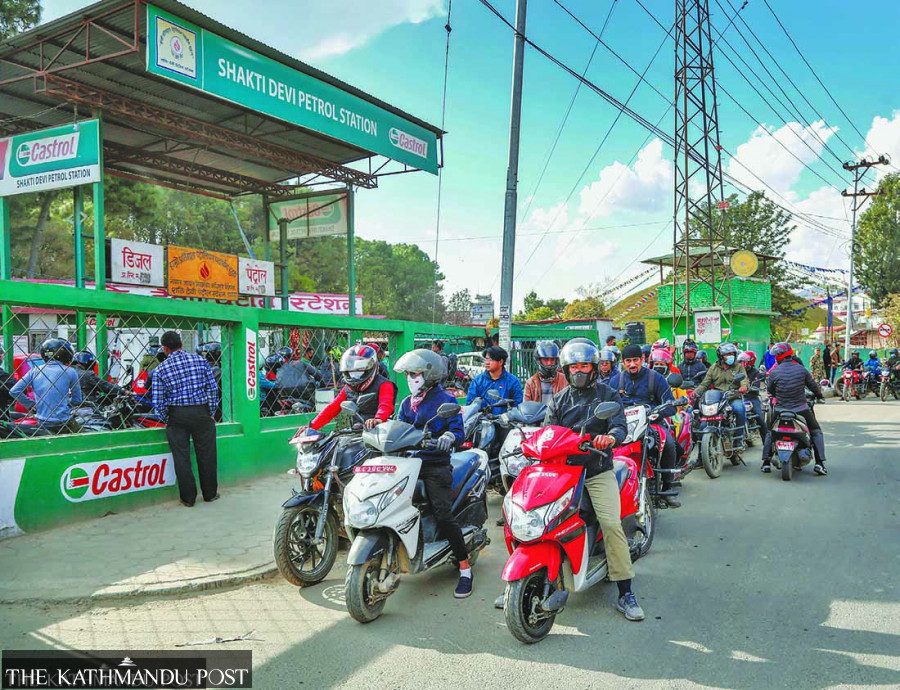
The escalating conflict in West Asia and the subsequent disruption of the strategically vital Strait of Hormuz have triggered a severe economic tremor across the world, Nepal included. With petrol prices reaching a record Rs202 per litre in the Valley after the state-owned monopoly increased rates for the third time in less than a month, the structural fragility of a nation dependent on imported fossil fuels is undeniable. Approximately Rs300 billion in national capital is drained annually to pay for petroleum products. The current instability threatens the foundational economic pillars of agriculture, industry and services, placing nearly 25 percent of the Gross Domestic Product at immediate risk of sectoral disruption.
While the demand for electric vehicles is currently surging by 50 to 60 percent, the path to a green economy is obstructed by a confluence of rising costs. Freight charges have tripled, and the value of Nepali currency has fallen to a historic low of Rs150.24 against the US dollar. These factors, combined with rising lithium prices in China, are forcing dealers to increase electric vehicle prices by up to Rs100,000 per unit. Despite these financial headwinds, the conversion rate of inquiries into sales remains high at 90 percent as the public seeks to escape the uncertainty of fuel supplies. The transition to the electric option is no longer a matter of environmental choice but a desperate search for economic predictability in a volatile global market.
A sustainable transition requires more than tax exemptions. The recent Cabinet decision to allow the retrofitting of existing petrol and diesel engines with electric powertrains is a necessary step to reduce the reliance on imported energy. The government should impose a strict mandate requiring all new taxis and public transport fleets to be exclusively electric to ensure that the most visible segments of the transport sector lead the transition. The private sector must evolve from a model of simple import to one of domestic production and value addition. Over 80 percent of electric vehicles in the market are imported from China, creating a dangerous reliance on northern trade routes and foreign manufacturing cycles. Private enterprises should collaborate with the state to establish local battery manufacturing plants and specialised maintenance facilities to support the growing national fleet. A proactive strategy for e-waste management is as critical to prevent the future accumulation of hazardous lithium-ion batteries that could otherwise become an environmental liability.
The current crisis offers Nepal a choice between continued energy dependence and the utilisation of the 4,000 megawatts of domestic hydroelectric capacity. At the household level, the replacement of Liquefied Petroleum Gas with electric stoves must be a national priority to reduce the massive import bill for cooking fuel. Digitalisation of government services and education can further diminish the national demand for fuel by reducing the need for physical travel and commuting. The state should act as a guarantor for domestic production rather than relying on fiscal stimulus that the current revenue growth of 4 percent cannot support. Promoting large-scale commercial farming and ensuring that energy reaches the agricultural sector will also help mitigate the impact of rising costs on the food supply chain.
The world has entered a period of protectionism and unpredictable market volatility where every 10 percent increase in oil prices adds 0.4 percentage points to domestic inflation. Nepal cannot afford to bear the brunt of these external shocks without a buffer of energy and food security. Reclaiming control over the energy and the data that drives the transport system is the only way to ensure that the prosperity of the nation is no longer held hostage by distant regional conflicts.




 18.81°C Kathmandu