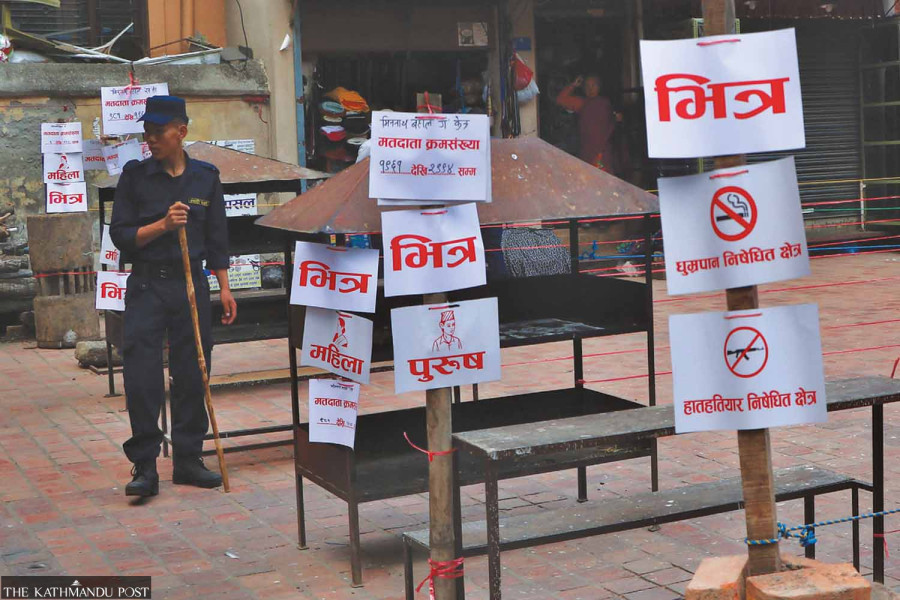
With the election to the House of Representatives just a day away, Nepal is currently in a silence period. It began on Monday at midnight and will last until the voting concludes at 5pm on March 5. Also called a ‘publicity restriction period’, ideally, this is when all forms of election campaigns end. Any promotional materials, including advertisements, videos and posters, disseminated during the campaign period, are removed. Posters and banners within a 300-metre radius of polling stations are put away. Items such as stickers, logos, caps and bags that promote political parties and their candidates are barred. No discussions, workshops, interactions or seminars are held. The motive of the period is to safeguard the integrity of elections by ensuring that they are conducted in a free, fair and fearless environment, allowing voters to calmly decide who to vote for.
Yet it is also when the election code of conduct is violated behind the scenes to gain a last-minute advantage. Vote buying, financial transactions to influence voters, continue during this period. A study titled ‘Study on the Election Campaign Finance: Local, Provincial and Federal Elections in Nepal, 2017’ by the Election Observation Committee Nepal observed that the majority of candidates didn’t comply with the election code of conduct even during the silence period. The study highlights the claims made by the respondents, including candidates going so far as to distribute money and other items, such as clothes, gifts, drinks and food, to sway voters. Parties also try to influence voters during this time by buying transport tickets and offering free meals. In the April 2023 by-election, a candidate running from Tanahun-1 had allegedly asked for votes over the phone during the silence period. For many candidates, victory is more important than fairness.
Additionally, social media and its algorithms pose a serious threat to the sanctity of the silence period. Even as the EC claims to remain committed to combating all forms of code violations on social media and punishing the violators, social media posts and algorithmic recommendations continue to appear, even if they are not posted during the silence period, and could influence voters. It is also challenging to track indirect vote solicitation in private groups and violations arising from websites that function outside the country.
The EC’s preparations appear commendable on paper: The Information Integrity Promotion Unit under the Election Information Dissemination Coordination Centre, supported by cyber bureau experts, will monitor social media activities. Those who violate the EC’s directive face fines up to Rs100,000 or termination of candidacy for serious violations as per the law. (Indeed, action has already been taken against some purveyors of election-related propaganda online.) Monitoring mechanisms are in place at all levels of government and include special micro-monitoring teams in sensitive areas. Nonetheless, the past failure to punish those involved in such things like organising feasts and buying votes in far-flung villages will undoubtedly embolden some candidates to take the same path this time as well. A high level of vigilance and monitoring is warranted, especially at a time of a difficult political transition when criminal elements may try to make their presence felt.
This period also offers voters time to make informed choices by rejecting those who try to sway their votes through unlawful means, be it through door-to-door campaigns or online. We can protect our conscience only through a deliberate attempt to tune out these distracting notices.




 14.82°C Kathmandu