Ahead of the March 5 elections, the candidate lists for direct elections reflect a betrayal of the progressive spirit supposed to define Nepal’s post-Gen Z movement political landscape. Shying away from the movement’s demand for change, political parties have retreated into a familiar, hardened hegemony, continuing to sideline marginalised groups from the First-Past-The-Post (FPTP) electoral process.
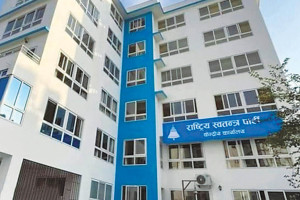
The exclusion of the Dalit community, which constitutes 13.4 percent of the population, is particularly egregious. Across the 165 constituencies, the representation of Dalit candidates in direct elections is negligible: The Nepali Congress (NC) has fielded only one, the CPN-UML and the Nepali Communist Party (NCP) three each, and even the ‘alternative’ Rastriya Swatantra Party (RSP) just two. Parties continue to treat marginalised communities as vote banks while denying them the backing necessary to contest direct elections. They have also blatantly ignored the Election Commission’s directive to ensure that a third of FPTP candidates are women. Forget the Congress, which has nominated a paltry 6.67 percent and the UML, which has picked an abysmal 4.85 percent women candidates; even the newfangled RSP has failed to reach 11 percent women candidates in direct elections.
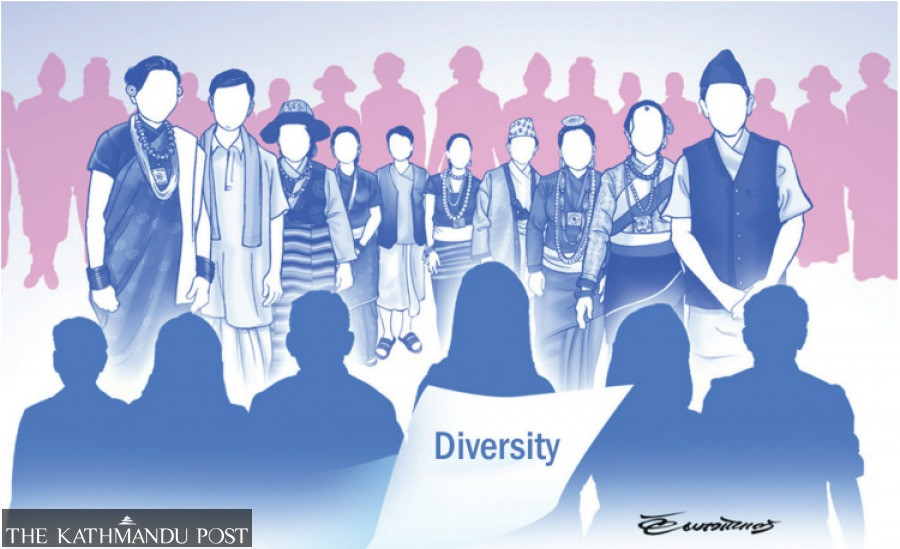
Furthermore, the underrepresentation and lack of representation of indigenous groups, such as the Chepangs, highlights a systemic neglect of historically sidelined communities. The 84,000-strong Chepang community remains nearly invisible in the national political discourse, despite constitutional guarantees of equality. In constituencies like Chitwan-1, candidates from marginalised communities carry the heavy burden of ‘lived struggles’—memories of state suppression and structural poverty—into an arena where they lack any significant organisational support. The parties, meanwhile, have rendered the Proportional Representation (PR) system a quota for women and marginalised groups, while the direct electoral arena remains a sanctuary for male elites. This ghettoisation of marginalised groups in PR lists blocks them from exercising real executive power and engaging in direct electoral competition.
Parties must understand that it is no longer enough to pay lip service to Article 42 of the Constitution—which guarantees that socially backward women, Dalits, indigenous groups, minorities and marginalised communities have the right to participate in state bodies—while maintaining internal structures hostile to diversity. The financial burden associated with contesting direct elections has become a prohibitive barrier which reinforces social hierarchy. It is a Herculean task for the candidates from marginalised backgrounds to compete against the money and power mobilised by traditional party structures. The economic exclusion ensures that only the wealthy and well-connected can reach policy-making levels. Without a genuine commitment to reform and proper organisational backing for candidates from marginalised communities, the voices of such communities will remain unheard.
If the parties—both the old forces and the new ones—wish to remain relevant to a generation that has shown its willingness to revolt against political malpractices, they must move away from cheap populist propaganda and toward genuine structural changes. They need to internalise the spirit of inclusion not as a legal obligation that can be circumvented, but as a moral imperative for national progress. A functioning democracy requires a House that mirrors the faces of its people, not a closed club that perpetuates the very inequalities it claims to fight. Voters from the marginalised groups should closely scrutinise the parties’ promises and manifestos and refuse to be swayed by those who only seek their votes while denying them adequate political representation.




 23.65°C Kathmandu