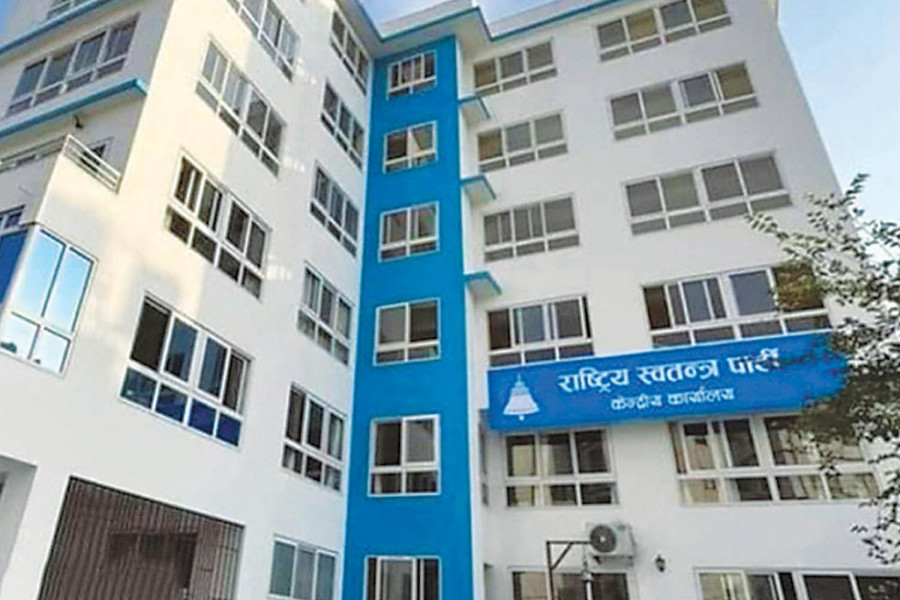
The Rastriya Swantra Party (RSP) is undeniably creating a buzz as the country inches closer to March 5 snap polls. All signs are that it is giving a tough time to traditional parties with decades-long histories and deep-rooted pan-Nepal organisations. The popular image it has built is based on promises of reform of the flawed political culture that the established parties have long practised. However, several activities of the four-year-old party in the run-up to the elections reveal a big gap between its rhetoric and actions. Candidate selection through primaries was a major differentiator for the RSP compared with the other parties where the leadership took the nominations as their prerogative. But this time, the RSP high command is facing allegations from the party rank and file that it is monopolising the selection process without internal competition, despite raising Rs25,000 from each aspirant for tickets.
It is also ahead in flouting election rules and the code of conduct. Openly violating a legal provision that allows a political party to replace the candidates from the closed list under the proportional representation system who opt out, the RSP included 38 new candidates. Legally, it could have inducted only two in place of those who withdrew from the closed list. Similarly, the largest number of candidates who have been asked to provide written clarifications for code-of-conduct violations are from the party, according to the Election Commission. Its senior leader and prime ministerial face, Balendra Shah, is the only candidate, so far, to have received the commission’s letter for clarification twice.
People and especially youngsters look up to the RSP as it supposedly practices transparency and fair play. But the RSP leadership is trying to cover up the mistakes, arguing even its petty issues have been blown up as the party is in the limelight. But numbers maintained by the constitutional election body don’t lie. The party should come out of the denial mode and take measures to correct its wrongs. Refusing to accept the wrongdoings puts it in the same category as the old parties it likes to deride. Yet it is still not too late. The election campaigns have just begun. There are miles to go before the vote. There is ample time for the RSP to demonstrate maturity and prove that it is actually the torchbearer of alternative politics.
The RSP might cash in on the anti-establishment wave in the upcoming polls, but without reforms in its political culture, its achievements could also be short-lived. To continue to win the public heart, it must be seen as different from the parties, not just in words but also in action. Whether the RSP wants to establish itself as a trustworthy political force in the long run will depend on how its actions unfold in the days to come. To restore credibility, it could, for instance, quickly and publicly accept its recent mistakes and take demonstrable corrective measures. Doing so would not be a sign of weakness; it would in fact be a show of confidence befitting a credible alternative force.




 14.7°C Kathmandu