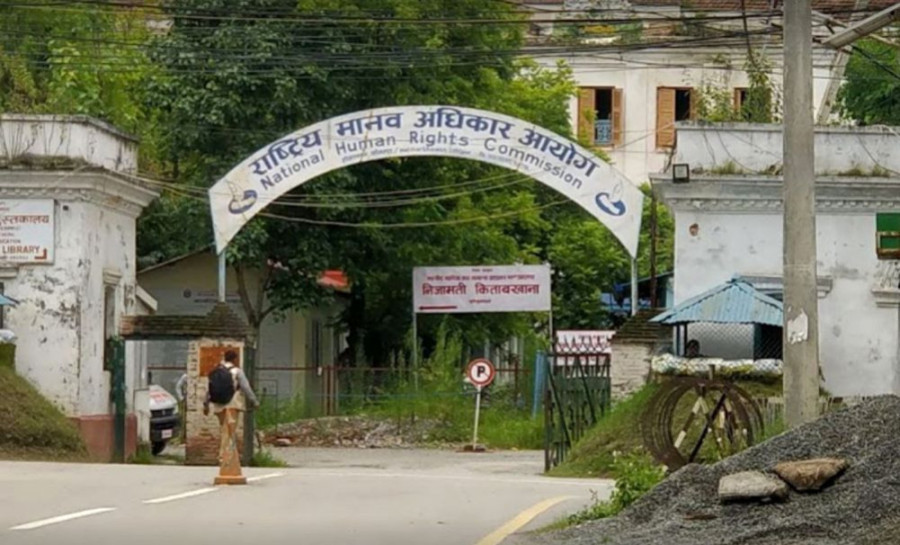
Nepal has long taken pride in its human rights-friendly constitution and a history of civic movements for liberty. The ground-level track record on action against human rights violators, however, is becoming increasingly indefensible. The current civilian administration, led by former Chief Justice Sushila Karki, promised change, especially with the cabinet including prominent rights advocates in the home and law ministries. Yet, with over a month left in its tenure, the government has proven to be a continuation of its predecessors’ culture of apathy and impunity. The Post’s recent revelation of the executive’s persistent snubbing of the National Human Rights Commission (NHRC) exposes a bureaucratic lapse which has enabled direct assault on human rights.
The numbers are staggering and shameful. Since its inception in 2000, the NHRC has recommended action on 1,618 complaints, yet only 13.29 percent have been fully implemented. More alarmingly, over the past four years, the government has failed to implement a single recommendation fully. It is not a lack of serious grievances that has led to inaction. If anything, the number of grievances is significant, highlighted by the number of recommendations for action. The commission’s files are thick with cases of insurgency-era atrocities, custodial deaths and extrajudicial killings. Instead of justice, the state has offered the NHRC a traditional mindset of resistance and even farcical excuses.
While the government ignores its domestic watchdog, it choreographs a deceptive dance on the international stage. In its recent report to the United Nations Human Rights Council for the Universal Periodic Review (UPR), the government painted a glowing but grossly exaggerated picture of progress. It claimed to have achieved most recommendations from the previous cycle, citing advancements in criminalising torture and increasing NHRC’s autonomy. However, civil society organisations and rights defenders paint a different picture. Of the 10 recommendations on child rights, not one has been fully implemented. Claims of investigating torture are equally hollow, as there has not been a single prosecution against police despite dozens of suspicious custodial deaths. During the fourth cycle of the UPR in Geneva, over 100 countries urged Nepal to translate its lofty promises into action. They raised serious concerns regarding caste-based discrimination, the stalled transitional justice process, and the rights of sexual minorities. It is a national embarrassment that Nepal must be reminded by foreign states to protect its own citizens from harmful practices and long-standing accountability gaps.
The NHRC itself is in a state of crisis, weakened by political interference and internal divisions. The commission has been criticised for its weak follow-through and failure to use its constitutional authority to name and shame officials who ignore its directives. The resignation of the commission’s only female member over the rejection of her proposals for women’s rights highlights a deeper institutional decay. If these malpractices are to continue, Nepal risks a humiliating downgrade of its global ‘A’ status by international human rights bodies.
The cost of inaction is measured in loss of human lives. In 2024 alone, Informal Sector Service Centre (INSEC) recorded over 10,734 incidents of rights violations, including 60 custodial deaths and thousands of cases of gender-based violence. When the state fails to prosecute perpetrators or provide compensation to victims, it signals that impunity is the unofficial law of the land. The criminalisation of politics—seen in the appointment of individuals with serious human rights offences to high office—only further erodes public trust.
Human rights are not a commodity to be traded for international praise. Section 5 of the National Human Rights Commission Act makes it mandatory for the executive to implement the watchdog’s recommendations. There is no room for excuses about ‘burned files’ or ‘lack of resources’. Anything less than a total commitment to implementation is a betrayal of the democratic spirit of the nation. The government must act quickly to restore the sanctity of the NHRC. The time for hollow commitments is over. Now is the time for accountability.




 14.81°C Kathmandu