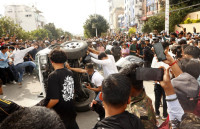
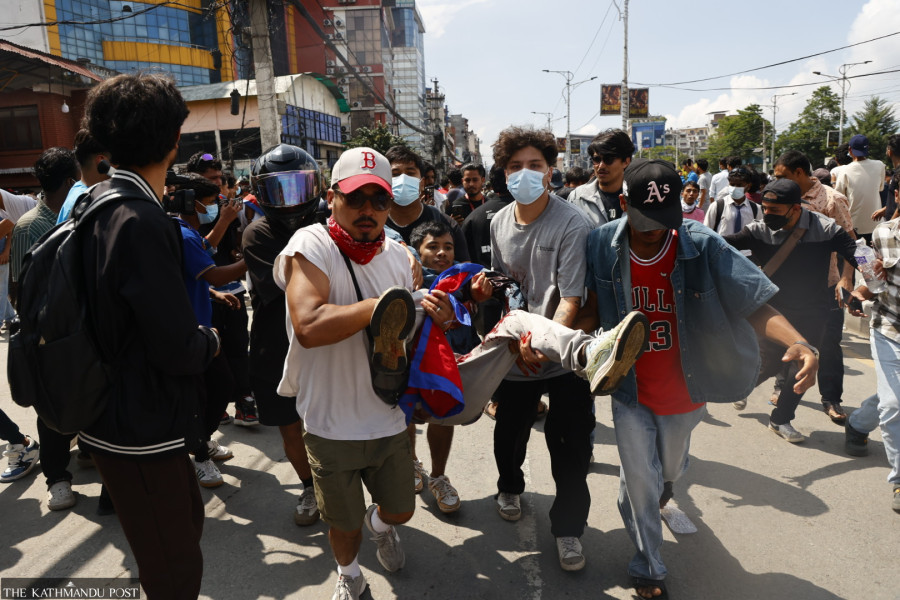
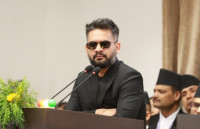
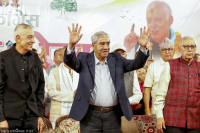
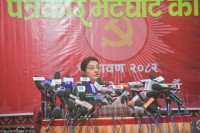
The commission formed to investigate the deaths and large-scale destruction during the Gen Z protests of September 8 and 9 is closing in on its three-month deadline to submit a report to the interim government. With two weeks to go, the probe panel, headed by former Special Court chair Gauri Bahadur Karki, has finally started preparing to question then Prime Minister KP Oli and his Home Minister Ramesh Lekhak for their involvement in suppressing the protests. A big segment of society still believes that both the political leaders must be held responsible, at the very least, for their abject failure to control the big loss of lives and property. At the worst, they must be directly implicated in the killings.
A question still haunts the entire nation: Who was responsible for the deadly use of force on September 8? The police personnel on the field? The Chief District Officer? Minister Lekhak? And what was former PM Oli’s role in the state brutality? So far, the nation has not been served a definitive answer. And all hopes are pinned on the probe commission. But the three-member panel has not been able to make headway, as all the parties that are supposed to be investigated have feigned innocence. Then-Inspector General of Police Chandra Kuber Khapung has told the Supreme Court that no police personnel can be subjected to disciplinary action for their role in the Gen Z movement. Army Chief Ashok Raj Sigdel has defended the security force’s role, stating the army took necessary initiatives to maintain law and order after assessing risks. Oli and his CPN-UML cadres are still calling the commission a ‘fake body’, questioning the credibility of the panel chair Karki.
As perhaps best illustrated by Nepal’s seemingly never-ending transitional justice process, the search for accountability is weakened by the passage of time. This is why the probe commission must expedite its work before it is too late to differentiate fact from fiction. Yet the investigations also cannot reach a meaningful conclusion without the help of all the related actors. For instance, veteran political leaders like Oli and Lekhak, who have occupied important state offices, are expected to cooperate with the investigation. And even more so, security bodies like the Nepal Police and the Nepali Army. If the state’s own security forces are seen to be flouting the rule of law and show no accountability, why should others behave as law-abiding citizens? The society will head towards lawlessness if the state actors themselves start promoting impunity. That said, it is also the responsibility of the new probe commission, as well as the interim government that formed it, to ensure that the body does not act on personal vendetta and mob pressure.
After the acquittal of Mohammad Aftab Alam in the Rautahat bomb case, the nation cannot afford another ‘No one killed Jessica’ scenario. The martyrs of the Gen Z movement did not voluntarily relinquish their lives. If the probe panel fails to identify those in the chain of command who contributed to the opening of fire on September 8, it would be a grave injustice to the martyrs of the movement. Plus, this is not just a question of punishing this or that individual. More importantly, it is a matter of establishing the state’s accountability and preventing the society from descending into anarchy.




 15.26°C Kathmandu