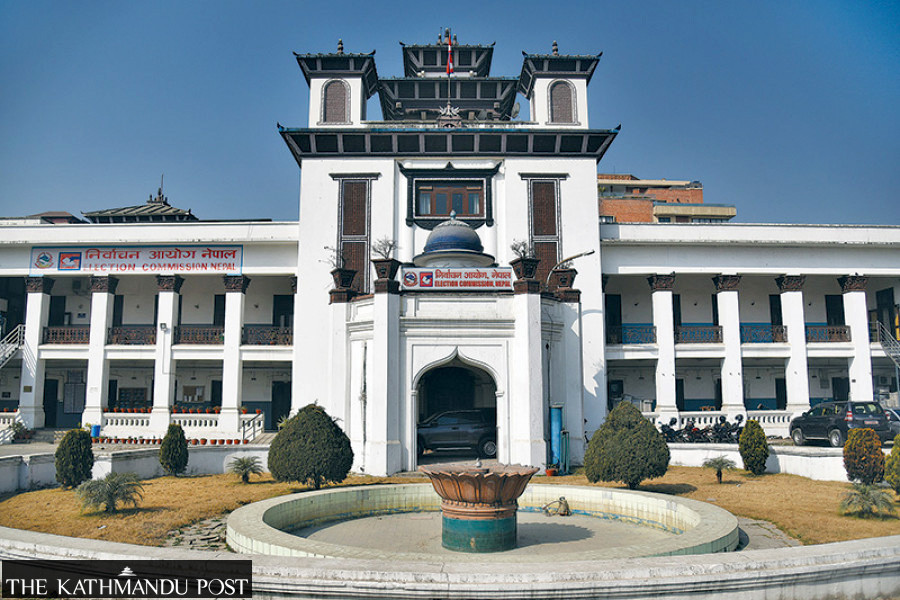
Perhaps it won’t be an exaggeration to say that this election cycle, the election code of conduct has been more often violated than respected—and the Election Commission seems helpless to do anything about it. The code violations range from creating spurious online content about opponents, publishing various poll projections, using larger-than-allowed crowds while campaigning, and sometimes open violence against opponents. The commission issues strong warnings that the violators of the code will be punished, but then does nothing about it. This image of a ‘toothless tiger’ that the commission has embraced, in turn, emboldens the parties and candidates to act with more abandon. There might be multiple reasons behind the poll body’s reluctance to act against the culprits. Sometimes, it may be calculated that ignoring minor infractions of the code is wiser than taking punitive measures that could provoke further violence or disturb social harmony. It might not feel adequately backed by the government, which itself might be uncertain about how to impose the code in a potentially volatile political climate. Or perhaps the commission lacks robust laws to act.
These constraints might be real. Yet they do not justify inaction. The Election Commission is tasked with holding free and fair elections, and as such, at the time of enforcement of the code of conduct, it is given quasi-judicial powers to act when it sees fit. For the same reason, the constitutional body also has a lot of autonomy. This is important. Credible elections are the bedrock of democracies; they are the foundations on which all the other edifices of democracy rest. Even autocrats—including our absolute ex-monarchs in the past—hold elections in order to show their supposed commitment to democratic values. Yet these autocrats often pack their poll-governing bodies with loyalists, making it easier to rig elections. Rival parties can be banned or restrictions placed on their media visibility. In functioning democracies, the poll-governing bodies are more autonomous and empowered to ensure a level playing field for everyone.
The Sushila Karki government came into office on the back of the Gen Z uprising with the sole mandate of holding timely elections. There is no doubt that with stronger legal and political backing of the government, the commission could have acted with more authority. Yet as the autonomous constitutional body specifically mandated to hold elections, the burden of responsibility falls much more on the commission, which could frankly show some spunk. If the election commissioners consistently flag cases of violations and uniformly impose fines and penalties, it will be hard to accuse them of bias. They would also get public support, further stiffening their resolve. The risk is again that the more leeway the political parties and candidates are given, the more egregious the code violations could get—some poll candidates have already progressed to fisticuffs this time. The March 5 elections are not taking place during a normal time. There are plenty of anti-democratic elements working to undermine the legitimacy of these elections and the preceding Gen Z uprising. A lot is at stake for the country. It is about time the Election Commission came out of a state of learned helplessness and swung into action.




 14.82°C Kathmandu