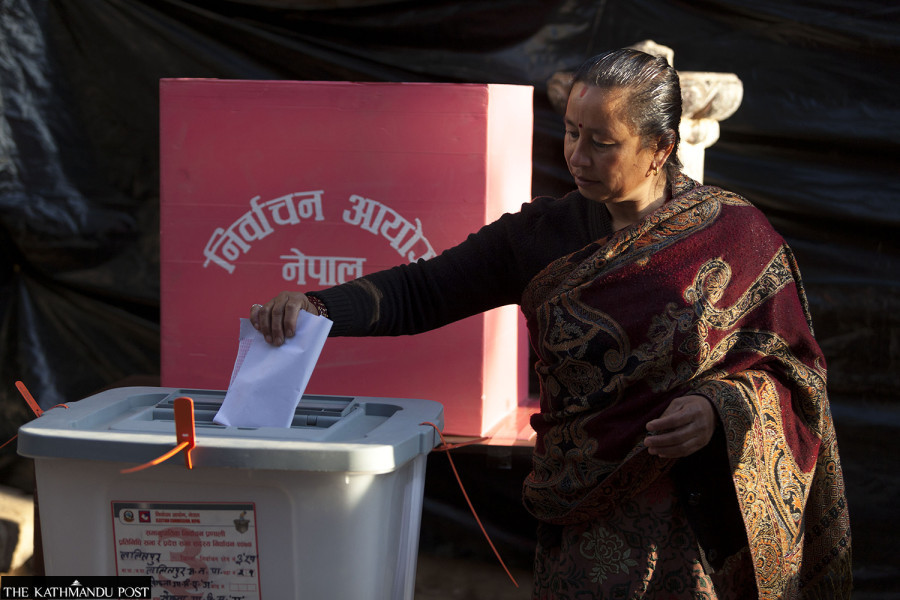
Nepalis have always enthusiastically participated in elections, demonstrating a strong commitment to democracy. The September Gen Z uprising preponed the general elections by nearly two years, to March 5 this year. Yet the enthusiasm has not gone down. It has rather increased, as a large section of Nepali society sees it as an opportunity not just to change the leadership but also the political culture, which has long frustrated them. A survey by Sharecast Initiative, in collaboration with The Post, shows that a large number of voters are eagerly awaiting the D-day to exercise their franchise. The pan-Nepal survey shows 59.1 percent of respondents are ‘very likely’ to vote, while 12.3 percent are ‘somewhat likely’, taking the possible voters’ share to 71.4 percent.
The average voter turnout since the 2006 people’s movement stands at 69.4 percent, with the highest (78.3 percent) seen in the 2013 second Constituent Assembly elections, and the lowest (61.4 percent) in the 2022 elections. Mostly, Nepal has a high voter turnout, and the survey suggests this healthy trend will continue. The fact that around a million new voters, most of whom are youths, were added since the 2022 elections also substantiates the claim of heightened voting fervour. This is also a strong rebuttal to a section spreading rumours about the poll postponement. With the country inching closer to the polls, attempts are being made on social media platforms to create illusions against timely elections. Yet the state machinery is all prepared for the polls; so are the voters. There should be no confusion: the country will successfully hold next week’s polls with significant voter turnout.
Decades of instability, bad governance and poor political culture have not taken away Nepali’s longing for democratic exercise. They continue to believe in change through the ballot box. At the same time, it is important to note that the upcoming elections are being held against the backdrop of an unprecedented Gen Z uprising. Seventy-seven people did not sacrifice their lives just for yet another election. It was for a dynamic shift from how old guards in the established political parties ran the country, keeping themselves above the country and the people’s interests. Fed up with the unkept promises, they revolted to establish a transparent, accountable, and effective governance system.
The survey report suggests that 60 percent of the voters want representatives aged between 35 and 45 years. This is also an indication that the public wants young leadership to replace the failed old guard. In a month and a half, the country will have an elected government, which will replace the Sushila Karki-led interim election government. Unlike its predecessors, the to-be-formed government will have no excuses for non-performance. People’s eagerness to vote is also suggestive of their impatience for accelerated changes, which the previous leadership failed to deliver. They want sustainable economic growth, governance reform, corruption control, and improved service delivery. Whatever the outcome of the March 5 elections, people’s abiding faith in the power of the ballot box bodes well for the future of Nepali democracy.




 14.82°C Kathmandu