



 14.8°C Kathmandu

Sat, Oct 17, 2026
Columns
Rasuwa flash floods recede, health risks loom
Reliable systems for providing safe drinking water, sustained hygiene promotion and community awareness programmes are urgently needed.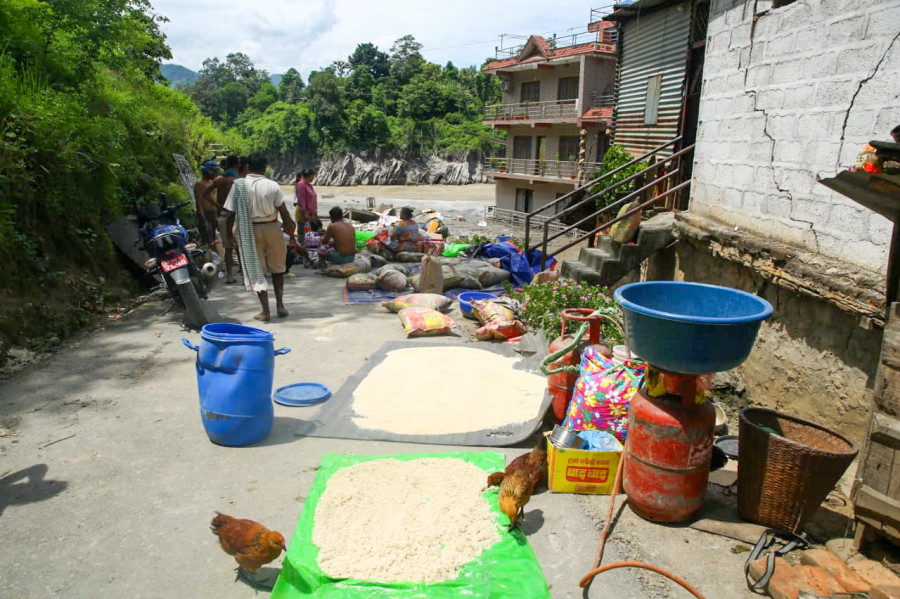
bookmark
Dr Sher Bahadur Pun
Published at : September 24, 2026
Updated at : September 24, 2026 07:42
On August 26, 2026, an unexpected flash flood struck Rasuwa, causing widespread devastation. More than 1,400 deaths have been confirmed, while more than 6,000 people remain missing or out of contact with their family members or loved ones. Tragically, my mother- and father-in-law are also among those missing; they were on a pilgrimage to Gosainkunda.
Numerous human and animal remains have been reported floating along the riverbanks, heightening concerns about the potential risk of infectious disease outbreaks among displaced populations living in flood-affected areas. Although the flash floods in Rasuwa have receded, serious concerns about the potential for infectious disease outbreaks among displaced and affected populations are now emerging.
Natural disasters, such as earthquakes or flooding, can trigger infectious disease outbreaks. Waterborne diseases are among the major health threats following such disasters, particularly in displaced populations. Typhoid fever, viral hepatitis (A and E), leptospirosis and cholera are common waterborne diseases that have previously caused outbreaks in Nepal. Last year, a cholera outbreak was reported in Birgunj, with hundreds of cases documented, demonstrating that cholera can occur even in the absence of a natural disaster. It is encouraging that hundreds of doses of oral cholera vaccines have been distributed in these areas, which may help reduce the risk of a potential cholera outbreak.
Nevertheless, dozens of patients have reportedly suffered from diarrhoea. In Nepal, cholera is not the only cause of diarrheal illness; various bacterial and viral pathogens contribute to it every year. Recently, Escherichia coli (E. coli) and other diarrheagenic bacteria have been detected in drinking water supplied to flood-affected areas. This suggests that the drinking water supply in these areas may not be completely safe and free from contamination. Thus, the risk of outbreaks of waterborne diseases, including typhoid fever, viral hepatitis A and E, leptospirosis, and other causes of diarrhoea, may persist in the affected areas.
Respiratory illnesses, including cough and influenza-like illnesses, are also being observed among displaced populations sheltered in holding centres. Respiratory pathogens, including those causing influenza, the common cold and Covid-19, are currently circulating in Kathmandu. In Nepal, influenza virus typically peak during January-March and July-October, so the current period coincides with seasonal influenza circulation. These viruses could be introduced into displaced populations through people providing assistance or other contacts. Once introduced, respiratory infections can spread readily from person to person in crowded holding centres. Children, adults and people with underlying health conditions are particularly vulnerable to severe disease and complications. Therefore, preventive measures, including mask use, good hand hygiene and adequate ventilation, are important to reduce the transmission of respiratory infections among displaced populations. Influenza vaccination could also be considered for vulnerable groups to reduce the risk of flu-related complications.
Over the past few days, cases of dengue and Japanese encephalitis (JE) have been rising in several parts of the country. Both viruses are transmitted through bites from infected mosquitoes, which require suitable breeding sites with standing water. The Rasuwa flash floods destroyed infrastructure and deposited various materials along riverbanks, creating sites where water could accumulate for several days and allow mosquitoes to complete their breeding cycles. Thus, the coincidence of seasonal transmission of vector-borne diseases with current post-flood conditions may increase the risk of dengue and JE transmission among displaced populations.
However, one critical question remains: “Can mosquitoes breed in muddy, sediment-laden water?” The Rasuwa flash flood, characterised by extensive muddy sediment and debris, could provide an important real-world setting to investigate whether such post-flood conditions are conducive to mosquito breeding and whether they could contribute to subsequent outbreaks of vector-borne diseases.
More than three weeks have passed since the Rasuwa flash floods, and no significant infectious disease outbreak has been observed so far. However, the absence of an outbreak to date does not mean that the risk has passed. For example, following the devastating earthquake in Haiti in January 2010, a cholera outbreak emerged approximately nine months later, when large portions of the country’s infrastructure had been severely damaged. The outbreak subsequently spread rapidly, with nearly 820,000 cases and 9,792 deaths reported. This shows that without adequate restoration and management of essential infrastructure, particularly water and sanitation systems, the risk of waterborne disease outbreaks may persist long after a disaster.
The government has implemented several preventive measures to reduce the risk of infectious disease outbreaks, including regular health monitoring at holding centres for symptoms such as fever,
diarrhoea and cough. Efforts have begun to prevent cholera outbreaks through vaccination, but outbreaks of other waterborne diseases cannot be ruled out in the coming weeks or months. The risk of infectious disease outbreaks in flood-affected areas is likely to persist until essential infrastructure—particularly water, sanitation, and health care systems—is adequately restored or rebuilt. Re-establishing reliable systems for providing safe drinking water, together with sustained hygiene promotion and community awareness programmes, will be essential to reduce the risk of waterborne and other infectious diseases. Therefore, the government and donor agencies should prioritise assessing and addressing potential health risks among displaced populations.
Dr Sher Bahadur Pun
Pun is Chief of the Clinical Research Unit at Sukraraj Tropical & Infectious Disease Hospital.





Most Read from Columns

Before you take credit for Khula Manch, read its history
Shah went to the UN to speak for Nepal, then left before he could make the most of it

Bhotekoshi flood wasn’t a freak event. It’s the Himalaya doing what it does

Lesson learned after the death of Ronaldo
Why passive neutrality won’t take Nepal anywhere
Editor's Picks

Constitutional Bench caught in seniority, ‘pick and choose’ dispute

A Dom boy’s long road to becoming a doctor

From blankets to handmade dolls, two foreign women bring comfort to flood survivors

News Analysis: When institutional defence exposes institutional fault lines

It’s a bird … it’s a plane … it’s the Indian ambassador’s farewell tweets
E-PAPER | October 17, 2026

×