Five of 15 drinking water sources in flood-hit Bidur contaminated with E. coli
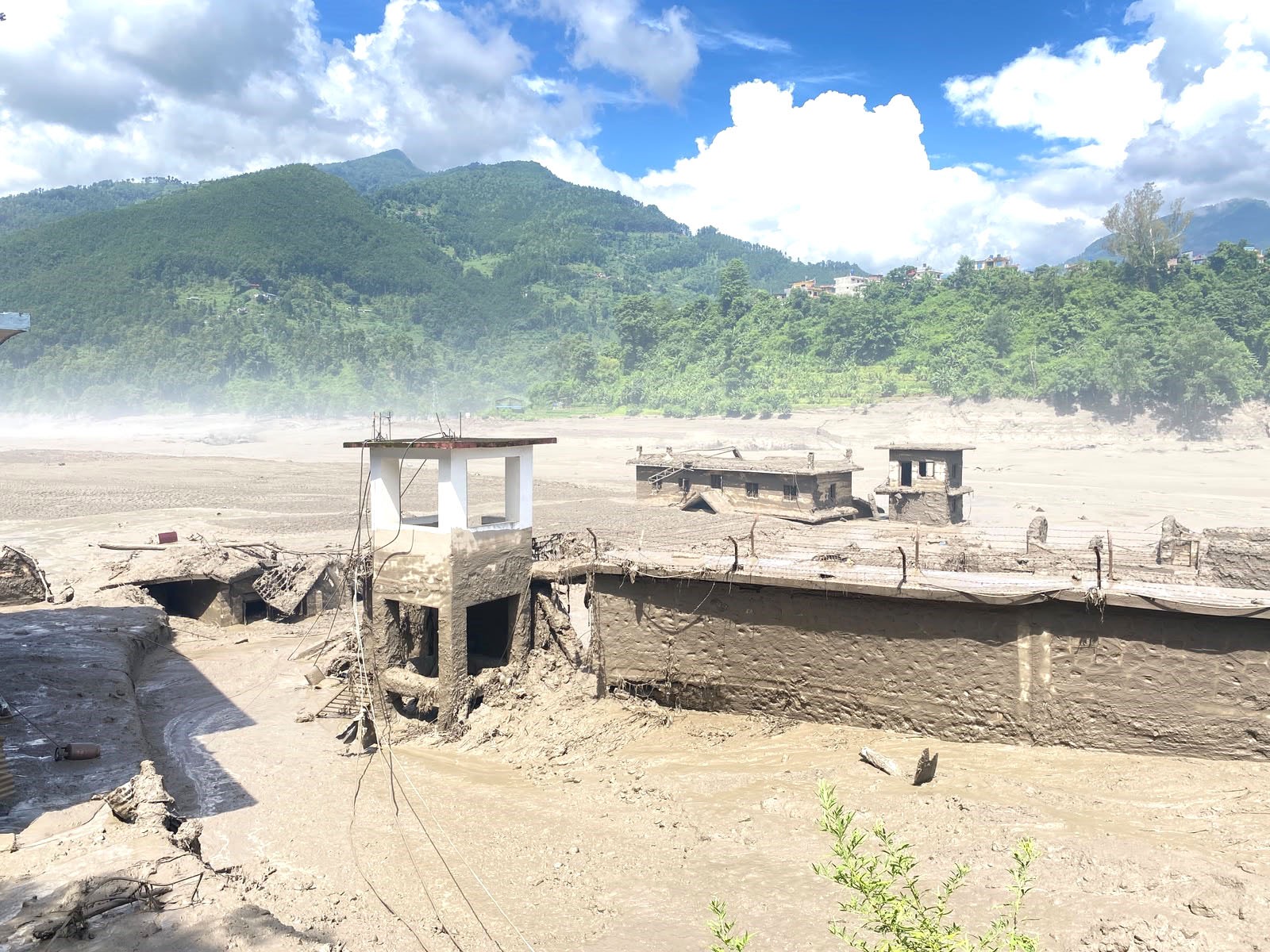
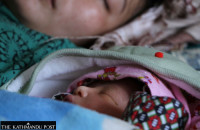
Officials mull cholera vaccination for around 100,000 vulnerable people and measles vaccine for over 75,000 children. Beyond the casualties, the floods swept away entire settlements and vital infrastructure, including roads, bridges, and drinking water systems. Nepal Photo Library
Five of 15 drinking water samples collected from various sources in flood-hit Bidur Municipality in Nuwakot district have been found contaminated with E. coli.
“E. coli has been found in five samples out of 15,” said Krishna Prasad Rijal, a senior lab technician at the municipality. “We have already chlorinated the water sources in question.”
The finding comes as health authorities prepare for possible outbreaks of cholera and other waterborne diseases in the flood-hit districts.
E. coli is a microscopic organism that lives in the intestines of warm-blooded animals and is also found in faeces. Its presence in the drinking water indicates contamination with faecal matter, health officials say. Experts warn that contaminated drinking water could trigger outbreaks of waterborne diseases, including cholera and typhoid, among others.
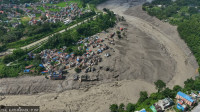
Bidur is one of the areas worst hit by the August 26 Bhotekoshi floods. Over 1,200 people have died and more than 5,000 are missing, while thousands have been displaced by the disaster in three affected districts. Authorities have set up 25 holding centres in Bidur, where at least 2,700 displaced people are taking refuge.
Beyond the casualties, the floods swept away entire settlements and vital infrastructure, including roads, bridges, and drinking water systems.
Due to disruptions in water supplies, flood survivors have been forced to drink whatever water they can find.
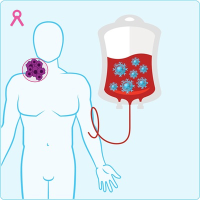
Doctors say drinking contaminated water can cause diarrheal infections and cholera, and increases the risk of dysentery, typhoid, and hepatitis A and E.
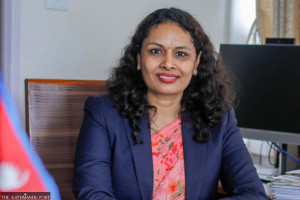
“First of all, we don’t have a sufficient drinking water supply,” said Sarala Shrestha, information officer at the municipality. “We have been using tankers to supply drinking water to the displaced camps.”
Health officials say they are coordinating with federal agencies and development partners to prevent possible outbreaks in the flood-hit areas.
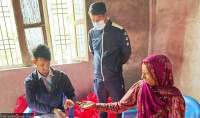
“Several cases of diarrheal infection and fever have been reported from various locations, including displaced camps,” said Raja Ram Bhandari, health coordinator of the municipality. “But patients have been provided with medicines. Major outbreaks have not occurred yet, and we are cautious about the possible risks.”
Public health experts warn that the risk of communicable, non-communicable, and vector-borne diseases increases in the aftermath of disasters. They urge authorities to take potential health consequences seriously.
“This disaster has multiple dimensions and will have multiple consequences,” said Dr Sharad Raj Onta, a public health expert. “We have seen recurring disasters in the aftermath of major disasters like the Bhotekoshi flood.”
Doctors say drinking contaminated water can cause diarrheal infections and cholera, and increases the risk of dysentery, typhoid, and hepatitis A and E. File Photo
Experts have urged the government to pay attention to young children, elderly people, and individuals living with non-communicable diseases, as well as the mental health of flood victims. They said authorities must ensure safe drinking water for affected populations.
“A lot of people are residing in the congested rooms, where there are pregnant women, new mothers, small children, and elderly people,” said Onta. “The risk of spread of diseases increases in such circumstances. We already have health problems, and disasters exacerbate the risks.”
Doctors say preventing disease outbreaks must be the priority of all agencies concerned because an outbreak would create a major health challenge for the entire country.
“We are at high risk of outbreaks of both communicable and non-communicable diseases in the affected areas. People who were already affected and displaced by the 2015 Gorkha earthquake have now been hit by floods, and any outbreak could further worsen their suffering,” said Dr Baburam Marasini, former director of the Epidemiology and Disease Control Division.
Many elderly people have missed their regular medicines, Marasini said, adding that he could only imagine the psychological trauma disaster-affected people are experiencing.
Children and new mothers are also likely to have had their nutritional needs compromised.
Meanwhile, the Ministry of Health and Food Safety said it was considering administering cholera vaccine to around 100,000 vulnerable people.
“Cholera vaccination will be launched if any major diarrheal outbreak occurs in the flood-affected areas,” said Dr Samir Kumar Adhikari, joint spokesperson at the Ministry. “Health agencies are also working to launch vaccination against other vaccine-preventable diseases, including measles and rubella.”
Asked why cholera vaccination is being planned for only 100,000 people when several hundred thousand people live in the flood-hit districts — Rasuwa, Nuwakot, Dhading — officials say the government has only 100,000 vaccine doses in stock.
“We will administer the measles-Rubella vaccine to around 75,000 children under 15 years of age,” said Dr Abhiyan Gautam, chief of the Immunisation Section at the Family Welfare Division under the Department of Health Services. Along with that, tetanus and diphtheria vaccines will be administered to displaced children.”
Officials, meanwhile, say they are struggling to track down flood victims who have scattered across different districts, including Kathmandu.
Arjun Poudel is a health reporter for The Kathmandu Post. Before joining the Post, he worked for Sagarmatha Television, Naya Patrika, Republica and The Himalayan Times.




 14.74°C Kathmandu