



 14.4°C Kathmandu
Fri, Oct 16, 2026
Columns
Nepal’s diplomacy of vibes finally meets reality
Balendra Shah’s government spent 100 days performing sovereign equality with foreign envoys. Then someone had to actually go get an invitation.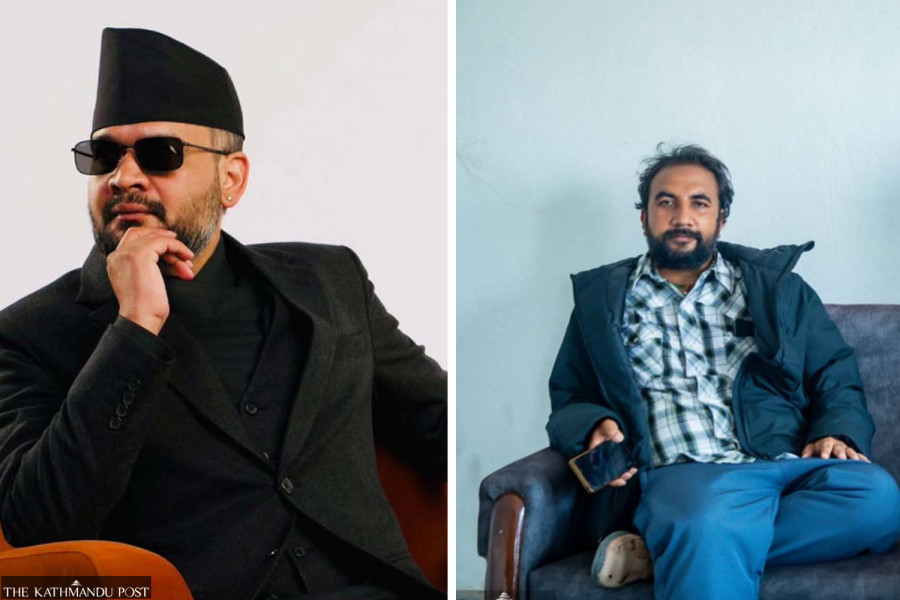
bookmark
Anup Kaphle
Published at : July 23, 2026
Updated at : July 23, 2026 16:38
For the first 100 days, it was a point of pride. Prime Minister Balendra Shah would not sit down one-on-one with foreign ambassadors — not India’s, not China’s, not even U.S. President Donald Trump’s special envoy for the region. In April, Shah met 17 envoys together, in one room, a photograph that conveyed to the diplomatic community in Kathmandu that no relationship ranked above another. When India’s foreign secretary prepared a trip to formally hand over Prime Minister Narendra Modi’s invitation to visit New Delhi, the trip got deferred amid uncertainty over whether Shah would even receive him privately. His own party floated the idea that he might not leave the country at all for a year. Political commentators called it sovereign equality. It was also, unmistakably, a campaign promise still being performed after the campaign had ended.
This week, that performance stopped. My Post colleague Anil Giri reported that Shah will break his own rule and meet the Indian and Chinese ambassadors separately, dates still being arranged by the Foreign Ministry. Meanwhile, a second story broke this week. According to a report in Nepal Khabar, Kumar Ben (Byanjankar), Shah’s advisor was in New Delhi, working the channels to secure an India invitation for the prime minister. Ben privately told Kantipur’s reporters that he hasn’t travelled to India and that the report is inaccurate; he hasn’t denied it publicly. In a conversation with a Post reporter, a high-level official at Foreign Ministry confirmed Ben’s travel to India, but refused to get into details. “If they’d asked us, we’d have recommended not to take the trip,” the official said, signalling that the meeting took place without the knowledge of the ministry.
If you’ve been paying attention to international politics, this isn’t entirely a new sequence. In enough small states wedged between larger neighbours, it has a name: campaign posture meets governing reality. The Maldives elected a president on an “India Out” platform, all-caps defiance of the country’s largest security patron — and within a year President Mohamed Muizzu ended up in Delhi anyway, because a small economy dependent on a large neighbour’s tourists, currency swaps, and goodwill cannot actually afford the defiance it campaigned on. Another neighbouring country, Sri Lanka, offers an even starker version. The JVP, now leading Sri Lanka’s government under President Anura Kumara Dissanayake, had anti-India sentiment built into the party’s founding identity. Yet within three months of winning the presidency in 2024, Dissanayake chose India for his first overseas trip, sat down with Modi in New Delhi, and has since signed a defence cooperation pact with the country his own party once took up arms against.
It’s tempting to call Shah’s decision to meet the Indian ambassador a change of heart, or a belated realisation that governance can’t run on social media optics. Neither quite holds up. Hearts don’t usually change this abruptly, over a diplomatic calendar rather than a conviction — and late realisation would be a strangely slow lesson for a government otherwise moving fast “on an expressway” on everything else. What it looks more like is a symbolic policy running into its own limits. Joint ambassador meetings make for a clean photograph and a clear message that won plaudits among supporters on social media. But the policy of “no special treatment” was never going to survive contact with a bilateral relationship that actually requires special, specific, unglamorous handling: border questions, hydropower financing, the fact that a huge share of Nepal’s economy runs on remittances and trade routed through or dependent on India specifically.
The more interesting detail here isn’t the reversal itself, but who’s putting in the work of restoring it. Ben’s meeting in New Delhi, which has been confirmed by Setopati on Thursday, means substantive diplomacy is happening through the same merry band of unelected advisors that has shown up in multiple high-level meetings. This is a government that came to power promising to dismantle exactly this kind of arrangement: decisions made by trusted men close to the top rather than by the stakeholders and bureaucracies meant to make them.
Yet the pattern keeps resurfacing: Shah has been meeting industry delegates without the ministries meant to handle them; his aides are pressuring the anti-corruption commission directly over a disputed passport tender; and now, it appears, an advisor doing in Delhi what the Foreign Ministry is nominally coordinating from Kathmandu.
Hundred days in, most Nepalis still want to believe that Shah is not someone who lacks conviction, and that his instincts aren’t wrong. What is becoming increasingly clearer in this government is that the formal institutions are supplying the choreography, while a small, unelected circle around the prime minister supplies the substance. A joint ambassador meeting is a fine way to open a government. But nobody really should have believed it was ever going to be a foreign policy. Now the real test, as ever, isn’t the reversal — it is whether the actual India visit, whenever it lands, gets negotiated by the foreign ministry officials and foreign service officers who understand the nuances — or by whoever it was that made the trip to Delhi.
Anup Kaphle
Anup Kaphle is the Group Editorial Director of Kantipur Media Group. He previously served as the editor-in-chief of Rest of World in New York, where he led award-winning coverage of technology's impact in the emerging markets. He has spent nearly two decades in U.S. newsrooms covering international affairs and national security, including roles at The Washington Post, BuzzFeed News and The Atlantic.


.PNG&w=200&height=120)

Most Read from Columns
Before you take credit for Khula Manch, read its history
Shah went to the UN to speak for Nepal, then left before he could make the most of it

Bhotekoshi flood wasn’t a freak event. It’s the Himalaya doing what it does

Lesson learned after the death of Ronaldo
Why passive neutrality won’t take Nepal anywhere
Editor's Picks

Constitutional Bench caught in seniority, ‘pick and choose’ dispute

A Dom boy’s long road to becoming a doctor

From blankets to handmade dolls, two foreign women bring comfort to flood survivors

News Analysis: When institutional defence exposes institutional fault lines

It’s a bird … it’s a plane … it’s the Indian ambassador’s farewell tweets
E-PAPER | October 16, 2026

×