



 25.92°C Kathmandu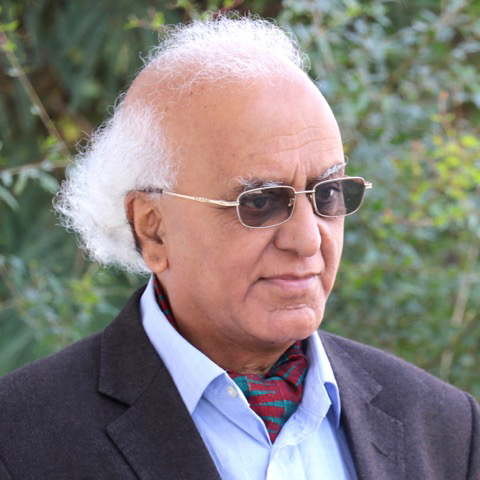
Tue, Oct 27, 2026
Columns
How Mundhum is shaping political consciousness among the Kirat people
The Mundhum provides a basis for forming political perspectives among the Kirat people.
bookmark
Abhi Subedi
Published at : April 12, 2026
Updated at : April 12, 2026 07:17
Politics is appended to every important topic in Nepal these days. The changes that have occurred like a whirlwind since the political transformations in Nepal, propelled by what is known as the Gen Z movement of September 2025, have dominated patterns of thinking. The Millennials and Gen Z movements are variously mentioned in modern history for their significant impact on change. But the prime focus being on politics and the morality of the moment, topics such as orality and written cultures have not received sufficient attention.
However, such creative topics have now begun to interest scholars and concerned groups. This article discusses one such recent event, drawing on the performative dimension of the famous oral tradition of the Kirats, mainly, the Rai and Limbu. Other Kirat peoples, including the Sunwar and Yakha of Nepal, also share the performative traditions summed up under the rubric of Mundhum.
Hindu-Kirat culture
As someone born and brought up in Limbuwan, I am familiar with the Mundhum oral tradition. I have witnessed how the dominant Hindu and the Kirat cultural tradition have long coexisted. More importantly, I have seen how the Kirats have continued to uphold their traditions in the Hindu-ruled state. The Mundhum oral culture was the most eloquent and expressive among those traditions. The Limbus whom I knew used the Mundhum tradition of knowledge and performance as a force of resistance.
While the Hindu formation has used such accoutrements as cosmogonic belief systems and the system of Vedic knowledge, law, and rituals that create a structure of both performative and epistemological dimensions, Mundhum utilises its own form of knowledge and rituals.
Mundhum in academia
On April 3, I was invited to present a keynote discourse at the Sixth Kirat Rai Academic Conference. It was challenging for me. As someone not a Kirat and an activist, I took it as an academic subject. I have often evoked Mundhum not only in my academic discussions but also while teaching graduate students in literature, performance studies and playwriting. The invitation was therefore significant from an academic point of view.
The colloquium, a rigorous two-day academic exercise that involved Kirat and non-Kirat scholars, exuded an energy that chimes with the spirit of positive awakening in present-day Nepal. The underlying spirit of both the cultural and social spheres is dominated by discussions about waves in politics and power in the country. The assertion of identity and resistance to state policy were naturally considered important factors that generated the synergy needed to create conditions for social and political change.
Mundhum tradition
The 26 papers presented at the two-day conference covered a range of topics from cosmogonic to anthropological, folkloristic and judicial subjects. The political shift following the Gen Z uprising and the formation of a new government, with nearly two-thirds of seats in Parliament won by the Rastriya Swatantra Party, raises questions about the identity of the Kirat Rai community. This was the primary focus of the seminar. It also raises other questions: Is the political shift going to affect the existence and continuity of Kirat cultural traditions, with the Mundhum serving as the major repository of knowledge, poetry, performance and rituals? Has Mundhum become an endangered cultural form in Nepal now? The answer should be sought in the nature of the Mundhum narratives and the worldview they foster. What is the worldview of the Kirat as reflected in Mundhum? Does the indigenous tradition act as a force? It is vital to explore these questions.
We should look at the oral process of the Mundhum tradition and the effects of the tradition of ‘écriture’, a term used by the French philosopher Jacques Derrida, as well as the impact of the written tradition and culture. Organisations and individuals working to foreground the features of the culture and the ways of preserving it have rightly come up with some wise policies. One notable aspect is the projection of Mundhum as philosophical guidance for action with political implications.
Organisers have rightly stressed that the Mundhum worldview gives strength to form political perspectives. Mundhum does this by providing a pattern of identity for the Kirat people, shaping how they view the world and the morals that guide their lives. Mundhum represents the essence of a philosophy of life shaped by a vision of harmony and ecological consciousness. The Mundhum vision therefore is poetic in character.
Poetic character
A prominent Mundhum writer and poet, Tilbikram Nembang, renowned as Bairagi Kainla, says in his famous essay that he was attracted to Mundhum by its poetic power. Poetry connects the individual to the spirit of the community and the indigenous knowledge. In an essay written about his epiphany, Kainla says, “I got interested in Mundhum for being a literary writer. It can be said that I started viewing the Limbu philosophy in Mundhum quite late. I can say that my interest in Mundhum grew not because of sociological and anthropological epistemology but because of the poetic power inherent in Mundhum, and by knowledge of the fact that Mundhum should be saved from being forgotten. I have spent the important years of my life collecting, editing and translating them into Nepali.”
I became a reader of Kainla’s Mundhum works. Influenced by one of them, I wrote and published a play based on the Mundhum Yuma Sammang to be staged by Sunil Pokharel in Gurukul Theatre.
Political shift
The seminar organised by Kirat Rai Academy on Mundhum took place at a time when the country is experiencing a new political shift. A Parliament in which nearly two-thirds of seats are held by younger members of the RSP and seasoned members of opposition parties has opened new discourses on the politics of change. They say they will do away with the inefficient and corrupt practices of the erstwhile governments. We can assume that questions of indigenous identities and the preservation of rich oral, cultural and folkloristic traditions will be addressed in the new order of transformations and deliveries.
Discussions about Mundhum represent a call to study the creative and eloquent traditions of indigenous knowledge and worldview. Such discussions, as the Chancellor of the Nepal Academy, Bhupal Rai, said at the opening of the programme, should form part of regular academic discussions and, importantly, constitute the texture of knowledge that Nepal is rich in, with diverse cultures and traditions that are creative, poetic and pragmatic in character. I want to conclude by saying that Mundhum remarkably embodies these features.
Abhi Subedi
Abhi Subedi is a poet, playwright and a columnist.



Most Read from Columns


Editor's Picks

What to know about the US trial over Mamta Kafle’s disappearance
NPL returns with bigger ambitions and global recognition
What’s new in the Nepal Premier League’s third season?
After Nepal’s recent disaster, it wants to test whether COP31 can deliver climate justice

Why does an hour long flight to Dhangadhi cost more than a flight to New Delhi?
E-PAPER | October 27, 2026

×