



 21°C Kathmandu

Mon, Oct 12, 2026
Culture & Lifestyle
Movie review: A tender story that tries too hard to break your heart
In ‘A Letter to My Youth’, a bond between a caretaker and a boy, reveals a fragile path towards emotional healing.
bookmark![]()
Skanda Swar
Published at : April 8, 2026
Updated at : April 9, 2026 15:52
There is a particular kind of film that does not need a grand stage to tell a meaningful story. ‘A Letter to My Youth’ or ‘Surat untuk Masa Mudaku’ in its original Indonesian title is precisely that kind of film. It is an Indonesian coming-of-age drama, directed by Sim F and released on Netflix on January 29, 2026, with a heartwarming premise and sufficient execution.
It is a film that reaches for something genuinely tender, and when it finds it, the results are quietly beautiful. When it misses, it stumbles into territory that feels repetitive and manipulative. The final verdict lands somewhere in the complicated middle, an imperfect letter, but one written with unmistakable sincerity.
It is based on the story of an old man named Simon Ferdinan, who finds himself in the role of caretaker at a local orphanage, while his plans for life were very different and morose. He needed a job, and he appeared with his own baggage of sorrow, solitude, and weariness. Kefas, a rebellious teenager who hides a great deal of loss behind an outward show of anger and defiance, enters this world. Kefas grew distrustful of those in authority and older people around him, which makes him the most volatile resident of the orphanage and, inevitably, the one in need of Simon the most.
The movie is set within an adult Kefas, played by Fendy Chow, who returns to the orphanage following Simon’s death and is compelled to write an obituary for the man who influenced his life. This structure of a dual timeline establishes the movie as rooted in reflection and nostalgia, where the movie is less concerned with the storyline and more with the emotional archaeology of memory, the way in which childhood trauma manifests in adult life, and the way in which the individuals who believed in us leave indelible marks even after they have disappeared.
‘A Letter to My Youth’ presents itself as a soft, realistic movie that explores the stages of grief, loneliness, and mental healing in a cautious, subtle manner. Its strongest point is its emotional integrity. The film recognises that when something bad happens to us, it does not simply fade away with time. It demonstrates that even when we become adults with children and a complete life, some of the things that can hurt us can remain in our memory. No fake catharsis, no neat healing circle that bows to grief. The movie sits down with its characters in their malaise, and that is a commendable quality.
The emotional high point of the film is the relationship between young Kefas and Pak Simon. These are the main characters the movie handles well. Simon appears to be incredibly tired and miserable, and he is not always a sad man. Instead, he does not say much about his pain, so he demonstrates how he feels by being silent. Kefas, however, is a hot-tempered man and may be hard to deal with, but you see the reason. He is furious since he is still grappling with pain.
Agus Wibowo is pensive, which makes him very real. His acting is modest in the most commendable manner, a man with years of misery who has been taught to work it through into patience and presence. And then there is Millo Taslim as young Kefas. He strikes every chord as a brother, a troubled orphan, and an angry kid who balances his sorrow with attitude. He feels real. Taslim is a revelation in a film in which much of the acting is either stiff or unconvincing. He is expressive, down-to-earth, and completely believable. He bears the film’s emotional core on his shoulders and hardly faints.
There are also significant cultural and social strata that the movie touches upon. It touches on social inequity and colourism, and one character remarks on his darker complexion, which brings a valuable cultural aspect to identity and belonging. These scenes are rather worked out than artificial, and are incorporated into the very structure of orphanage life.
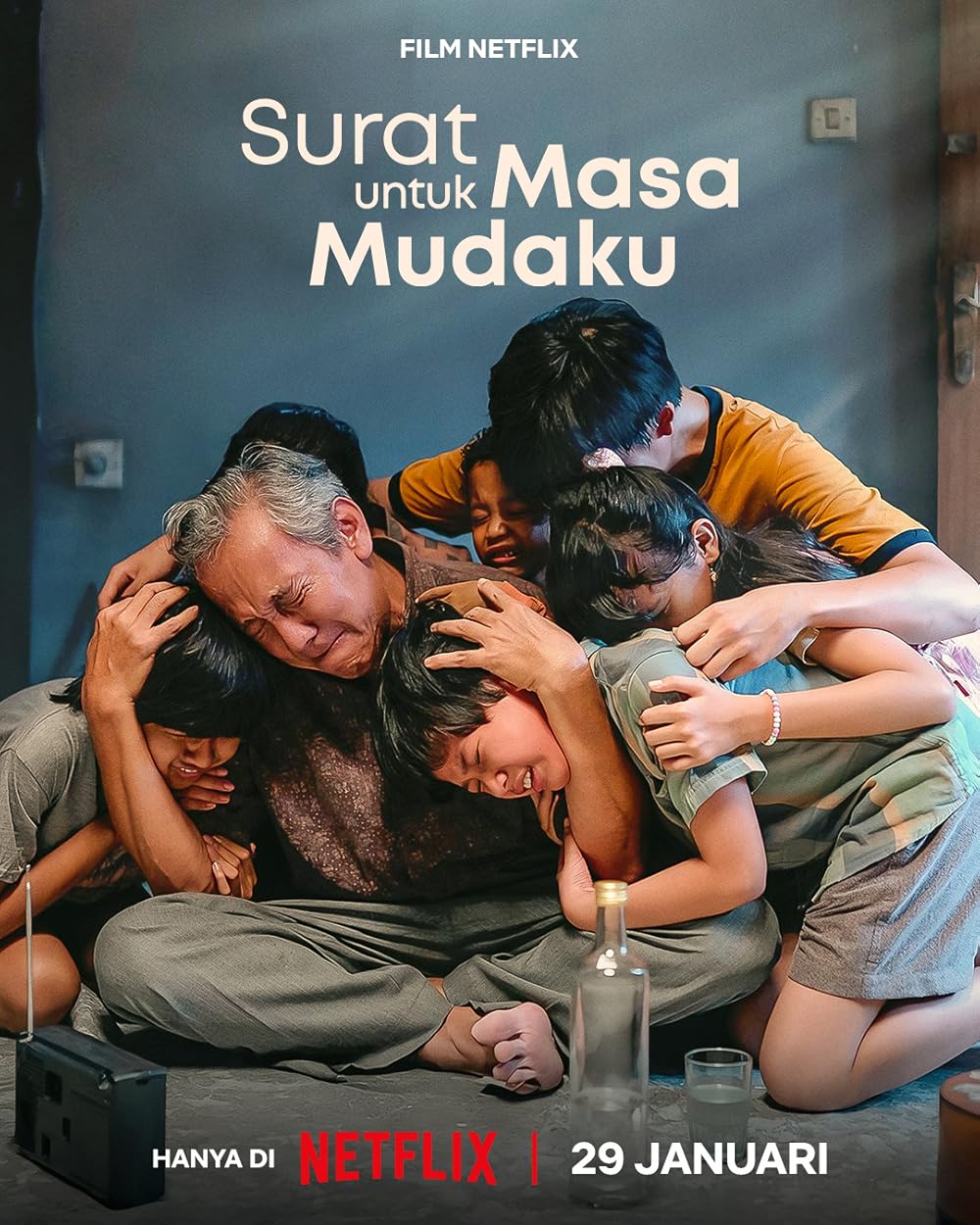
The structure is the film’s greatest weakness. The framing device of Kefas as an overly nervous father looking back on his childhood is structurally confusing. The current plot can hardly be called worth its existence, and the movie could have worked better had it either devoted itself to the past or switched back and forth between the two timelines, which water each other down.
The issue of emotional restraint being dropped at important times is also present. The movie is so sentimental that it borders on using it as a weapon, returning to the same shot of crying orphans in unison and hoping that repetition will further enhance the effect. It is a decision that erodes the emotional beats that the film has worked hard to achieve. Sorrow does not require a musical backdrop and a shot of tears every fifteen minutes to be authentic; the subtler ones show that.
‘A Letter to My Youth’ is a movie that looks more like a handwritten letter than a slick postcard, as one viewer pointed out. It is personal, imperfect, and sincere. It will not satisfy viewers looking for narrative sophistication or formal daring. However, for those ready to encounter it on its own ground, as a silent reflection on found family, loss, and the individuals who make us when we are at our lowest ebb, it provides moments of pure emotional reality.
It serves as a reminder that young people are sloppy, unjust, and rough, that the process of healing does not entail forgetting but rather learning. It is a message that, at best, lingers well beyond the credits.
__________________
A Letter to My Youth (Surat untuk Masa Mudaku)
Director: Sim F
Cast: Theo Camillo Taslim, Fendy Chow, Agus Wibowo
Duration: 135 minutes
Year: 2026
Language: Indonesian
Available on: Netflix





Most Read from Culture & Lifestyle

It’s a bird … it’s a plane … it’s the Indian ambassador’s farewell tweets

‘Tenzing’ puts the Sherpa at the centre of the Everest story
How should Nepal navigate a world in reorder? Rajib Upadhya on geopolitics and foreign policy

How Anup Poudel took Nepali cinema to Cannes

A Nepali photographer rediscovers Calcutta after decades
Editor's Picks

Constitutional Bench caught in seniority, ‘pick and choose’ dispute

A Dom boy’s long road to becoming a doctor

From blankets to handmade dolls, two foreign women bring comfort to flood survivors

News Analysis: When institutional defence exposes institutional fault lines
It’s a bird … it’s a plane … it’s the Indian ambassador’s farewell tweets
E-PAPER | October 12, 2026

×