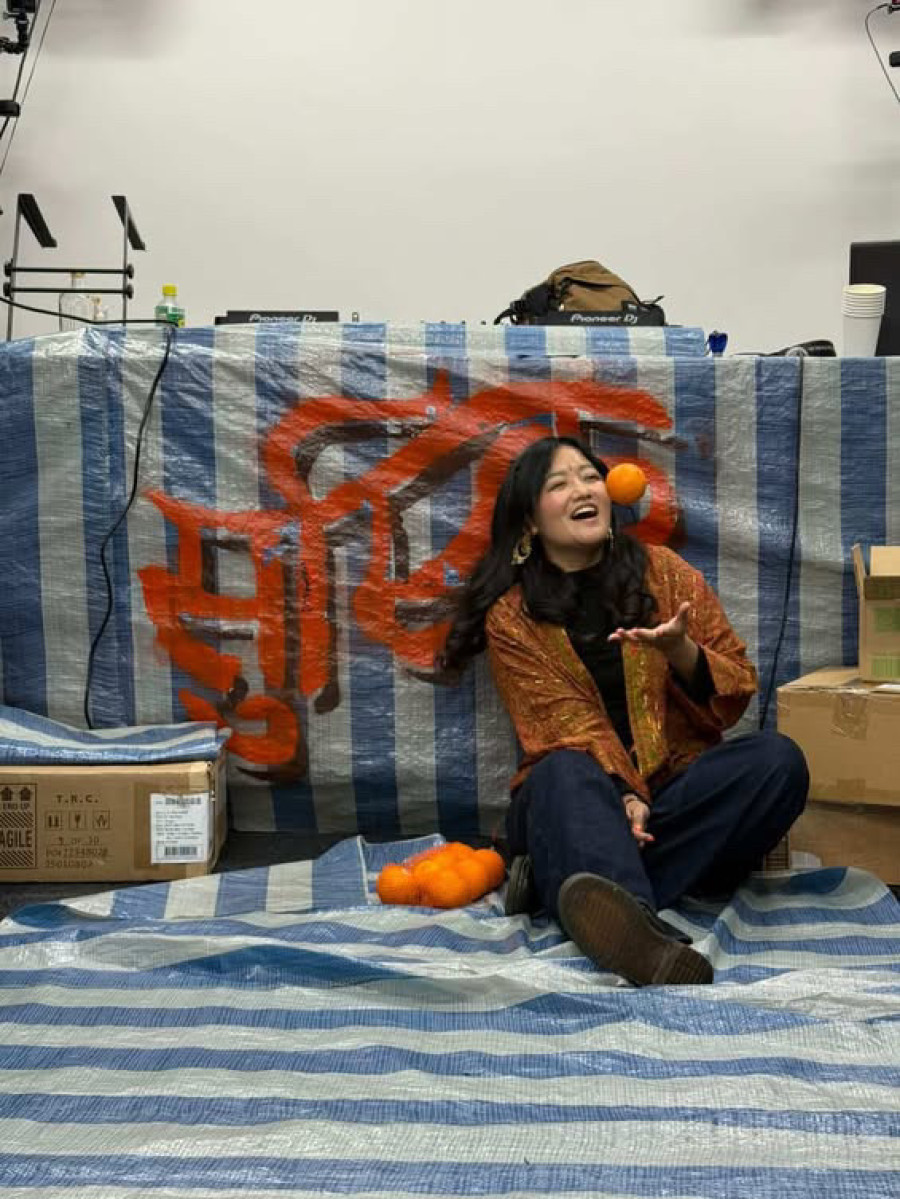
The Hong Kong–Nepali rapper Suskihanna Gurung uses music to highlight often-unspoken struggles of diaspora youth and creative independence. Courtesy of Suskihanna Gurung
Behind the strong character of ‘Big Didi’, there lies a rapper who makes vulnerable art. Not just speaking up for herself, but for communities and struggles often left unheard.
When we think of the word ‘activism’, what comes into our heads? Serious, sensitive and a fight for change. But activism is not only a march towards change; it resonates far more deeply with people when we hear it on the radio or hum a rap.
Suskihanna Gurung, whose stage name is SUSKI, is a Hong Kong-Nepali rapper who talks about topics we usually do not hear in mainstream rap: mental health and identity isolation. But the themes she writes about are not limited to body positivity, empowerment, the pursuit of passion, and limitations in the music industry.
“Growing up, I used to follow rap battles from Raw Barz like Uniq Poet vs Laure and others,” says Gurung. Her classmates from different South Asian countries, despite not understanding Nepali, used to watch Raw Barz’s videos. For Gurung, tuning to rap meant a community coming together.
“Rap’s history is so rich; it is kind of like protest activism through music. This genre feels real to me,” claims Gurung.
She used to perform open mics for rap and enter video competitions as well. The response from her seniors and audience was always the same: release your raps officially.
In September 2023, she officially released her debut EP, ‘Karma’, with songs ‘BDE (Big Didi Energy)’, ‘Rat Race’, ‘Only’ and ‘Karma Outro’.
‘BDE (Big Didi Energy)’ was an online sensation with almost 155K views on YouTube. At first, the song gained virality on TikTok. As Tiktok was banned in Hong Kong, Gurung was in awe when she found out her rap song was already circulating widely with the Nepali audience.
Besides songs which almost have a ‘girlboss’ concept, Gurung has taken a route of introspection in her raps.
After her EP, recently, on May 21, 2026, her album, ‘Impostor Syndrome', was released. All 16 tracks on the album are now available on YouTube and Spotify.
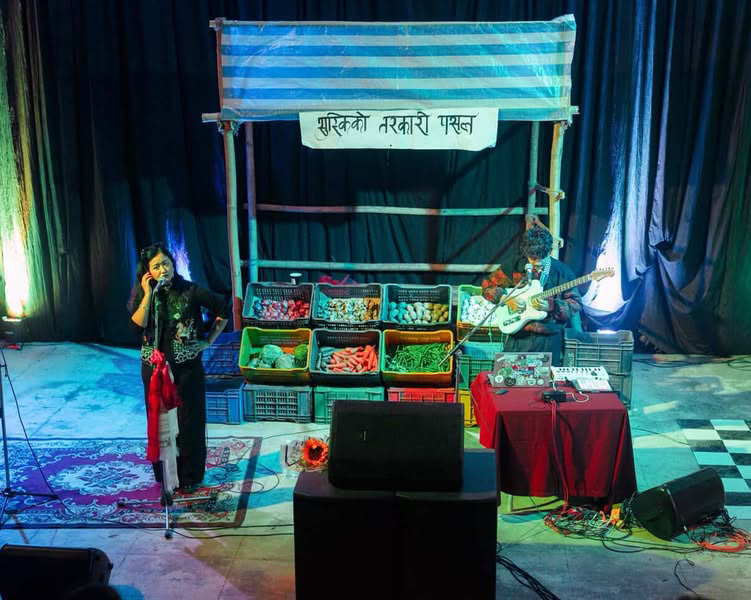
Suskihanna’s debut album live show at Eden on May 8. Courtesy of Suskihanna Gurung
A powerful opening of Gurung’s latest song, ‘Nari Nai Durbar Ho', begins with a sampled track of Nepal’s first female singer, Melawa Devi Gurung’s, ‘Mirmire Jhyalaima’. Then Suski’s laidback yet energetic rap flow begins, making the song an empowerment anthem with a traditional touch.
In it, the verse goes, ‘Like Pasang, Like Parijat’—appreciating all the women’s identities that stand like a durbar: strong and still. The song is especially a tribute to her mother, who is a big believer in hearing songs without any swear words.
“Often, their lives are seen as ideal, but it is not the entire story,” claims Gurung, describing the lyrics behind it.
“Another kid would die to be in your place
Exchange for a stronger passport
So we can pass through ports we couldn’t before
With no trace of your origins except in your name”
Along with her independent artistry, she has also collaborated with Korean rapper Yumewanaii on the song 'Spit Like This’.
The direction Gurung wants to go is collaborative music-making with other artists, supporting one another rather than competing.
“Nepalis have one of the highest drop-out rates in Hong Kong, with not a lot of Nepalis in universities as well,” says Gurung, addressing the systemic issues that she wants to integrate in her raps.
Gurung’s lyrics depict what she experienced firsthand in her early childhood. Having spent her early years of schooling in Nepal, she was not equipped with Cantonese. Not knowing the regional language meant schools rejecting her from admission. As a result, she was absent from any formal education for a short time.
Despite the region’s systemic disadvantage towards minority groups’ education, Gurung was one of those who always persisted throughout her high school career. After high school, she was admitted to the University of Hong Kong, a public university in the region. There she pursued a major in English studies.
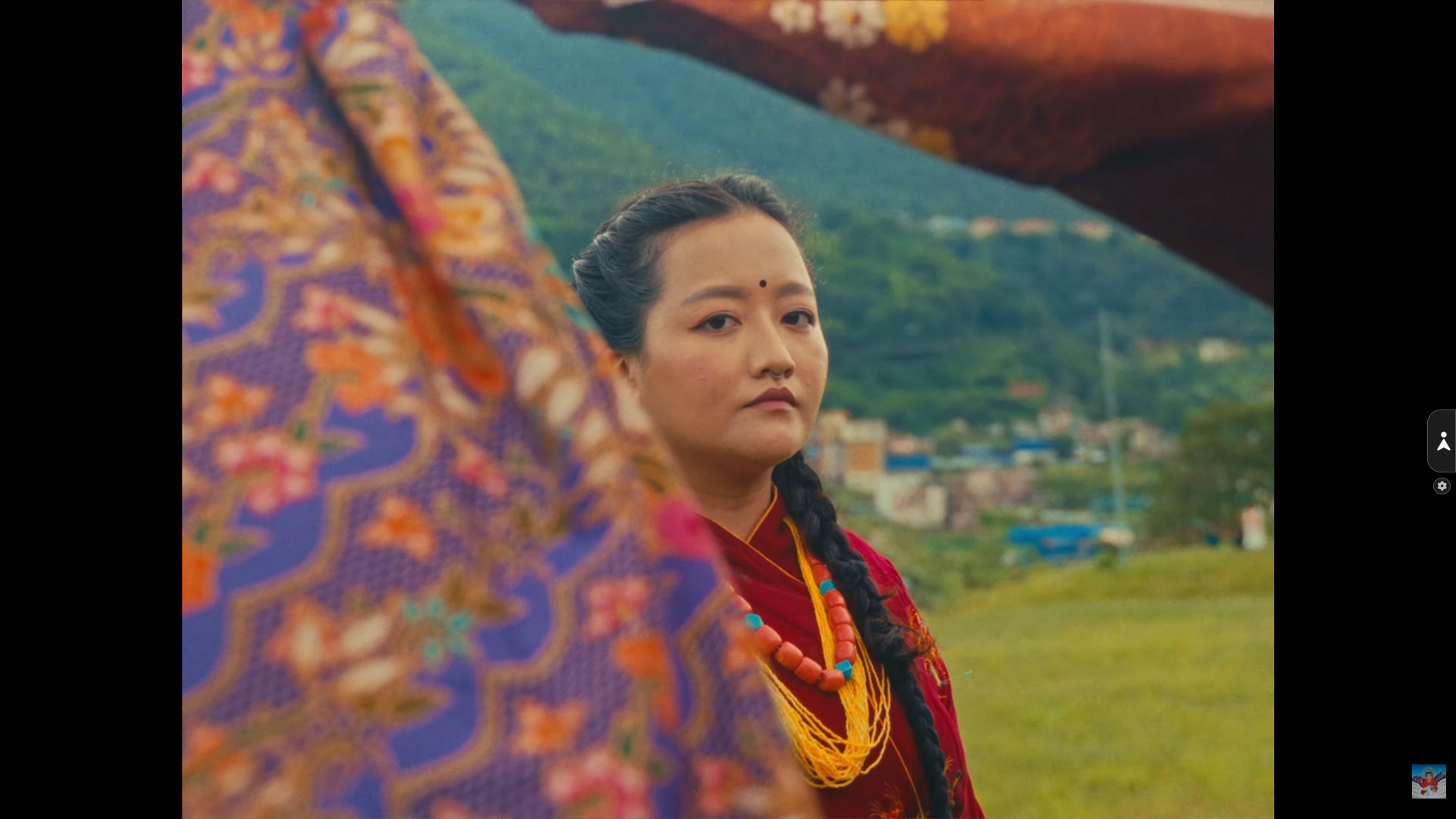
Screengrab from ‘BDE (Big Didi Energy)’
At first, pursuing her passion for being an artist seemed like overstepping a zone she had prepared for many years. It also meant not fulfilling her parents’ expectations of pursuing a more academic field. But Gurung’s devotion to music took over. Without a concrete plan, she packed a suitcase and left Hong Kong for Nepal. A path she had devoted her whole life to was challenged by a familiar obstacle, one that felt less like resistance and more like a calling.
Her raps are sometimes trilingual, with Cantonese, English and Nepali. What seems like a difficult combination of connotations, tones and meanings surprisingly comes naturally to Gurung.
“I realised I was kind of losing my Cantonese; integrating it in my raps has been a medium for me to practise it while continuing my art. It also shows my identity,” says Gurung laughingly.
So far, Gurung has performed in three countries, including India.
“What I wish to see in the Nepali hip-hop industry is lyrics that really speak for themselves and not just braggadocious undertones. I like braggadocious rap, but the raps that have really stayed with me are the ones that talk about issues around us,” says Gurung.
Through her music, she wants to spark conversations on the importance of tending to mental health.
“East Asia has one of the highest rates of suicide all over the world. We still don’t talk about mental health seriously, and especially in Nepal, people are vulnerable to opening up,” mentions Gurung, wanting her fans and listeners to have more discussions about mental well-being by listening to her raps.




 20.62°C Kathmandu