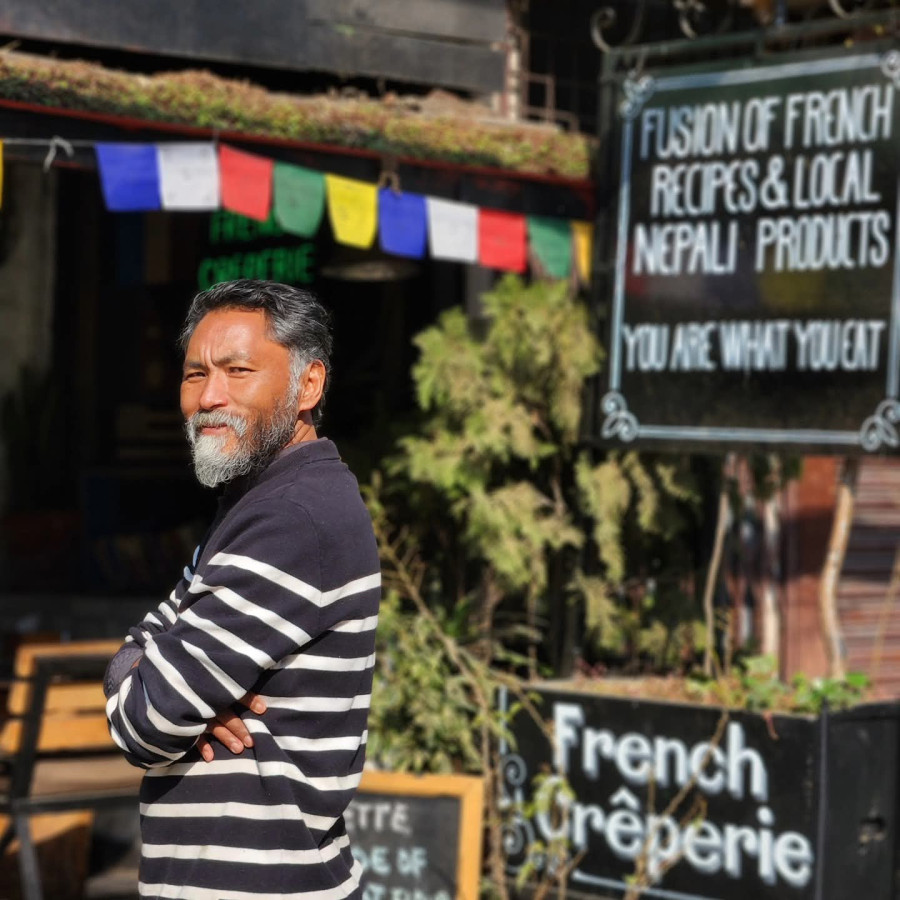
After discovering Brittany’s food culture in France, Hari Gurung returned to Pokhara to build a restaurant where French recipes and Nepali ingredients meet. Photos: Courtesy of Colette Gurung
At each table, diners slide slices of cheese beneath small raclette grills, watching them bubble and soften before pouring the melted cheese over boiled potatoes, vegetables and cured meat. Nearby, Hari Gurung stands behind the griddle preparing another order of buckwheat galettes, folding the savoury crêpes around mushrooms, eggs and locally made cheese.
Ten years ago, few people in Pokhara had heard of either dish. Today, they have become signature offerings at the French Crêperie.
It is an unlikely scene in a lakeside city better known for dal bhat, momo, and trekking cafés, but it reflects the idea that has shaped Gurung’s life: what he learned abroad could flourish at home.
As hundreds of thousands of Nepalis leave each year in search of opportunities abroad, Gurung chose to come back. After discovering Brittany’s food culture in western France, he returned convinced that many of the ingredients that define French country cooking were already growing in Nepal. His goal was never to recreate France, but to reinterpret its cuisine through a Nepali lens.
‘The recipes are French,” Gurung says. “The products are Nepali.”
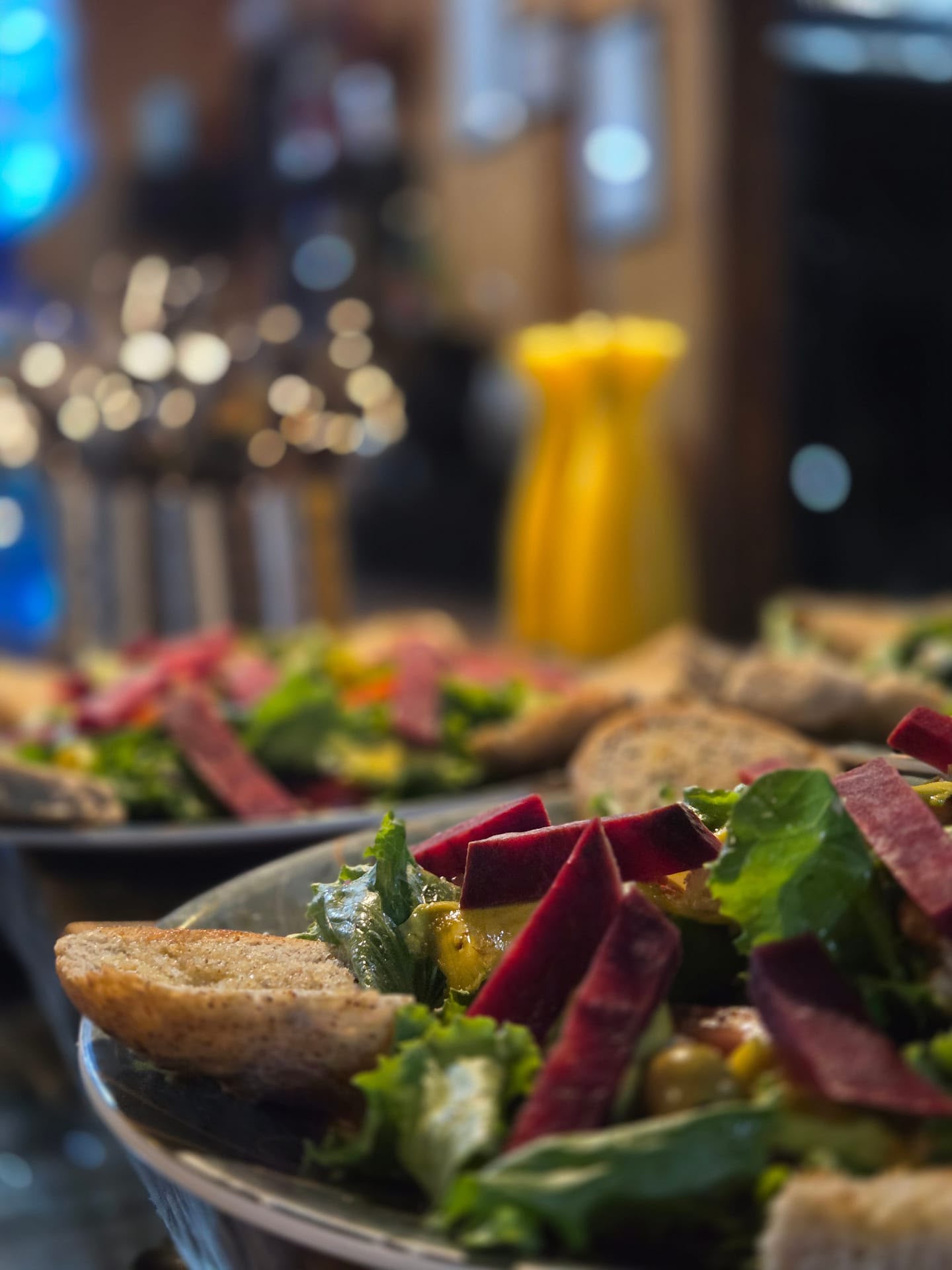
At the French Crêperie in Pokhara, nearly every vegetable comes from nearby farms. Herbs are bought in local markets. Milk and cheese come from Nepali producers whenever possible. Only a handful of ingredients still arrive from overseas. The chalkboard menu shifts easily between French and English, offering naturally gluten-free galettes, croque-monsieurs, quiches and crêpes alongside local coffee, and Himalayan honey.
Before he was teaching Nepalis how to eat raclette or introducing trekkers to Breton galettes, he was a boy growing up in the hills of Gorkha near the Manaslu range. At the age of eight, he left his family in the hills of Gorkha to live with a family in Kathmandu who supported his education while he helped with household responsibilities.
Cooking was one of the few constants. He had been preparing meals for his family since he was eight years old, and what began as a household responsibility gradually became a profession. He started at the bottom, washing dishes in restaurant kitchens before discovering that he had a knack for cooking.
“I always wanted to do something for Nepal,” Gurung says. “Even when I was abroad, I thought about what I could bring back.”
That opportunity arrived unexpectedly through France, where during a visit he encountered a cuisine that felt both unfamiliar and surprisingly accessible. In Brittany, he became captivated by the region’s buckwheat galettes, savoury crêpes filled with eggs, cheese, vegetables, and cured meats. Beyond the recipes themselves, he admired the philosophy behind them. French country cooking relied on fresh produce, seasonal ingredients, and simple techniques rather than elaborate presentation.
As he travelled through France, Gurung began noticing something else. Many of the vegetables he saw in French markets already grew in Nepal.
“I would see produce there and think, ‘We have that in Nepal too,’” he says. “The spices are very similar. The flavour is just slightly different.”
The realisation was an epiphany for him, changing the way he thought about food. If the ingredients already existed at home, perhaps the recipes could too.
With the seeds of an idea, he returned to Nepal carrying far more than a cookbook.
Before opening the French Crêperie, Gurung experimented with another idea. In 2008, he opened a pizzeria. The business found customers quickly, but it also taught him something about Nepal’s restaurant industry.
“Everybody started opening pizzerias,” he says with a laugh. “There is a viral culture here. Once something becomes popular, everybody does the same thing.”
Gurung wanted his next venture to follow a different path. “I wanted to do something unique,” he says. “Something people couldn’t find anywhere else.”
The opportunity finally came in 2015, when he opened the French Crêperie near Phewa Lake.
The restaurant’s early years proved challenging. Specialty ingredients were difficult to source in Pokhara, forcing Gurung to make frequent trips to Kathmandu. Over time, as Nepal’s food industry evolved, many of those products became easier to find. Even today, he imports only the handful of ingredients that cannot be sourced domestically.
Choosing local ingredients is, for Gurung, an expression of confidence in Nepal — its farmers, its produce, and its potential. The restaurant reflects the same understanding that brought him home: that Nepal already has what it needs to build something meaningful.
When Gurung opened the French Crêperie, French food was still a novelty in Pokhara. Vegan and vegetarian restaurants were uncommon, and many locals had never heard of Breton galettes or raclette. Gurung wanted to build a restaurant where travellers and residents, meat eaters and vegetarians, could all find a place at the same table.
“I wanted to create a place where everyone could eat under one roof,” he says.
More than a decade later, the restaurant has become exactly that.
On any given afternoon, trekking guides stop in between tours, Nepali university students sample French cuisine for the first time, former migrant workers return in search of flavours they came to love in Europe, and families leave with sandwiches, lemon tarts, or Nutella crêpes before strolling along Phewa Lake.
One of those diners arrived in 2018 looking for a taste of home.
Colette, who grew up near Paris, was travelling through Nepal when she wandered into the French Crêperie. The menu caught her attention immediately.
So did the chef behind the griddle.
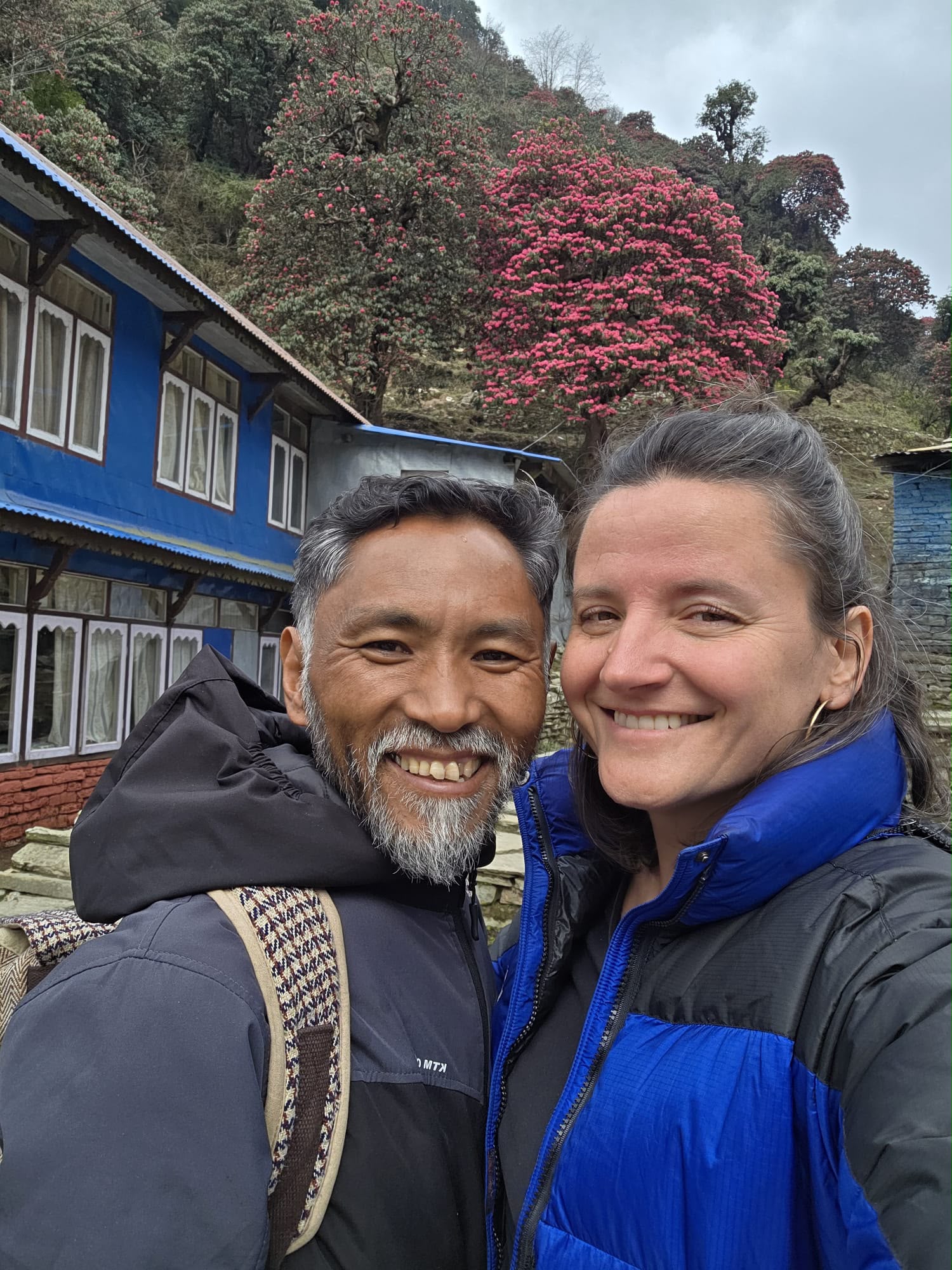
“It was love at first sight,” she says. “I came back a second time, then realised I wanted to come back to Nepal.” She eventually returned to Pokhara for good.
Today, Colette manages the restaurant’s Facebook and Instagram pages and works alongside Gurung and his wife and business partner. While Gurung prefers the kitchen, Colette enjoys telling the story behind it.
“Our love is like a recipe,” Gurung says. “We both contribute.”
As their relationship grew, so did Colette’s appreciation for the decision that had brought Gurung back to Nepal in the first place. “My husband could have lived abroad,” she says. “He chose to stay. To build here. To invest here. To create jobs here.”
“Opening a French restaurant in Nepal is a political gesture,” she says. “It is believing that you can help develop your country from within.”
Over the years, the restaurant has become a meeting place for travellers, expatriates and locals who gather over French recipes prepared with Nepali ingredients. Diplomats, aid workers and visitors regularly stop by, while the French ambassador has visited, drawn by a menu that feels familiar while celebrating local produce.
Most tables are filled with glasses of apple wine from Manang or homemade chyang rather than imported French wine, reflecting the restaurant's commitment to pairing French recipes with Nepali products wherever possible.
The French Crêperie has evolved into an informal meeting place where conversations flow as freely as the food. Travellers, expatriates and local residents gather around the same tables, swapping stories while French recipes prepared with Nepali ingredients provide common ground.
“We are more than a restaurant,” Colette says. “I love seeing French people meet Nepali people and for them to share their lives with each other.”
As another galette leaves the griddle and another bottle is uncorked, conversations drift between Nepali, French and English. For Gurung, that is the recipe he hoped to bring home — a reminder that Nepal already had the ingredients. It simply needed someone willing to see their potential.




 24.18°C Kathmandu