Jean Renoir once said that a filmmaker makes only one film in their life; they then break it into pieces and make it again. The same is true in Anand Gandhi’s case. Across projects like ‘Tumbbad’ and ‘MAYA’’, Gandhi has repeatedly explored questions of identity, morality and the human condition. Yet his cinematic peak arrived with his first writer-director feature, Ship of Theseus. The film turns 13 today.
Released in 2013, the film explores life, art, identity, meaning, justice and death through three seemingly separate stories. In his interviews, Gandhi regularly speaks about how the answers to the most profound philosophical inquiries can be found in the solace of biology.
‘Ship of Theseus’ is the very manifestation of this notion—it approaches the centuries-old Greek paradox, as well as the classic debates in the Bharatvarshiya domain, in perhaps the most somatic manner possible. And this is the very reason that renders it relevant to its 13th anniversary.
Unlike most films produced in the region that are quick to satisfy their audience with ready-made and often easy-to-digest answers, ‘Ship of Theseus’ throws a heap of questions that stifle its viewers. It compels people to leave theatres with a curious mind, questioning their own beliefs. This, the film does through its characters’ and their choices, dilemmas, action and even inaction.
Gandhi’s characters are as convincing as they are bold. The three main ones—a blind photographer, an ailing monk and a philistine stockbroker—stand as the three pillars that carry the film’s most profound queries.
A common understanding in screenwriting is that characters are not real people, meaning that characters need not be bound by the limitations people face in reality. However, people in Ship of Theseus are as real as possible—they are vulnerable, flawed, stern, fixated, loving, empathetic and, most importantly, contradictory.
The first story begins with Aaliya played by Aida El-Kashef. A photographer who began her career after losing her eyesight to a corneal infection, Aaliya is an artist who commands control over her work. For her, photography is anything but a visual experience with auditory cues and palpability of the result as her main aids.
Aaliya’s unyielding eyesight does not limit her, a feeling that seems likely to grow after her cornea transplant. However, having regained her eyesight, she clicks pictures only to loathe them later.
Aaliya’s is a tale that demands pondering over an artist’s grip over their choices. Does intuition play any part whatsoever in art-making? Must every stroke of brush, every shutter-clicked or every word penned be deliberate? Albeit her debut feature performance, Kashef carries the essence of Aaliya until the very last frame of the film. Her performance rightly aligns with the documentary-like approach the film strives to achieve.
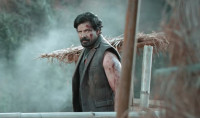
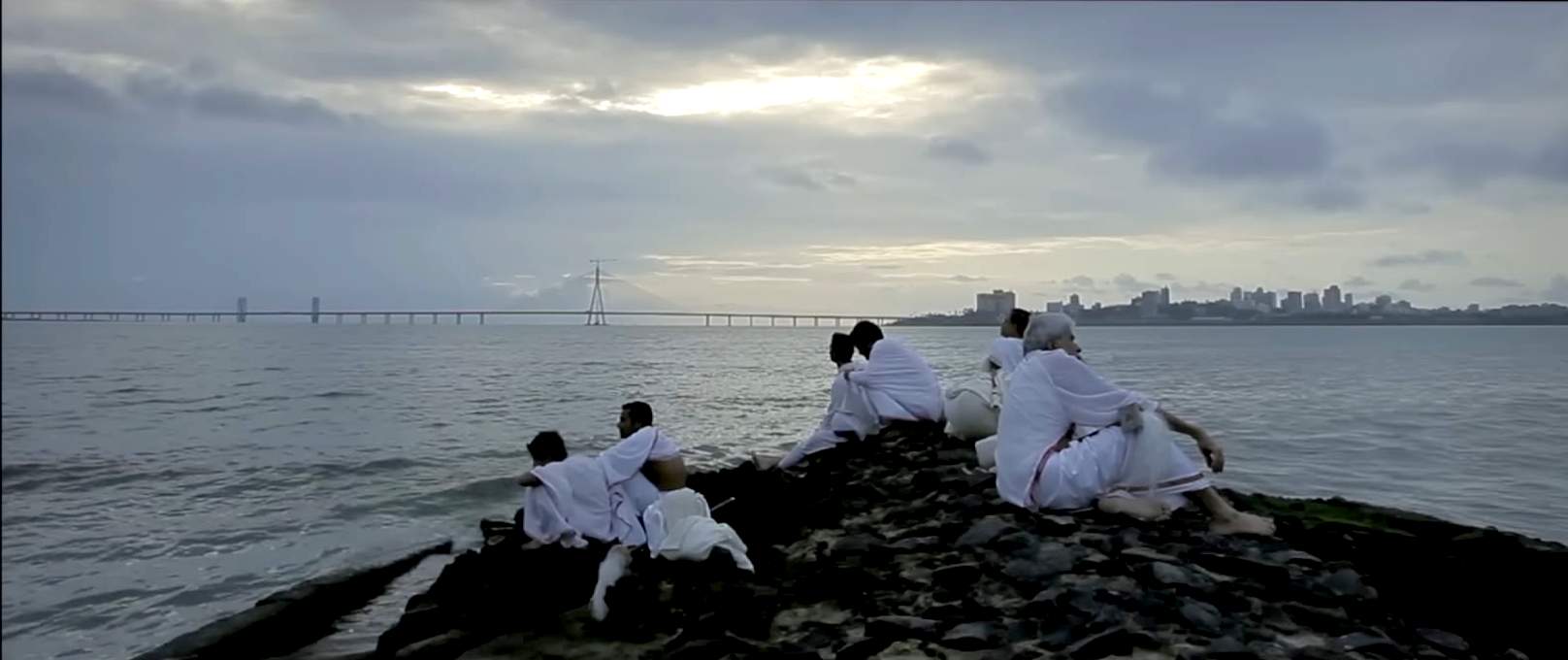
An abrupt, thundering cut transitions into the second story featuring Maitreya. The Jain monk with liver cirrhosis, played by Neeraj Kabi, is also an activist fighting against the unnecessary chemical testing carried out on animals. Maitreya is constantly accompanied by Charvaka, a young lawyer trying to “learn to win an argument from both sides.”
Here, Gandhi draws from the eastern pool of knowledge: In Buddhism, Maitreya is a bodhisattva who is going to descend upon earth to reestablish Dharma, while Charvaka was an Indian philosopher who advocated hedonism and materialism, rejecting the authority of the Vedas.
In the film, these characters personify their namesakes, for Maitreya holds a dualistic perception of the soul and body, and the eventual liberation from the karmic cycle of life and death, while Charvaka carries a sansaaric, more practical, approach to living, enjoying the material luxuries of life.
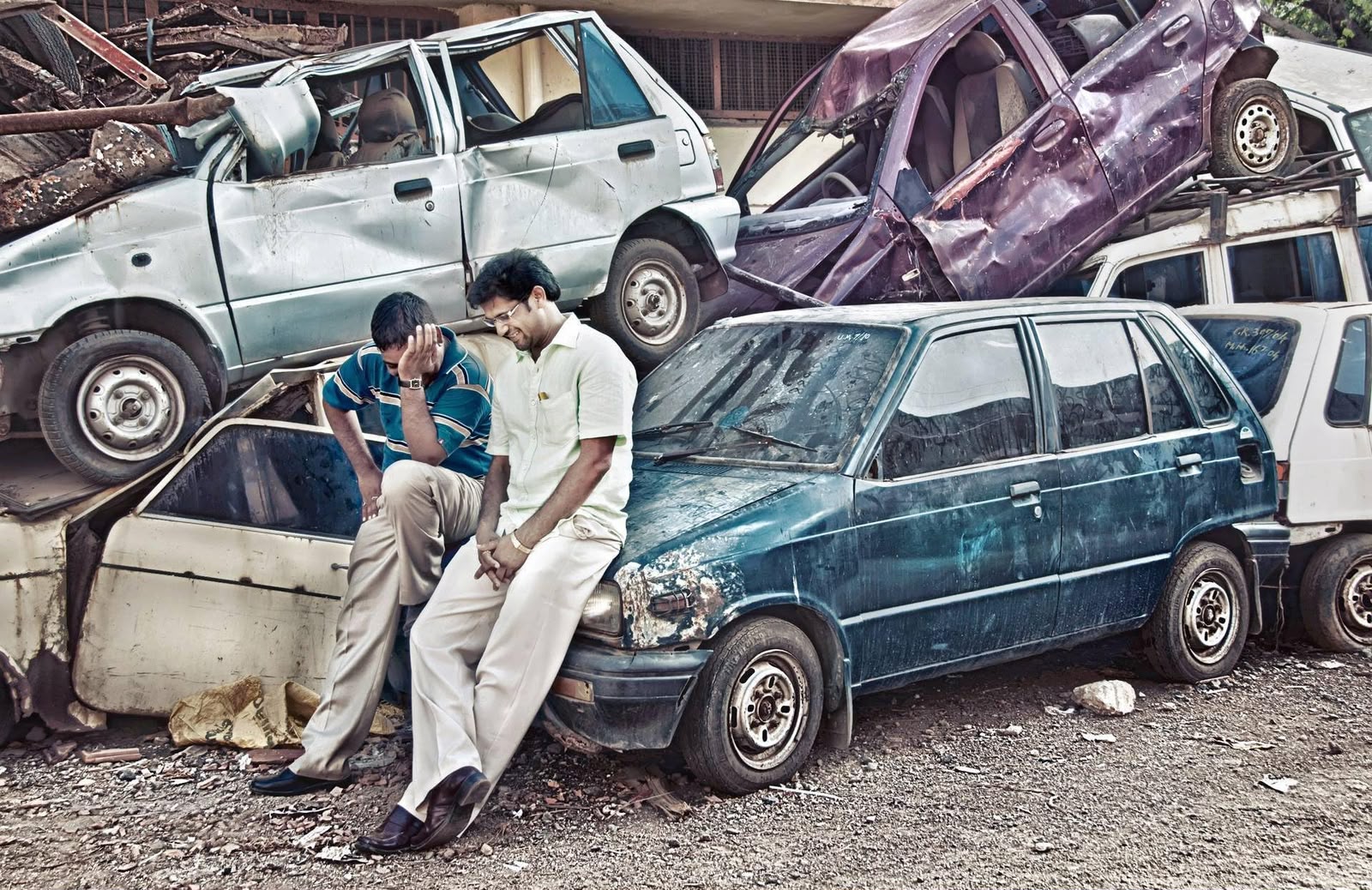
The final narrative features Navin, the stockbroker, who has recently gone through a kidney transplant. Being the philistine that he is, Navin takes no interest in reading books and has never listened to the vocal runs of Mukhtiyar Ali despite hailing from Rajasthan.
Unlike Aaliya and Maitreya’s obstacles that stem from a deeply personal conviction, Navin’s crisis emerges from someone else’s suffering. His willingness to go beyond borders, risking his own life—not for himself or his kin, but in pursuit of justice—exhibits his moral maturity above others’.
However, among the three protagonists, Shah falls shortest in portraying his character. While the matter concerning Navin is one of the most significant in the film, Shah’s stiff portrayal of the character seems evidently rehearsed and forced, constantly reminding the viewer of the film’s fictitious nature.
Nothing is accidental in ‘Ship of Theseus’—everything comes with a subtext. Arcs taken by Aaliya, Maitreya and Navin are filled with symbolisms waiting to be discovered. Like the frog-and-centipede story that Aaliya narrates: That same centipede crawls into the tale of Maitreya—perhaps, one way of connecting the two narratives.
When Navin’s car and his sidekick get stuck at the gates of poor Shankar’s neighbourhood, for one must be of a certain size to fit through such settlements; when Pankaj Kumar, the Director of Photography, uses a shaft of light to emulate a heavenly illumination falling upon Maitreya; or when the sturdy, red buildings stand tall emulating Maiteya’s firm beliefs—meaning is packed to the brim of this film. And these visual and narrative motifs are what keep the film fresh till today, for every revisit rewards the viewer with a new revelation, an “aha!” moment.
Apart from being a contemplative piece that demands more than just viewer attention, ‘Ship of Theseus’ succeeds in low-budget and guerrilla filmmaking.
Whether in terms of cinematography, soundscape, production design or even the cast, the film strips all the glittery bits of filmmaking down to the basics. Kumar captures the film’s visual mood, pace and texture without any fancy gear.
Cinematography that relies on the basics of light and shadows to paint strong, contrasting images, Kumar aligns the visual aesthetics with the film’s minimal approach. Similarly, Benedict Taylor’s violin breathes life into the film with a soundtrack that embodies the idea of continuum that the film is all about.
But since the film tests only the cognitive rigour of the characters, it lacks the emotional depth that moves its viewers. Placing intellectual payoff above an emotional one makes ‘Ship of Theseus’ an admirable film, but rarely a lovable one.
It being a low-budget production is another area where it comes short. Cutting on the cost, the film relies on a lot of non-actors, some of whom are quite glaringly bad at avoiding eye contact with the camera.
While the use of non-actors does add a sense of innocence, authenticity and rawness to the act, their blunders also constantly throw off viewers. So does the occasional amateur sync sound that’s too hard to ignore. But to get tangled up in its blemishes would be to miss the forest for the trees. In an age where perfection is achieved based on a poorly written prompt, this film reminds us of the humanness of imperfections.
‘Ship of Theseus’ is the result of an effort to draw from centuries-old knowledge systems and translate it into cinema. 13 years after its release, the film's appeal remains not because it settles for easy answers, but for its unwavering knack for asking questions. As long as the questions that have kept us awake at night for centuries endure, ‘Ship of Theseus’ will live on.




 20.17°C Kathmandu