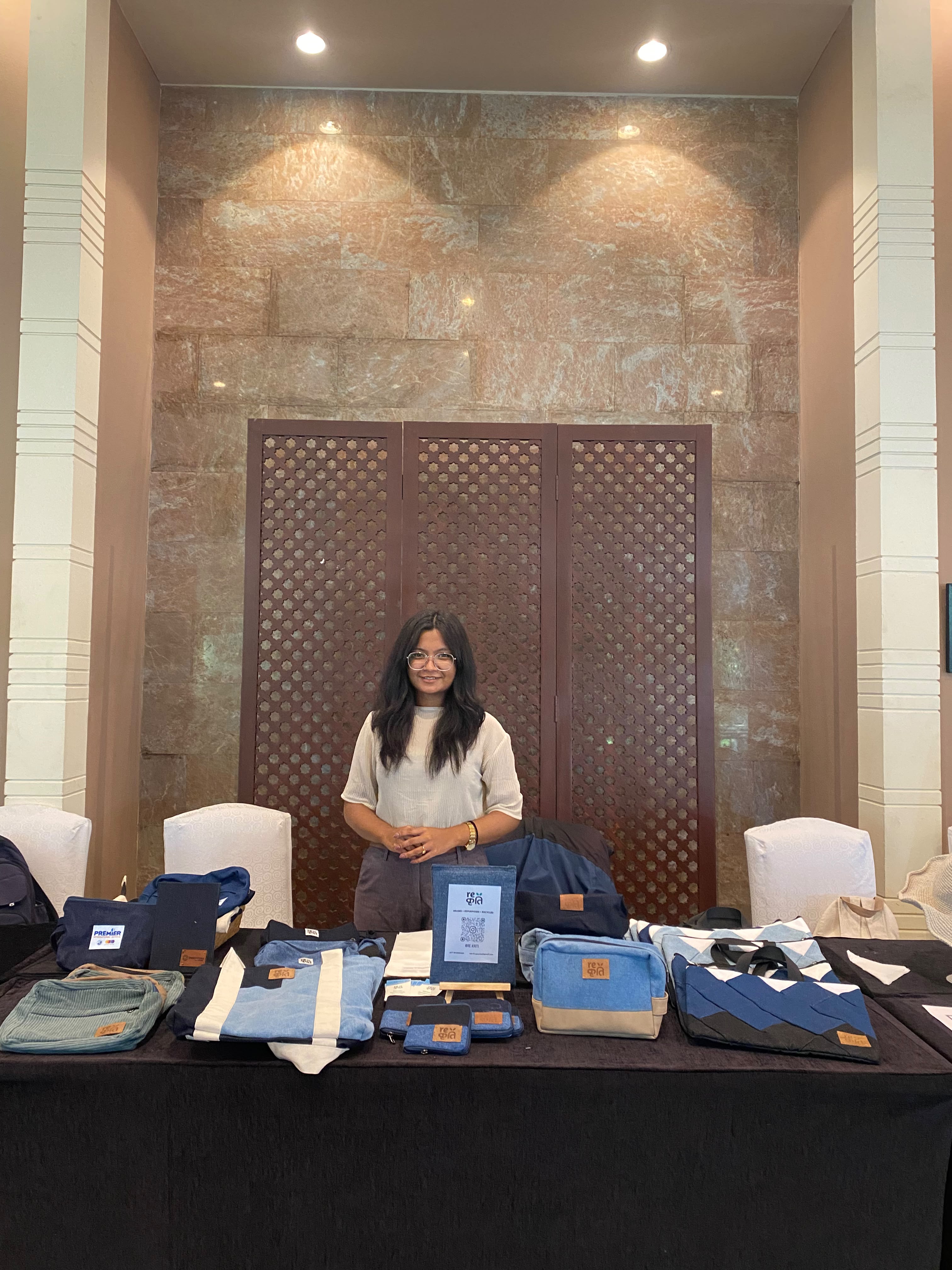
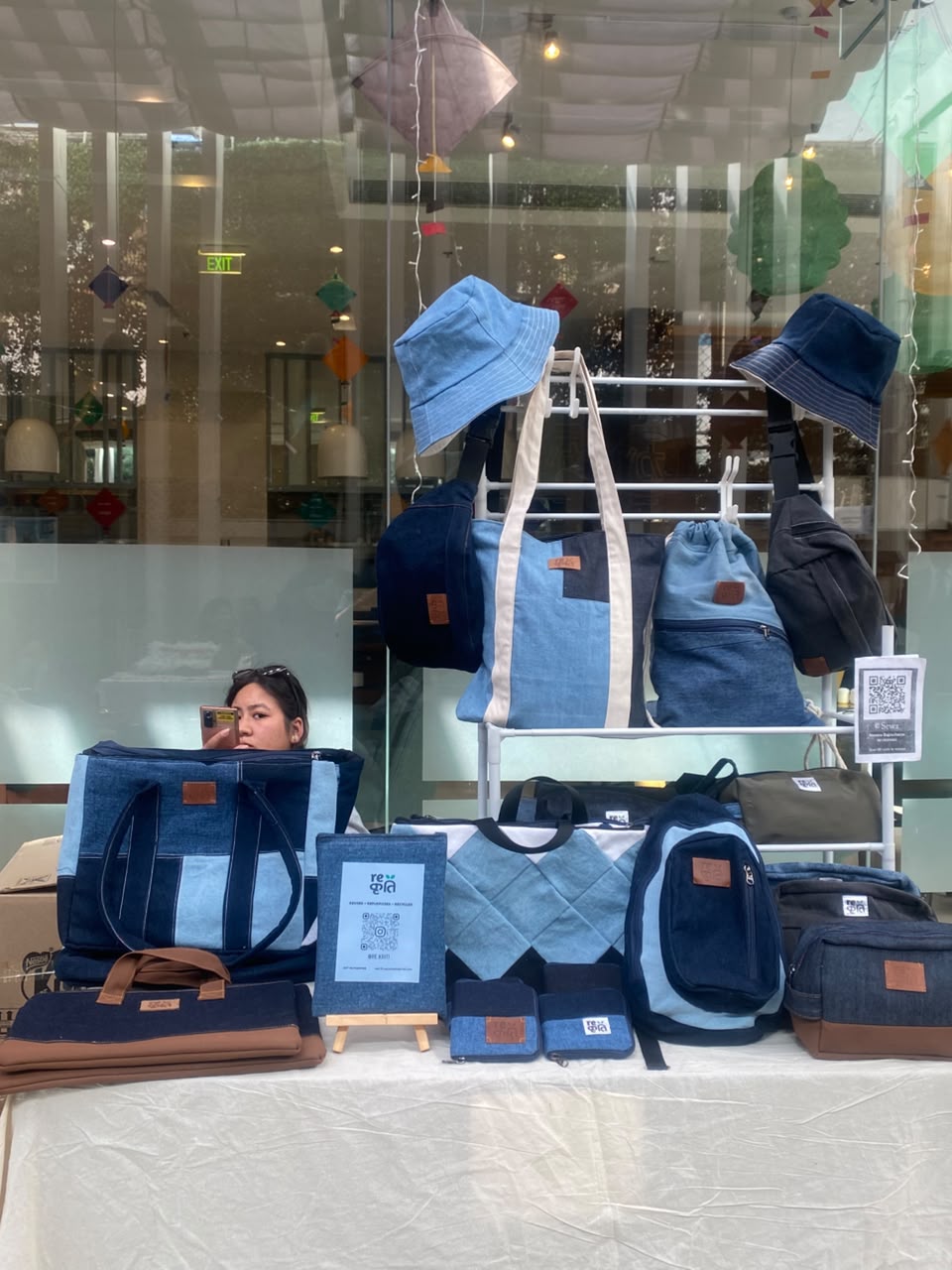
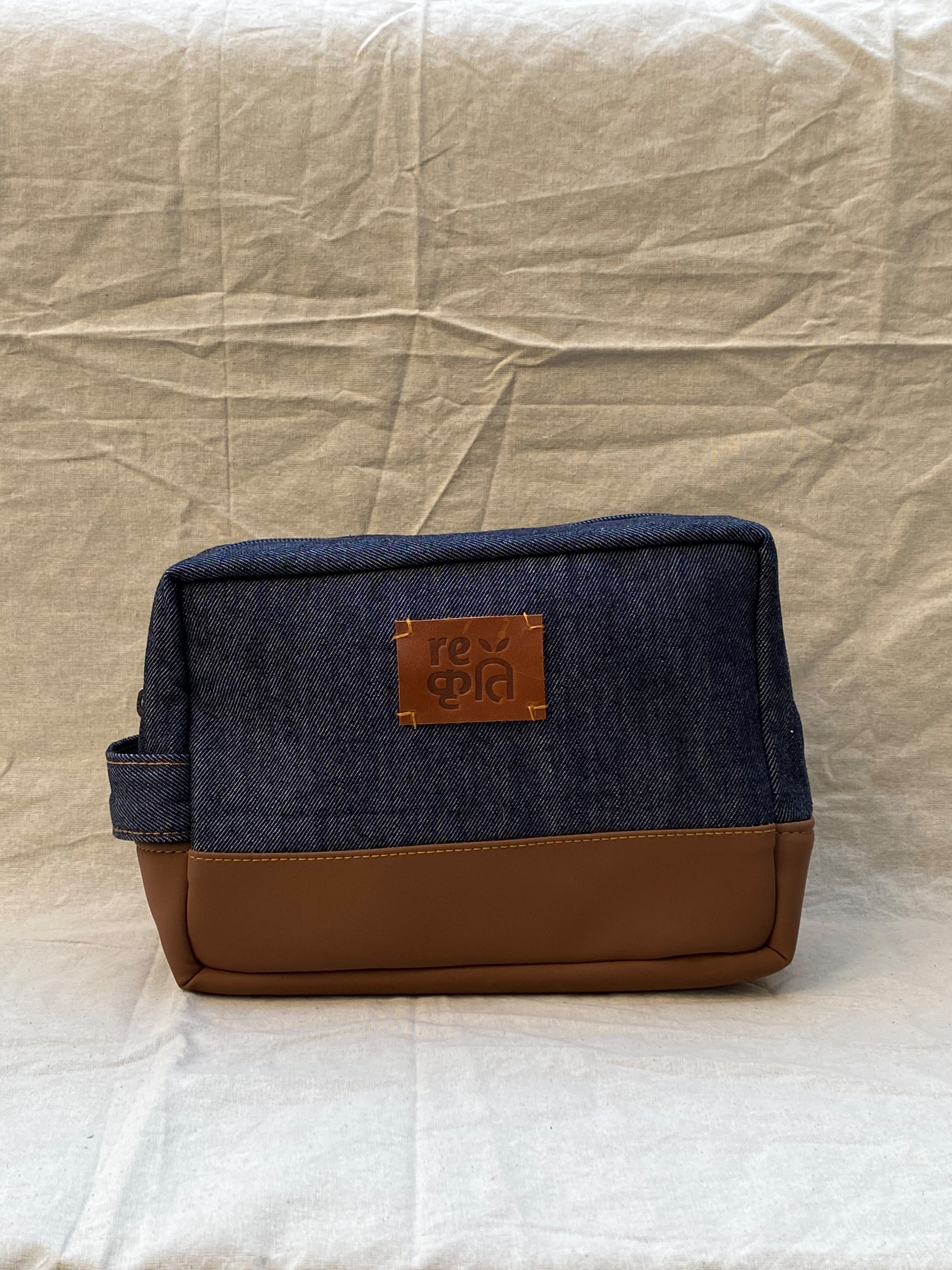
The organisation turns discarded denim into bags and accessories, while asking consumers to reconsider what they buy, what they throw away, and what waste can become.A model poses with a Re-Kriti bag made from old jeans. Photos: Courtesy of Re-Kriti
Growing up in New Road, one of Kathmandu’s busiest shopping hubs, Nasana Bajracharya watched her neighbourhood change around her.
Stores that once sold food, electronics, and other goods gradually became clothing shops. By the time she finished school, she remembers seeing clothes almost everywhere she looked.
It left her with a question. “Who wears these many clothes?” she wondered. And if people were buying so much, what happened to everything they no longer wore?
During the second year of her BBA, she participated in a startup idea competition. When asked to come up with a business idea, textile upcycling was the first thing that came to her.
That idea eventually became Re-Kriti.
Four years into its work, Re-Kriti has upcycled around 2,200 kilograms of jeans. More than 700 customers have handed over their old jeans to be transformed into bags. The organisation has also provided income-generating opportunities to 11 women artisans.
Founder Nasana Bajracharya
But getting people to see an old pair of jeans as raw material rather than rubbish has not always been easy.
“People did think that products made from discarded fabric are of low quality,” she says. Some expected products to cost between Rs200 and Rs500 simply because the material had already been used. The reasoning was: If it is old, why should I pay much for it?
For Bajracharya, Nepal’s textile waste problem cannot be separated from the fast-fashion industry. Clothing stores have multiplied, online shopping has expanded, and people are consuming more clothes without necessarily using what they already own.
And getting rid of clothes does not necessarily solve the problem either. Donation is often treated as an easy answer to unwanted clothing. But Re-Kriti’s founder argues that donating transfers the responsibility if there is no demand for what is being given.
Charity and thrift stores can also accumulate clothing that nobody wants, leaving the problem unresolved.
At Re-Kriti, however, clothes that have already reached that point are given another possibility.
Some materials arrive from garment factories, where unused fabric may be discarded despite being new. Others are purchased from thrift stores that have been unable to sell them. Customers also bring in their own old jeans.
Used denim is washed, sorted and eventually cut and stitched into new products. During its early days, the team could use only around 60 to 70 percent of a pair of jeans.
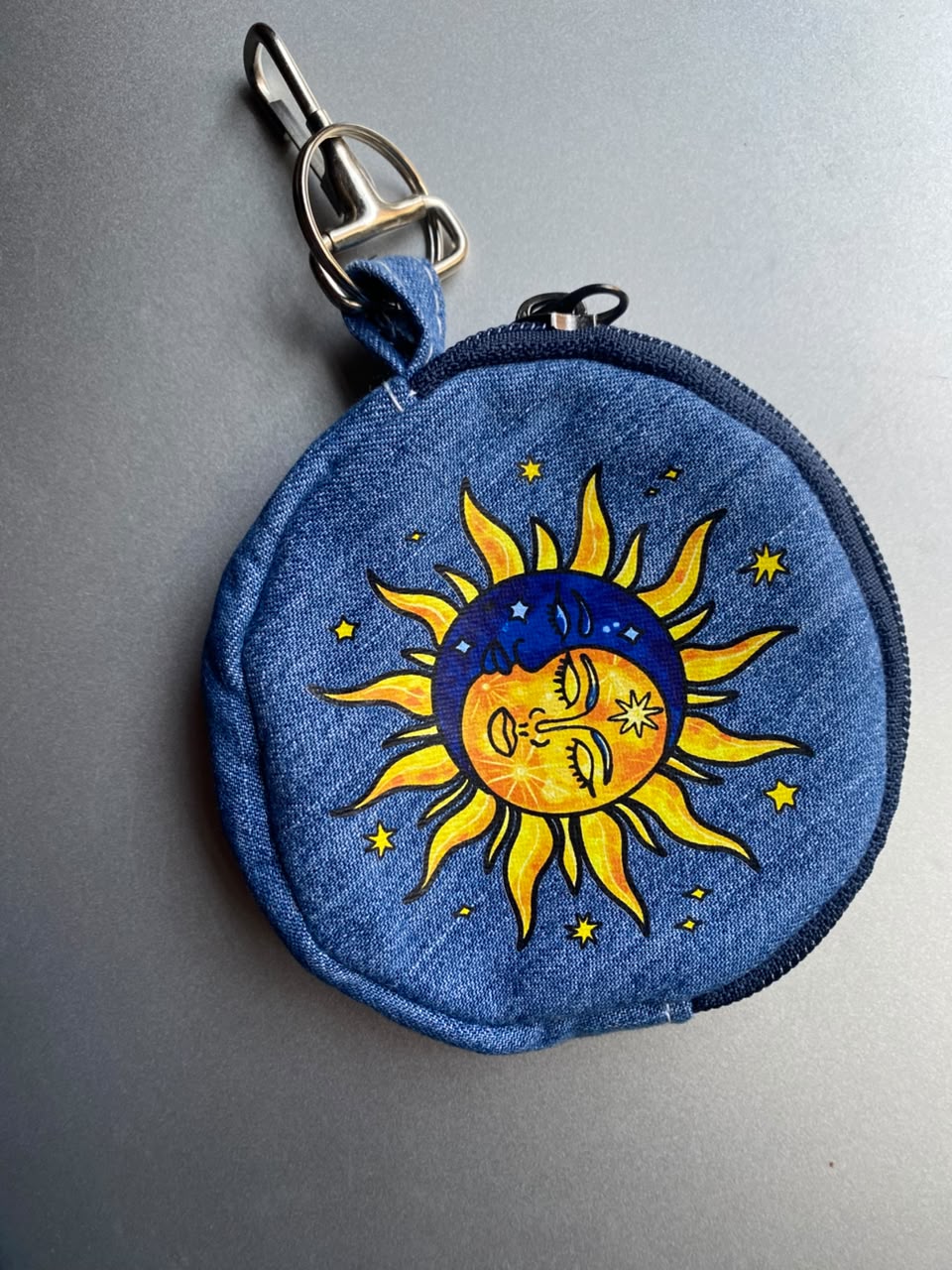
Today, the founder estimates that around 95 percent of each pair can be upcycled. Pockets and smaller pieces can become wallets, key rings and bag charms. She says only a few sections, such as the zipper and upper belt portion, remain difficult to repurpose.
Working with waste, it turns out, requires learning how to waste less of it.
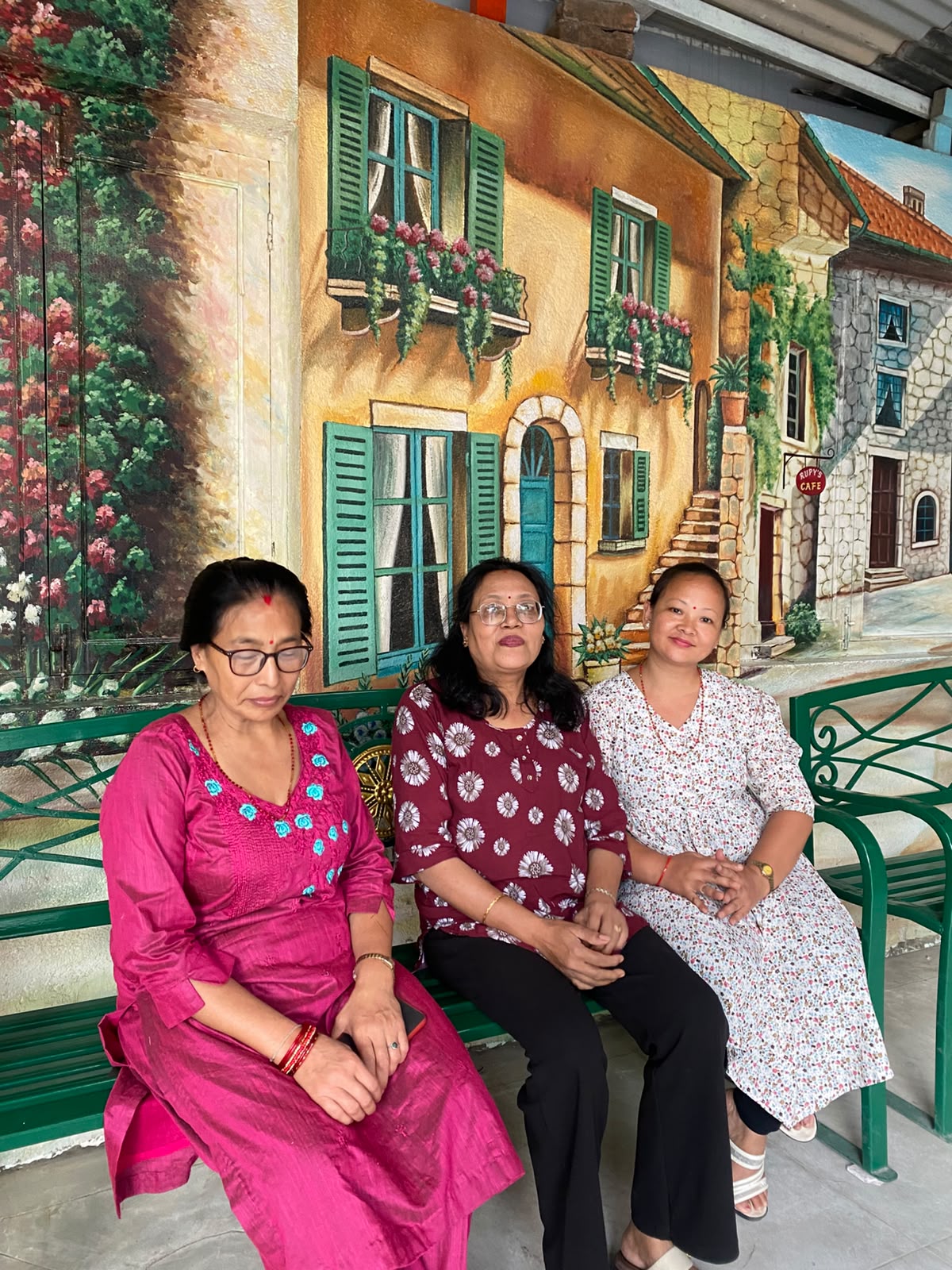
The organisation works with local women artisans, particularly home-based tailors.
The organisation deliberately works with local women artisans, particularly home-based tailors. Women may receive sewing and other vocational training through municipalities, wards, and different programmes, but learning a skill does not guarantee having somewhere to use it.
Household and caregiving responsibilities can make conventional working hours difficult. And when women cannot commit to a 10-to-6 job, formal employment opportunities shrink.
Re-Kriti therefore designed part of its production around home-based work, sending quality-checked materials to the artisans.
Of the 11 women who have received income opportunities through Re-Kriti, six currently receive consistent work, while five others are engaged when production increases.
She remembers one home-based tailor who had previously been poorly paid and treated badly elsewhere but had few alternatives. After beginning to earn through Re-Kriti, the founder says she noticed a change not only in her income but also in her confidence.
The first two years, Bajracharya says, felt like “hitting a wall”.
People sometimes bought Re-Kriti products because they admired the cause. That support was encouraging, but she quickly realised it was not enough to sustain a business.
So Re-Kriti studied online inquiries, marketplace responses and feedback from previous customers to understand what people actually wanted.
That process led to one of the most important lessons Re-Kriti has learned about sustainability.
“The product is the hero,” the founder says.
In the beginning, Re-Kriti emphasised words like ‘upcycled’ and ‘sustainable’. For people already concerned about the environment, that message could be persuasive.
For everyone else, sustainability alone was not enough; the product also had to be attractive and useful.
That realisation pushed Re-Kriti to invest more in product development, marketing and how its work was presented on social media.
Sometimes, however, the old material carries a value that no new fabric could replicate.
One customer had kept a pair of her father’s vintage jeans long after he had stopped wearing them. The jeans no longer suited his style, but she had preserved them anyway.
After discovering Re-Kriti, she sent the jeans three weeks before her birthday and asked the team to turn them into a bag. Along with them came a handwritten note thanking the team for allowing something that belonged to her father to become something she could now carry herself.
Stories like these, Bajracharya says, become “fuel” during periods when sales are poor and she questions why she started the business at all.
Re-Kriti has also tried to take upcycling outside its own production space.
Since 2025, it has organised five ‘Upcycling Mela’ events at colleges. Around 150 students and 20 teachers have participated, either bringing old jeans for Re-Kriti to transform or taking part in upcycling activities themselves.
That participation matters because Bajracharya believes Nepal does not necessarily suffer from a lack of conversations about sustainability.
If anything, she thinks there are too many.
Every Environment Day, every Plastic Free July and at sustainability programmes throughout the year, similar conversations return.
“We are only having conversations,” she says. “We are having too many conversations, honestly.”
What is missing, she argues, is action.
A person may hear repeatedly that overconsumption is harmful, but the idea becomes different when they hold an old pair of jeans, work with it and see it become something useful.
That is also why she believes changing consumer behaviour is more realistic than waiting for the fashion industry to transform itself. Consumers, however, make choices every time they purchase something.
Perhaps that is Re-Kriti’s larger experiment. Its work begins with jeans, but the question it poses is not whether an old pair can become a bag. It is whether people can learn to look at what they already own differently.
A pocket can become a wallet. A scrap can become a key ring. A father’s old jeans can become his daughter’s birthday bag. A skill learned by a home-based tailor can become a source of income.
And a pair of jeans someone was ready to throw away can still have somewhere to go. For Re-Kriti, sustainability begins there.




 15.38°C Kathmandu