RSP chief Lamichhane’s lead helped government douse eastern Tarai flames without further losses
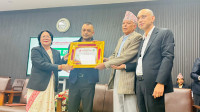
RSP chair begins consultations with political and community leaders before prime minister launches similar efforts after Sunsari violence spreads across Madhesh.RSP chief Rabi Lamichhane (centre) with faith leaders, Friday. RSS/Handout
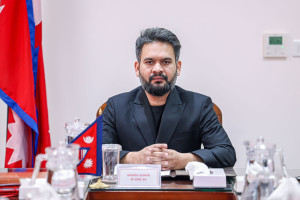
Following the communal unrest in Sunsari on the night of July 26 that later spread to several districts in Madhesh Province, Prime Minister Balendra Shah and Rastriya Swatantra Party Chairman Rabi Lamichhane have stepped up political consultations and outreach efforts.
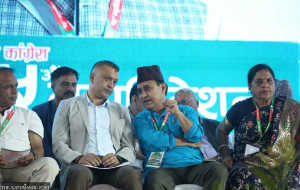
A review of the timeline of their engagements shows that Lamichhane moved first with a series of meetings involving political leaders and other stakeholders, while Shah later initiated similar consultations. Over three days, Lamichhane held at least half a dozen group meetings, while Shah launched comparable outreach efforts over two days.
In the immediate aftermath of the Sunsari incident, Shah and Home Minister Sudan Gurung focused primarily on security measures, including the mobilisation of Nepal Police and the Nepali Army. Lamichhane, meanwhile, moved to initiate political discussions and seek a broader response to the tensions.
As criticism grew that the government was not showing sufficient political leadership, the prime minister began adopting a similar approach, engaging political representatives and community stakeholders.
On the second day after the incident, Lamichhane issued a public appeal for restraint and began discussions with political and religious figures.
Political analyst Bhaskar Gautam said Shah and Lamichhane appeared to be operating on parallel tracks after the Sunsari violence.
“Those in power often suffer from the belief that they can solve everything on their own,” Gautam said. “The parallel activities of Rabi and Balendra reflect this mindset, the roots of which were visible even before the prime minister took office.”
Gautam said the current leadership was repeating past shortcomings by failing to strengthen institutions and adequately respond to ground realities.
“Prime Minister Shah is reinforcing a tendency where individuals take precedence over institutions, as seen through these parallel initiatives,” he said.
The unrest began at around 10:00 PM on July 26 in ward 3 of Dewanganj Rural Municipality in Sunsari, when clashes broke out between Hindu and Muslim groups. Security forces opened fire while attempting to contain the situation, killing one person at the scene and injuring another who also died later during treatment at a hospital. Nine locals and 13 security personnel were injured.
By 5:00pm the following day, Lamichhane had issued a public statement calling for communal harmony. At that time, the government had not issued a public appeal.
Nearly 24 hours after the incident, after 10:00pm, Shah posted a message on Facebook, followed by an official statement from the Prime Minister’s Office. The statement acknowledged that the incident had threatened social cohesion and created fear among citizens.
Shah promised justice, compensation for the deceased and legal action against those responsible.
“The government has maintained a presence from the beginning, but it was insufficient,” Shah wrote. “Loss of life due to security firing is unacceptable under any circumstances. The government has seriously reviewed the situation, and citizens will see responsible steps taken to prevent a recurrence.”
Lamichhane, in his statement, stressed the need to preserve Nepal’s multi-cultural social fabric.
“The greatest strength of Nepali society is our pluralistic culture, unity and centuries-old harmony,” he said. “We appeal to all citizens, civic leaders and stakeholders to refrain from activities that disturb communal tolerance.”
RSP leaders, however, maintain that the separate initiatives were coordinated. A member of Shah’s secretariat said the steps were taken with mutual understanding and that Shah and Lamichhane held a telephone conversation on July 29. Following the call, Lamichhane issued his statement, followed by Shah’s social media post and the PMO release.
The appeals, however, did not immediately prevent the unrest from spreading to Siraha, Dhanusha, Parsa and other districts in Madhesh Province.
The Sunsari administration imposed a curfew, while Nepali Army armoured vehicles began patrolling the area by 1:00pm the following day. The home ministry later formed an investigation committee headed by joint secretary Bhupendra Thapa.
On the morning of July 29 at 8:00, Lamichhane convened an all-party meeting attended by senior opposition leaders, including Nepali Congress President Gagan Thapa, former prime minister and Nepali Communist Party (NCP) coordinator Pushpa Kamal Dahal, CPN-UML General Secretary Shankar Pokharel, Shram Sanskriti Party General Secretary Aaren Rai, Rastriya Prajatantra Party (RPP) Chairman Rajendra Lingden, Janata Samajbadi Party leader Mahantha Thakur and Janamat Party Chairman CK Raut.
Lamichhane urged the leaders not to politicise the communal strife ahead of the House of Representatives meeting scheduled for July 30. He called on political parties and media outlets to act responsibly, avoid spreading rumours and allow authorities to conduct an impartial investigation.
The meeting issued a joint appeal against provocative activities and called for the establishment of cross-party mechanisms at provincial, district and local levels to prevent further tensions.
Immediately after the meeting, Lamichhane visited Sheetal Niwas to brief President Ramchandra Paudel on the consensus reached among political parties and the broader situation.
Following the meeting, President Paudel said political parties had an important role in maintaining peace and social stability.
Prime Minister Shah’s outreach, meanwhile, remained limited in the early days of the crisis. Shah, who had mostly met President Paudel for formal engagements since assuming office, visited Sheetal Niwas only on Thursday evening, a day after Lamichhane’s meeting with the President.
During the 20-minute meeting, Shah briefed Paudel on the government’s security measures. The President advised him to take all political forces into confidence and work towards a smooth de-escalation of tensions.
Six days after the Sunsari incident, Shah had yet to convene an all-party meeting at the executive level. He addressed the nation only on Thursday evening, the fifth day of the crisis, after two people had died and tensions had spread beyond Koshi, reaching Siraha, Dhanusha and Parsa.
Throughout Thursday, Lamichhane continued his consultations within the party, meeting RSP lawmakers from Koshi and Madhesh provinces, including Manish Jha, Deepak Kumar Sah and Purushottam Yadav. He urged them to return to their constituencies immediately and help calm tensions at the local level.
Later that evening, Lamichhane met leaders of Madhesh-based parties and called for a collective response to the crisis.
“We must extinguish the fire first,” he said. “We can review how this communal violence spread later. Parents must ensure their family members do not take to the streets to participate in disruptive demonstrations.”
It was only on Friday, after Lamichhane’s day-long series of meetings, that Shah began discussions with Madhesh-based political leaders and RSP lawmakers representing the region.
Following a similar approach, Shah asked lawmakers to return to their constituencies and serve as a link between citizens and the state. In his address to the nation on Thursday evening, he said the government was working to rebuild public trust and stressed that an entire community should not be blamed for the actions of individuals.
On Friday, the sixth day after the Sunsari incident, Lamichhane met Hindu and Muslim religious leaders, including Ram Chandra Tiwari and Raju Raj Phuyal of the World Hindu Federation, as well as Maulana Nurul Hussein and Maulana Mohammad Khalid from the Muslim community.
Following the meeting, religious leaders issued a joint appeal calling for an immediate halt to demonstrations in Sunsari and Siraha.
Shah’s secretariat has rejected the suggestion that the two leaders were operating separately, saying they had divided responsibilities, with the prime minister overseeing government administration and security measures while Lamichhane focused on political and civic outreach.
“The prime minister held a two-hour discussion with the chairman before addressing the nation,” a member of Shah’s secretariat said, adding that the two leaders remained in regular contact through telephone conversations every morning and evening.
RSP general secretary Bipin Acharya also said the party chairman and the government had maintained close coordination throughout the crisis.
“As party chief, the chairman remains in continuous consultation with the prime minister and ministers. Information was shared bilaterally, and responsibilities were divided strategically,” Acharya said.
He added that Finance Minister and party vice-president Swarnim Wagle attended the all-party meeting as the point of coordination between the party and the government.
Ram Gurung, a political analyst close to the RSP, said the division of responsibilities appeared deliberate, with the party and government working to align their political and administrative responses.
However, critics have questioned the government’s initial response.
Rakshya Bam, coordinator of the Nepal Gen Z Front, said delays in intervention allowed the situation to worsen.
“Had the government taken on Monday the steps it took on Thursday, lives would have been saved,” Bam said, suggesting that poor advice from government advisers may have contributed to the delay.
Madhesh analyst Sohan Sah said the more recent efforts by Shah and Lamichhane were positive but argued that the initial lack of urgency allowed the crisis to worsen.
“If the government had shown this level of urgency when the incident was still within Koshi, it would not have spread to Madhesh,” Sah said. “Although RSP won most of the seats across Madhesh, its lawmakers initially remained silent. Going forward, the government must remain alert to prevent such tensions from spreading to western provinces.”
Sah also said the government’s early reluctance to engage wider political stakeholders had weakened its response.
“The government displayed overconfidence initially and failed to engage in dialogue. The consultative approach that has started now must be continued,” he said.




 14.67°C Kathmandu