



 21.42°C Kathmandu

Mon, Oct 12, 2026
Culture & Lifestyle
Woven with purpose
Aama’s Creation started as a solution for a baby’s sensitive skin during lockdown and has now become a growing network of women-led production, grounded in inherited knowledge.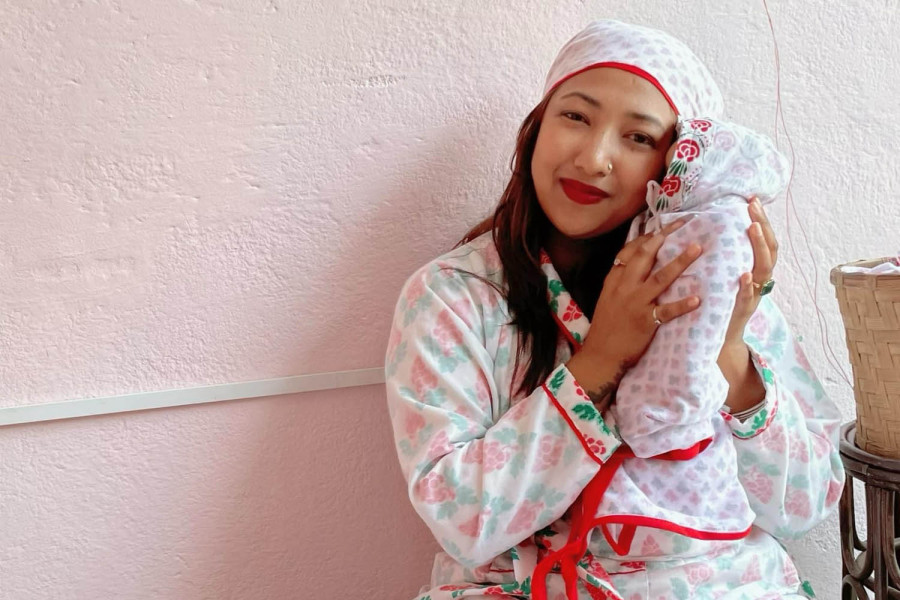
bookmark![]()
What started as a one-woman venture has now grown into a family. ![]()
Aama’s Creation was designed specifically to employ single mothers. ![]()
![]()
Skanda Swar
Published at : April 6, 2026
Updated at : April 6, 2026 06:51
Kathmandu
There is a particular kind of resilience that does not announce itself loudly. It does not arrive with a business plan or a startup grant. It begins quietly, in a hospital corridor late at night, at a sewing machine during a lockdown, in the stubborn refusal to give up on both a child and a dream at the same time. This is the story of Suruchi Khadka, the woman behind Aama’s Creation, and a journey that turned personal pain, professional instinct, and inherited memory into a purposeful social enterprise.
Khadka grew up in Kusunti, Kathmandu, in a middle-class family shaped by education and quiet ambition. Her mother was a teacher, her father a volleyball coach, people who believed in giving their children tools, not just comforts. Much of her early childhood was spent at her maternal family’s home, where her aunt surrounded herself and everyone around her with malmal cotton. “From a very young age, my aunt used to make me wear nightsuits made from three layers of lightweight malmal cotton,” Khadka recalls. “Even my bedsheet was of this cloth.” She wore it without thinking much of it. She simply knew it felt good on the skin. That quiet memory would not surface again for many years, but when it did, it changed everything.
After completing her studies, Khadka found herself working in the demanding environment of an intensive care unit. It was high-stakes, technical work, but what she brought to it was something no curriculum could teach: a genuine, almost fierce tenderness towards the people in her care. Bedridden elderly patients did not just recover under her watch; they formed deep bonds with her. As they were discharged and transferred, many would quietly press their phone numbers into her hand and ask if she might visit them at home. “Patients would ask for my number when they were leaving,” she recalls. “They’d say, just come check on me sometimes. That’s how it started. Not with a plan, just with people who needed care and couldn’t find it.”
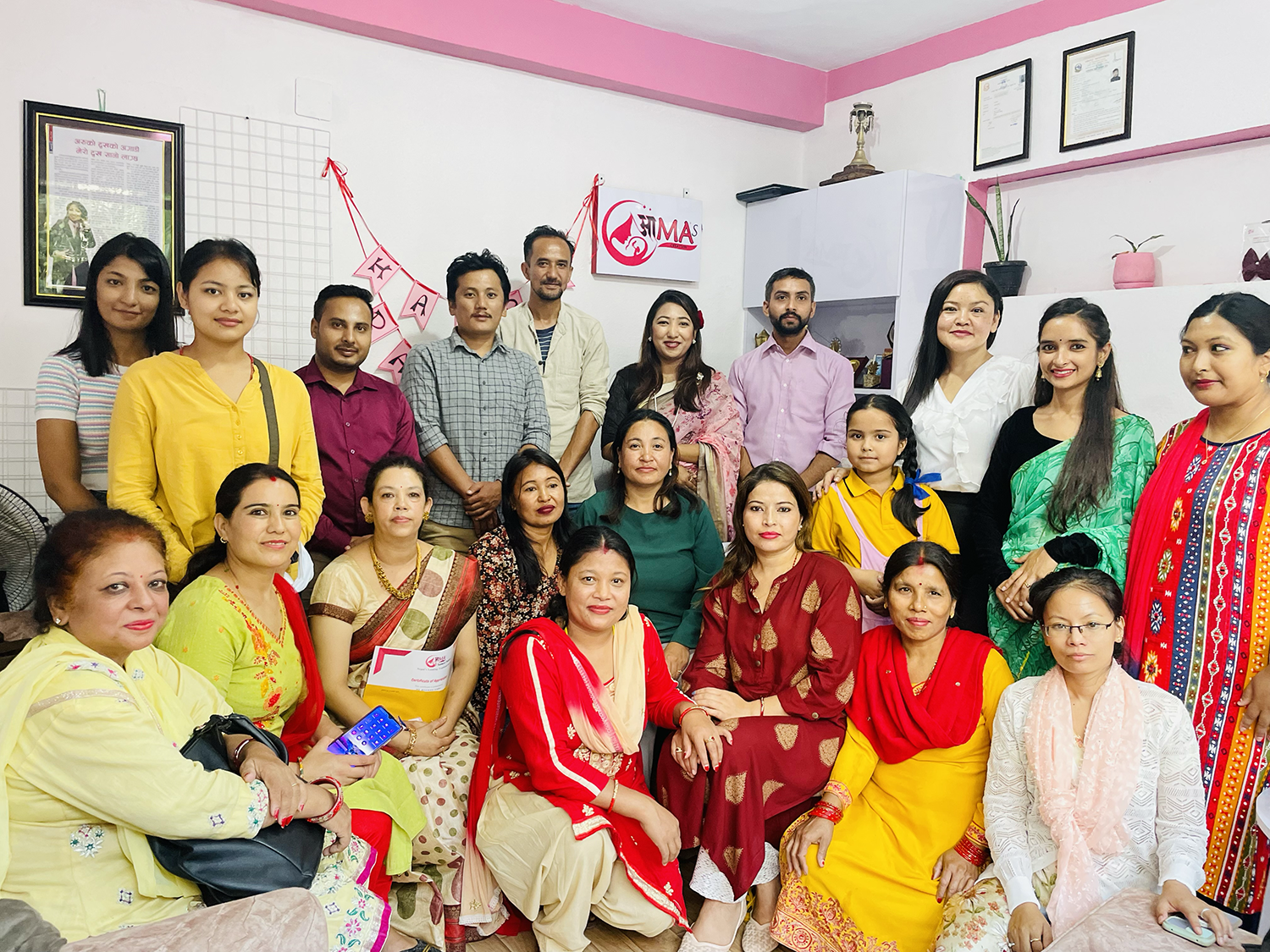
At first, she did it for free, moving between homes and neighbourhoods, monitoring blood sugar and blood pressure for people whose families did not always have the time. “These patients did try to give me money, but I always tried doing it for free,” she says. “Eventually, a lot of people told me I could turn it into a business.” Slowly, as the network grew and she could no longer visit everyone herself, she began directing trusted colleagues and juniors to help. And from this informal web of care built entirely on relationship and instinct, the seeds of her first venture, Suruchi Home Care, were planted.
It was also through her home care patients that fabric re-entered her life with purpose. Many of her elderly clients were bedridden, and bedridden patients face a particular set of complications, bed sores, poor circulation, fever from trapped body heat, joint pain, infections from synthetic materials that couldn’t breathe. Khadka began researching what could help. She returned, instinctively, to what she already knew. The three-layered malmal cotton.
“After a lot of research, I found out there are three layers of malmal cotton, what we have been wearing since we were kids, the daura bhoto, the khasto, that cloth was comforting to the body.” She tested it on ten of her patients, using the fabric for their gowns and bedsheets, and watched what happened. The results were clear. Skin irritation reduced, comfort improved.
What she did not yet have was the personal crisis that would force her to act on it. She was navigating a healthcare career, a growing entrepreneurial instinct, a pregnancy, and profound social pressure, all alone. But she chose to have her baby, held steady by her immediate family and close circle, and gave birth during the early weeks of Nepal’s Covid-19 lockdown.
Her newborn son’s skin was sensitive and reactive. Rashes appeared almost immediately. The commercially available baby clothing, synthetic, cheaply dyed, stiff with a chemical finish, only made things worse. “I had no money. I had a newborn. I was in lockdown,” she says. “I pulled together a sum of money from my mom and other people to create designs for my baby’s clothes. I had the knowledge and the connections to tailors. That was enough to start.” She used money received as gifts during her baby’s mukh herne ceremony, borrowed a small sum from her mother, sourced fabric through her vendor contacts during lockdown, and waited for the finished products.
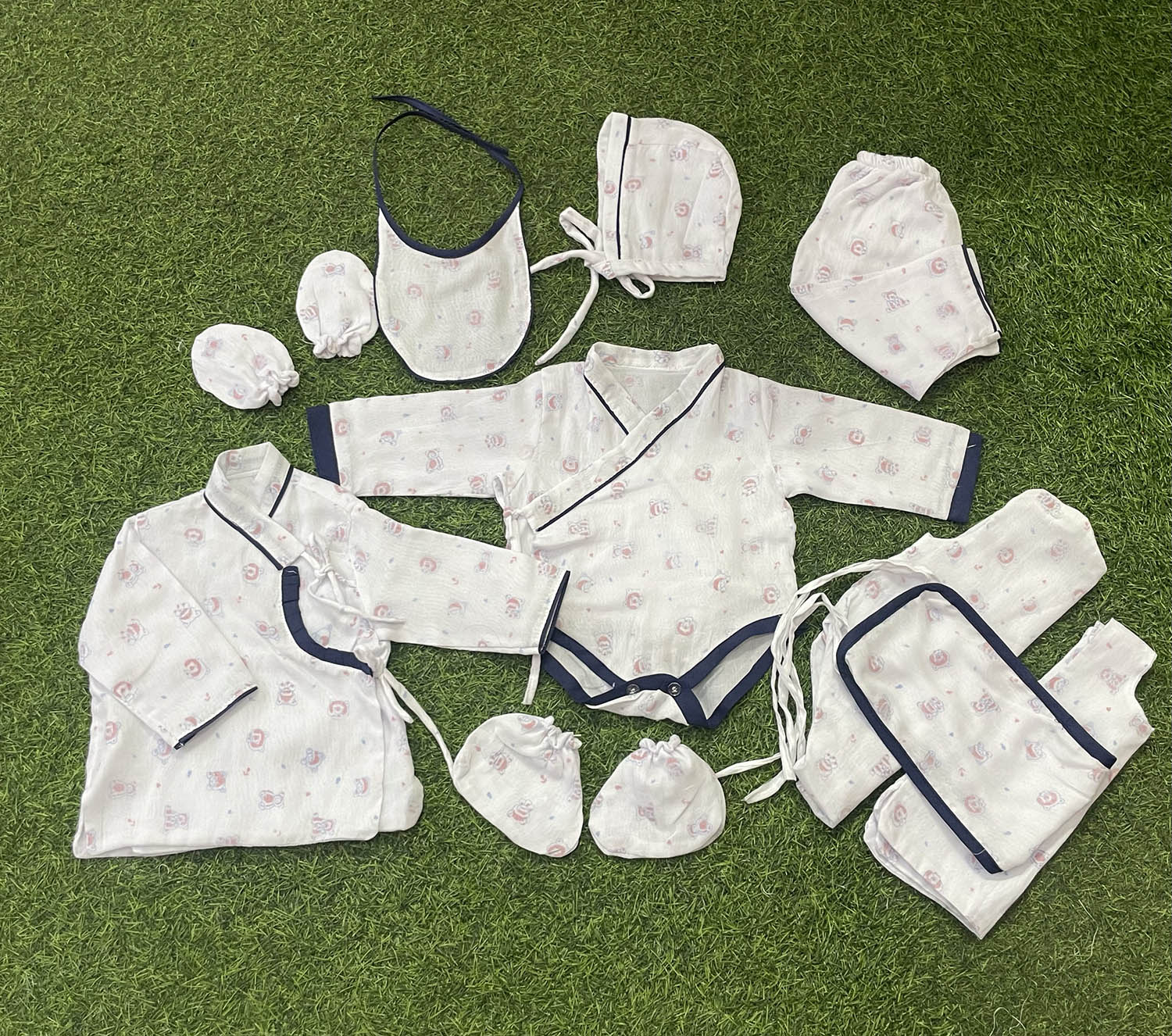
She designed a modern reimagining of the traditional daura bhoto and named it Dambar Kumari. She photographed the pieces and shared them on online platforms and in the communities she had joined as a single mother. “Since everyone was just wearing the regular daura bhoto, seeing a new design, everyone really liked the concept,” she says. “People started asking me for orders. That’s when it clicked, I think I should do something for women’s empowerment.”
Women began reaching out, not only to place orders but to ask how she did it. She gathered the women who wanted to contribute, gave them home-based work, and began building both a production base and a community of women who could earn with dignity.
From that nucleus of necessity and solidarity, Aama’s Creation was formally born. The name carries intention. In Nepali, aama means mother, one of the warmest and most loaded words in the language. Every product made under this name is meant to embody what that word represents: gentleness, safety, care, and unconditional presence. “We celebrate the journey of motherhood as an exquisite tapestry of emotions,” Khadka says.
At the heart of the brand is its signature fabric: the three-layered Dambar Kumari Malmal, 100% pure cotton, constructed with pure malmal on the outside, pure malmal on the inside, and a printed Dambar Kumari malmal in the middle. The resulting textile is soft, breathable, lightweight, and durable. “There are many types of malmal,” Suruchi explains, “but we have been using a scientifically proven pure one. The fabric keeps the body warm in winter and cool in summer.” Every product is pre-washed and double-sanitised before it reaches the store.
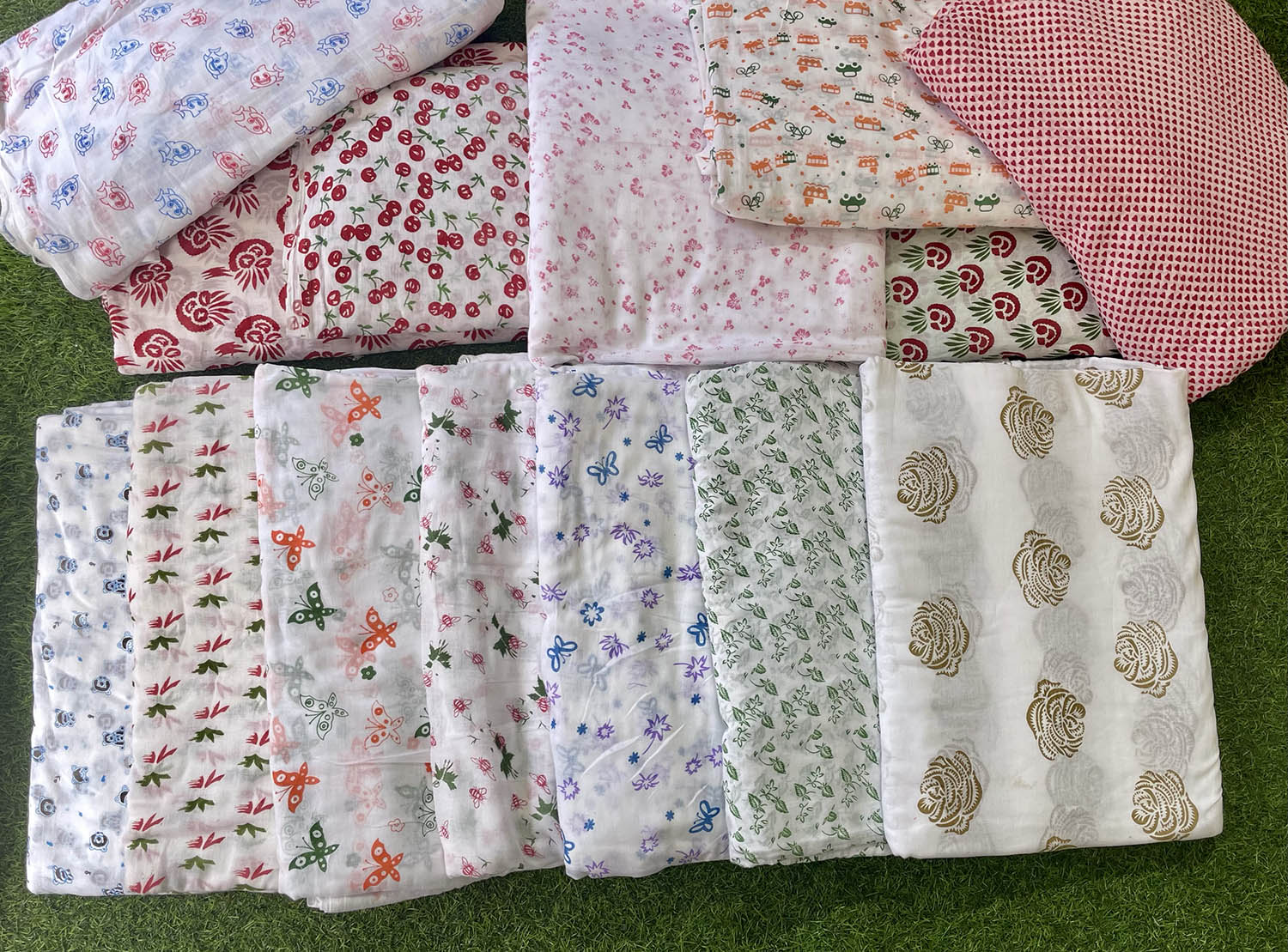
The product range spans baby wrappers and swaddles, bedding sets, traditional khasto garments, maternity robes and pyjama sets, and a growing line of clothing for children and adults. Each product reflects a careful balance: traditional Nepali design fused with modern comfort and functionality, proof that health-conscious and beautiful are not opposites.
The brand has grown steadily since its founding in 2020. Within a year of launching online, Khadka opened a retail store. A production house followed. Today, Aama’s Creation has a physical presence across Kathmandu Valley, with stores and stockists in Lalitpur, Maharajgunj, Baneshwar, and Pulchowk. Its reputation has been built almost entirely on word of mouth, the organic recommendation of one mother to another, one family to the next.
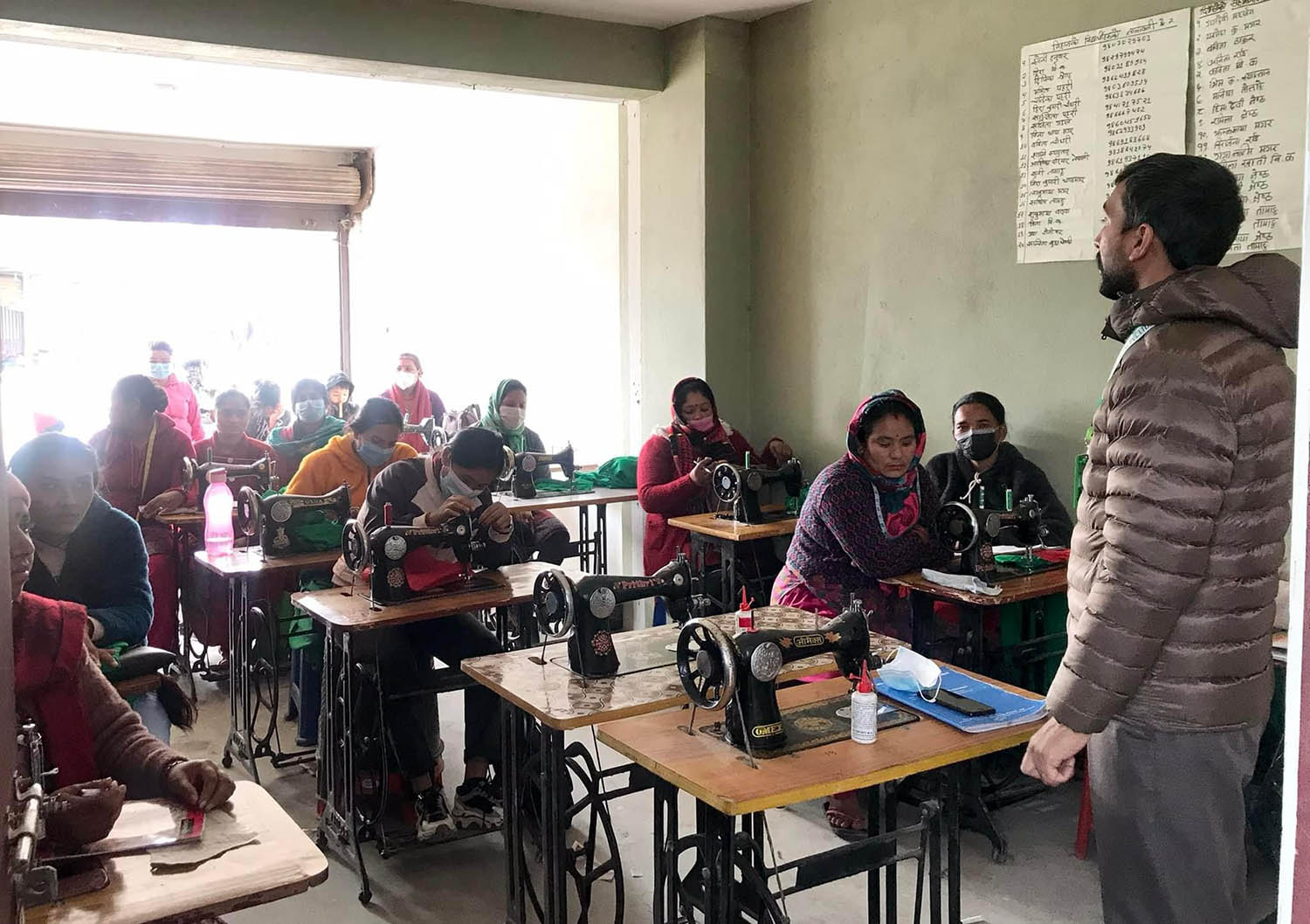
The social architecture of the brand is as carefully constructed as its physical products. Aama’s Creation was designed specifically to employ single mothers. Women who, like Khadka, found themselves navigating parenthood and financial survival without support structures. The production model was built around home-based work, meaning women with young children could contribute without sacrificing time with their families. “I am seeking financial independence while generating job opportunities for others,” she says plainly. “I want to empower, encourage, and support single mothers by setting an example. If I can do it, so can they.”
Most Read from Culture & Lifestyle

It’s a bird … it’s a plane … it’s the Indian ambassador’s farewell tweets

‘Tenzing’ puts the Sherpa at the centre of the Everest story

How should Nepal navigate a world in reorder? Rajib Upadhya on geopolitics and foreign policy

How Anup Poudel took Nepali cinema to Cannes
A Nepali photographer rediscovers Calcutta after decades
Editor's Picks

Constitutional Bench caught in seniority, ‘pick and choose’ dispute

A Dom boy’s long road to becoming a doctor

From blankets to handmade dolls, two foreign women bring comfort to flood survivors

News Analysis: When institutional defence exposes institutional fault lines
It’s a bird … it’s a plane … it’s the Indian ambassador’s farewell tweets
E-PAPER | October 12, 2026

×